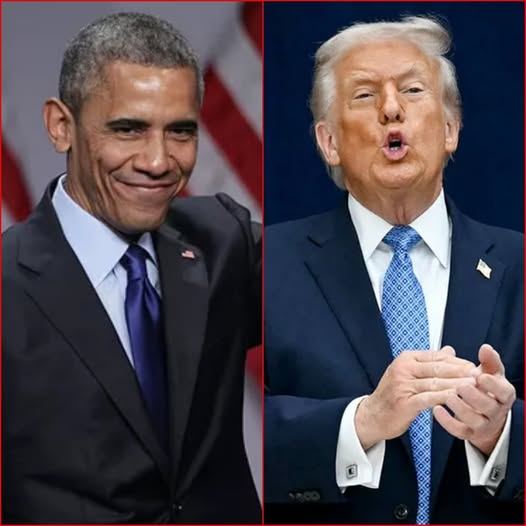
A simple “what if” from a former president can sometimes shake the political landscape more than a dozen policy speeches. Barack Obama’s recent assertion that he would “easily” outperform Donald Trump if he could run again is such a moment. This hypothetical scenario, barred by the 22nd Amendment, transcends mere political gossip. It is a deliberate intervention, a confident critique of the current political climate from a figure whose legacy is directly contested by the movement Trump leads. The statement forces a comparison not just between two men, but between two distinct visions of America’s role and its president’s purpose.
The comment is deeply rooted in the fundamental Obama-Trump dichotomy that has shaped the last fifteen years of American politics. Obama represents the cerebral, institutionalist approach, where change is pursued through policy frameworks and diplomatic channels. Trump embodies the antithesis: an anti-establishment force that operates on instinct, spectacle, and the direct channeling of grievance. By so confidently claiming victory in a rematch, Obama is making a declarative judgment on that clash of styles. He is asserting that, when tested, the electorate would ultimately reject chaos and reaffirm a preference for the politics of reasoned optimism and normative stability.
Beyond revisiting an old rivalry, Obama’s words are a strategic play for the future of his party. With the 2028 election already on the horizon, the Democratic field is taking shape. This statement acts as a north star, defining the ideological and tonal territory the party should reclaim. It’s a reminder to potential candidates that the Obama coalition—built on hope, diversity, and a forward-looking agenda—remains the party’s most potent electoral blueprint. He is, in effect, using his own enduring popularity to anoint a political style and discredit the alternative, providing a clear model for successors to emulate.

The instant, fiery reaction from both sides proves the statement’s effectiveness. For progressives, it was a rallying cry, a validation that their preferred brand of leadership is not obsolete. For conservatives, it was a provocation to be mocked, a sign of liberal delusion. This reflexive division highlights how Obama remains one of the most potent symbolic figures in American life. His ability to command such unified support and unified opposition with a single sentence demonstrates that his influence is not passive history, but an active force in the nation’s ongoing political identity war.
In the end, the power of Obama’s claim isn’t about rewriting the Constitution. It’s about narrative control. He has proactively framed the next electoral cycle as a referendum on which of these two legacies—his or Trump’s—defines the nation’s path forward. By placing himself hypothetically into the race, he makes the choice between continuity and disruption, between unity and division, impossible to ignore. It ensures that even as a private citizen, his vision will be central to the debate, making his hypothetical showdown a very real factor in the elections ahead.