During My Dad’s Funeral, My Husband Whispered: “I Changed the Lock on the $30 Million Condo You Inherited. If You Don’t Like It, We Can Get a Divorce.” I Started Laughing—Because the Condo Is…
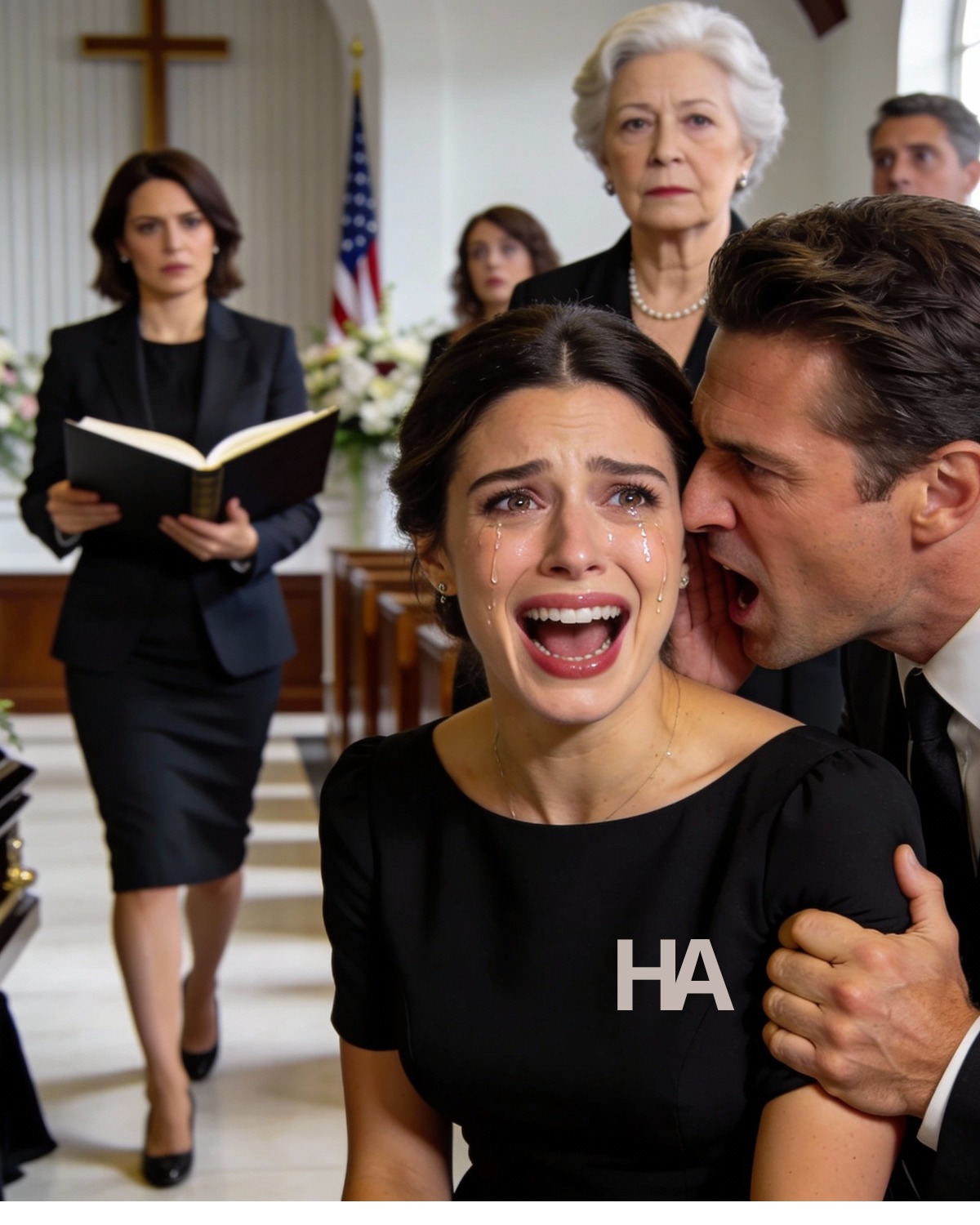
The chapel smelled like lilies and rain-soaked wool.
I stood between rows of black suits and muted condolences, staring at my father’s closed casket like I could will it open. Like I could bargain with the universe for one more terrible joke, one more eye roll, one more “kiddo, you’ll be fine.”
My name is Elena Morales, and that morning I became the last person in my immediate family—at least on paper.
When the pastor paused for a hymn, Grant slid closer.
His hand settled on the small of my back the way it always did in public—possessive, practiced, like a photographer had told him how to look supportive.
He leaned in until his breath warmed my ear.
“I changed the lock on the thirty-million-dollar condo you inherited,” he whispered, calm as if he were telling me he’d picked up milk. “If you don’t like it, we can get a divorce.”
For a second, my brain didn’t process the sentence. It floated there, unreal.
Then it landed.
Not because of the money—my father did well, yes, but he was private about it. It landed because we were standing three feet from my father’s coffin. Because my grief was still fresh and wet and he chose this moment to make a power move.
I turned my face slightly, not enough for anyone else to notice.
“You… changed the lock,” I repeated.
Grant’s mouth barely moved. “A precaution. People get opportunistic after a death.”
My hands trembled, so I tucked them into the folds of my black dress.
Across the aisle, in the front row, my father’s attorney—Marianne Keller—sat with a slim folder on her lap. She met my eyes for half a second. Steady. Unreadable.
Then she looked away like we’d never spoken.
Grant mistook my silence for surrender.
He squeezed my waist—harder. “We should go by the condo after this. I’ll show you the new keys. We can talk about what’s fair.”
Something inside me snapped.
Not loudly. Cleanly. Like a thread being cut.
It wasn’t the threat. It wasn’t even the condo.
It was the timing—the smug certainty in his voice. The way he used my father’s funeral like a trap, like I’d be too numb to fight back.
And that’s when I laughed.
Not a polite little chuckle.
A sharp, sudden burst that I tried to swallow but couldn’t.
Heads turned. A few people frowned, confused.
Grant froze.
His expression tightened like a mask slipping.
I pressed my lips together, still fighting the laugh, and whispered back, “Grant… you don’t understand.”
His eyes narrowed. “Understand what?”
I looked past him.
Marianne Keller was standing now, moving toward us, folder in hand—heels tapping softly on the chapel floor.
Each step sounded like a countdown.
“The condo,” I said, low and steady, “isn’t yours to touch.”
Marianne stopped beside us and opened the folder.
Grant’s fingers dug into my arm. “What did you just say?”
Marianne didn’t look at him like a grieving widow’s husband.
She looked at him like a man caught doing something stupid.
“Mr. Bishop,” she said calmly, “you changed the lock on a property you do not own, do not control, and do not have legal access to.”
Grant blinked. “I’m her husband.”
Marianne gave a faint smile—no warmth in it.
“That’s not the magic word you think it is.”
The hymn ended. People were still facing forward, unaware a second funeral had started—one for my marriage.
Grant’s voice turned sharp. “Elena, what is this? What did your father do?”
My laugh threatened to come back.
Because the answer was so perfectly Dad.
I leaned closer. “He protected me,” I whispered.
Marianne slid one paper halfway out of the folder and angled it so Grant could see the header.
A corporate name.
A trust.
Signatures.
Grant’s face changed color in real time.
“What—what is that?” he stammered.
Marianne’s tone stayed polite and lethal. “Your wife did not inherit that condo directly.”
Grant frowned, confused—then angry. “That makes no sense. I saw the document. I heard the number.”
Marianne nodded once. “The condo belongs to Morales Family Holdings LLC. The LLC is owned by a trust. Your wife is the sole beneficiary. She is also the only authorized manager.”
Grant’s eyes flicked to me.
I met his stare without blinking.
Marianne continued, “Your name appears nowhere on the ownership structure. Not now. Not ever.”
Grant’s jaw worked like he was chewing on rage. “She’s my spouse. That makes it marital property.”
Marianne finally looked him dead in the eye.
“No,” she said. “Inheritance is separate property in this state unless commingled. And it wasn’t.”
She tapped another page.
“And you signed a prenup, Mr. Bishop. On page fourteen, section three, you waived any claim to inherited assets, trusts, and properties held by corporate entities.”
Grant’s mouth opened.
No sound came out.
Because he remembered the prenup.
He just didn’t read it—he’d laughed it off, told me it was “just paperwork,” told me I was being “paranoid.”
He’d signed because he thought he had time to undo it later.
Or worse—he thought he could outsmart it.
Marianne lowered her voice. “There’s more.”
Grant’s nostrils flared. “What?”
Marianne’s eyes didn’t move. “That condo has a security contract tied to the LLC. The building’s management has already been notified that you are not permitted entry.”
Grant’s face went hard. “You can’t do this.”
I spoke gently, like you would to someone who didn’t understand they’d already lost.
“I’m not doing anything, Grant,” I said. “You did.”
His voice dropped into a hiss. “Elena. We can handle this privately.”
Marianne closed the folder with a soft snap.
“We already are,” she said. “Because the next step isn’t a conversation. It’s a report.”
Grant’s head jerked. “A report?”
Marianne nodded once. “Unauthorized alteration of property access. Potential unlawful entry. And depending on what else you’ve done… it could become more serious.”
Grant turned toward me, eyes blazing. “You set me up.”
I looked at him, honestly surprised.
“You threatened me at my father’s funeral,” I said quietly. “And you think I’m the one who set you up?”
He stared at me like he didn’t recognize me.
He didn’t.
Because the Elena he married apologized too quickly.
Smoothed everything over.
Made herself small so he could feel tall.
That Elena was standing in a chapel with my father.
The one in front of him now was what came after.
The Truth Comes Out
After the service, Grant tried to corner me by the parking lot.
He grabbed my arm—just enough to look “urgent,” not enough to look violent.
“Listen,” he said through clenched teeth, “we’re grieving. We’re emotional. We don’t have to do this.”
“We?” I echoed.
His eyes flicked around. “I’m trying to save us.”
Marianne’s voice cut in from behind, calm as glass.
“Mr. Bishop, let go of her arm.”
Grant released me instantly—like he was only brave when there were no consequences.
He tried another approach—softer, sweeter.
“Baby,” he said, voice low, “I only changed the lock because I was protecting you.”
I stared at him.
“You threatened divorce,” I reminded him. “At my father’s funeral.”
His expression tightened. “I didn’t mean it.”
And there it was.
The classic line.
I didn’t mean it.
Men say that when they mean it so much they assumed it would work.
Marianne held out a sealed envelope.
“This is a formal notice,” she said. “You are not permitted to access the condo, contact the building staff, or attempt further changes to locks, codes, or keys. If you do, law enforcement will be involved.”
Grant’s eyes snapped to me. “You’re really doing this.”
I thought about my father. About the way he used to watch people, quietly, and then say one sentence that explained everything.
So I gave Grant his one sentence.
“You chose control,” I said. “So now you get boundaries.”
The Condo Isn’t Just Protected—It’s a Trap
That night, Grant tried anyway.
Because of course he did.
He didn’t call me. He didn’t call Marianne.
He drove to the condo with “his” new keys and the confidence of a man who believed marriage meant ownership.
The building security footage later showed him arguing with the concierge, insisting he had a right to enter.
The concierge didn’t budge.
Grant demanded the manager.
The manager arrived, looked at the system, and calmly said:
“Sir, your name is flagged. You are not authorized.”
Grant’s voice rose.
He made a scene.
And then—because arrogance always makes people sloppy—he tried to force the issue.
That was the moment security called the police.
By the time I got the call from Marianne, I didn’t even feel shocked.
I felt… validated.
Like the universe was finally agreeing with what my gut had known for years.
“He’s being escorted out,” Marianne said. “No charges tonight—if he leaves. But it’s documented.”
I closed my eyes and exhaled.
Grant wasn’t just grieving.
He wasn’t just stressed.
He was entitled.
And entitlement doesn’t stop unless it hits a wall.
Tonight, it hit one.
The Final Twist
Two days later, Marianne came to my house with a second folder.
“This is the part your father wanted you to see after the funeral,” she said.
She slid a letter across the table—handwritten.
My father’s handwriting.
I stared at it until my throat burned.
Then I opened it.
Kiddo,
If you’re reading this, I’m gone, and I hate that.
But I need you to hear me one last time:
Love is not control.
I saw the way Grant watched your money. Your space. Your peace.
I didn’t say much because you needed to see it with your own eyes.
So I built you a door he couldn’t lock from the outside.
If he tries, he’ll expose himself.
I’m proud of you.
Choose yourself.
—Dad
My vision blurred.
Marianne sat quietly while I held the letter like it was a living thing.
“He knew,” I whispered.
Marianne nodded. “He suspected. And he planned accordingly.”
I swallowed hard. “Is there anything else?”
Marianne’s eyes softened.
“One more thing,” she said.
She slid forward a document stamped and signed.
“Your father also left you controlling interest in his company—through the same trust,” she said. “Grant can’t touch it. But… Grant has been using your joint account to pay for certain things. We’re tracing it now.”
My stomach dropped.
Marianne continued, “If he tried to move money, we’ll find it.”
I stared at the paperwork, and something in me clicked into place.
Grant didn’t threaten divorce because he wanted freedom.
He threatened divorce because he thought it would scare me into handing over control.
He didn’t want to leave.
He wanted to own.
And now he couldn’t.
The Ending
Grant showed up a week later with a completely different face.
No anger.
No threats.
Just fake sadness.
He stood on the porch like a man auditioning for forgiveness.
“Elena,” he said softly, “I made mistakes. I wasn’t thinking. I was trying to protect our future.”
I didn’t invite him in.
I didn’t argue.
I just held up my father’s letter.
“I know exactly what you were trying to protect,” I said.
Grant’s eyes flicked to the paper, then away.
“I love you,” he tried.
I nodded once. “You love what I provide.”
His face tightened.
I kept my voice calm, almost gentle.
“You threatened me at my father’s funeral,” I said. “You changed a lock you had no right to change. You tried to force your way into a building you don’t own. And you thought I’d fold because I was grieving.”
Grant swallowed.
I continued, steady as stone:
“My father is gone. But he still protected me.”
Grant’s expression hardened again—because the sweetness wasn’t working.
“So what now?” he snapped.
I looked at him with a clarity that felt like peace.
“Now,” I said, “you get the divorce you offered.”
He froze.
Because he’d never expected me to accept it.
Men like Grant only say divorce when they think you’ll beg them not to.
I didn’t.
I filed.
I kept the condo.
I kept the trust.
And more importantly—
I kept myself.
Months later, I stood in the condo alone for the first time.
The city glowed through the windows like a future that didn’t ask permission.
I walked across the marble floor and touched the wall lightly, as if to confirm it was real.
Grant could change locks all he wanted.
But he couldn’t lock me out of what was mine.
He couldn’t lock me out of the life my father built a final safeguard for.
And for the first time since the funeral, I laughed again.
Not sharp.
Not bitter.
Just… free.
Marianne’s folder stayed open on my kitchen table like a wound that refused to close.
Grant stood in the doorway with that “reasonable husband” face he used on neighbors and waiters—soft eyes, low voice, hands open like he was the victim of a misunderstanding.
“Elena,” he said, “we don’t have to do this. You’re grieving. Let’s slow down.”
I didn’t invite him in.
I didn’t argue.
I just asked the one question that made his mask flicker.
“Did you change the lock,” I said evenly, “because you were protecting me… or because you wanted to make sure I couldn’t protect myself?”
His jaw tightened.
For half a second, he looked tired of pretending.
Then he tried again, softer. “I was trying to keep things safe.”
I nodded once, as if I believed him.
Then I held up my father’s handwritten letter.
“I know,” I said. “He kept me safe.”
Grant’s eyes snapped to the paper and away again—like it burned.
“You’re being dramatic,” he muttered.
That’s what men say when they realize their control isn’t working.
I slid Marianne’s formal notice across the table toward him, still outside the threshold.
“You have forty-eight hours to leave this house,” I said. “And you will not return without permission. All communication goes through my attorney.”
His breath hitched. “You can’t kick me out.”
Marianne’s voice came from behind me, calm as steel. “Actually, she can. The title is in her name only, Mr. Bishop. Your occupancy was by permission.”
Grant’s face shifted—anger rising fast, because the polite version of him wasn’t getting what he wanted.
“So this is what you planned?” he snapped at me. “Your father set this up so you could destroy me?”
I stared at him.
“No,” I said quietly. “You destroyed yourself. My father just made sure I’d have proof.”
Grant took a step forward, then stopped when he saw Marianne’s phone already in her hand.
He swallowed, recalibrating.
“Fine,” he said, voice low. “If you want war, we can have one.”
Then he leaned closer and hissed the last thing he thought would scare me:
“You’ll regret choosing money over marriage.”
And that’s when I smiled.
Not because it was funny.
Because it was finally clear.
“You still don’t get it,” I said. “I’m not choosing money. I’m choosing freedom.”
Grant’s face went blank.
The word didn’t compute.
Because to him, my freedom had always been optional—something he could allow if it didn’t inconvenience him.
He looked at me like a stranger.
Then he turned and walked away, shoulders stiff, already rehearsing the story he’d tell other people.
Two Weeks Later
Grant tried to play the victim.
He told friends I was “unstable.” That grief made me “impulsive.” That Marianne was “poisoning” me.
But the truth has a way of spreading when you stop protecting lies.
Security footage from the condo’s lobby existed.
The concierge’s written report existed.
The police incident number existed.
And then Marianne found what my father suspected would exist:
A separate account.
Money Grant had been moving quietly—small amounts at first, then larger. A safety net he was building for himself while he tried to lock me out of mine.
When Marianne presented it in mediation, Grant’s lawyer went silent.
Grant didn’t.
He exploded.
“That’s my money too!” he shouted.
Marianne’s eyes didn’t move. “Not when you hide it. Not when you transfer it to evade disclosure.”
For the first time in the entire process, Grant looked scared.
Because the threat of divorce had always been his weapon.
Now it was mine.
The Final Day
The divorce finalized on a gray morning.
No dramatic courtroom scene. Just signatures, terms, and a judge who didn’t care about Grant’s charm.
When it was done, Grant tried one last time—right outside the courthouse, where he thought emotion might soften me.
He stepped close and said quietly, “After everything… you’re really going to do this?”
I looked at him and felt something surprising:
Nothing.
No rage. No heartbreak. No longing.
Just clarity.
“You offered divorce at my father’s funeral,” I said. “I’m simply accepting your offer.”
His mouth opened, then closed.
He had no final speech.
Because he’d spent years talking himself out of accountability.
And now, words couldn’t buy him out.
He walked away without looking back.
For the first time in our marriage, he didn’t know what to say to control the ending.
Epilogue
A month later, I went to the condo alone.
The building staff greeted me by name.
The new lock clicked open like a clean decision.
I stepped inside and stood in the quiet, looking out at the city through floor-to-ceiling windows.
Thirty million dollars worth of skyline.
But what mattered wasn’t the view.
It was what the view represented:
My father’s final act of love wasn’t money.
It was protection.
It was a legal wall built around my life so no one—especially a man who married me for access—could take it while I was grieving.
I walked through the condo slowly, hand trailing along the smooth wall, and for the first time since the funeral, I let myself cry.
Not for Grant.
For my dad.
For the years I spent trying to earn love that should’ve been freely given.
For the version of me who thought being “easy” was the same as being valued.
Then I wiped my face, sat down by the window, and opened my father’s letter again.
I read the last line out loud:
“Choose yourself.”
And I did.
Because the real inheritance wasn’t the condo.
It was the moment I finally understood:
A man who threatens to lock you out of what’s yours was never building a future with you.
He was building a cage.
And my father made sure I had the key.