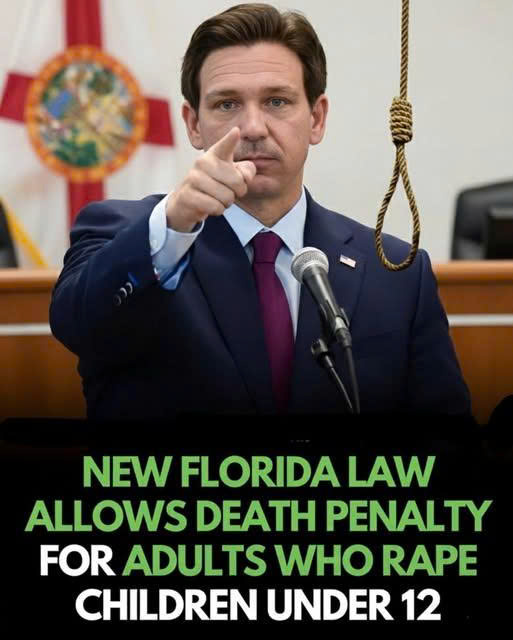
With the stroke of a pen, Florida has enacted a child protection law that pushes the boundaries of American criminal justice. The statute, which makes adults eligible for the death penalty upon conviction for sexually assaulting children under twelve, is a monumental shift in policy. It reflects an uncompromising stance from state leaders but also guarantees a protracted legal fight, as it contravenes established Supreme Court doctrine and raises profound questions about the administration of justice.
The driving force behind the law is a powerful sentiment: that certain crimes are so egregious they demand the most severe response available. Supporters, including the bill’s legislative sponsors and the governor, contend that the irreversible harm inflicted on a child’s psyche is comparable to the loss of life. They believe the death penalty is a just and proportional punishment, serving both as societal condemnation and a potential deterrent. This perspective taps into a widespread and visceral demand for accountability in the face of crimes that provoke universal revulsion.
Constitutionally, the law is on shaky ground. The 2008 Supreme Court precedent in Kennedy v. Louisiana is a formidable barrier. The Court’s decision was rooted in the “evolving standards of decency” that guide the Eighth Amendment, concluding that a national consensus did not support the death penalty for non-homicide crimes. Florida’s isolated action does not establish a new consensus, but rather a pointed disagreement. This turns the law into a high-profile experiment in federalism, testing how far a state can go in defining punishment before the federal judiciary intervenes.
Critical voices highlight significant systemic risks. They argue that introducing the death penalty into these cases could undermine the justice system’s ability to protect children. The overwhelming majority of child sexual abuse is perpetrated by someone known to the victim. The finality of capital punishment may make families less likely to come forward, potentially leaving abusers in place and children at continued risk. Moreover, death penalty cases are exceptionally resource-intensive and prone to appeals, which could delay closure for victims and strain court systems.
As Florida prepares for the inevitable lawsuits, the nation watches a debate unfold that transcends legal technicalities. It is a debate about symbolism versus substance, about retribution versus prevention, and about where to draw the line in punishing the unforgivable. The law may be halted by the courts, but the questions it raises will persist. It challenges the country to examine whether expanding the ultimate punishment makes children safer or simply satisfies a deep, albeit complex, public desire for justice in its most absolute form.