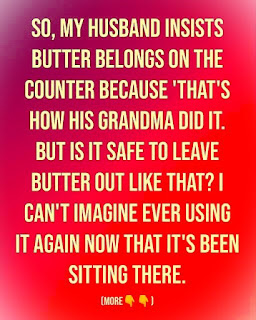
It was a simple dish on the counter, a soft square of butter catching the evening light. To my husband, it was a normal part of life, a small comfort from his past. To me, it was a hazard. What looked like a silly argument over dairy was really the sound of two different worlds colliding in our kitchen. For days, we circled each other, talking about butter when we were talking about anything but. He saw carelessness. I saw a dangerous disregard for rules. Our small disagreement grew heavy, filling the room with a tension so thick it felt like the walls themselves were waiting for the next sharp word. We had stumbled into a hidden space in our marriage, a place where old fears lived.
He wasn’t just leaving butter out. He was keeping a memory alive. His grandmother, the woman who raised him with quiet strength, always kept her butter soft. In her kitchen, it meant warmth and readiness, a promise that comfort was always at hand. To ask him to put it away felt, to him, like asking him to lock away a part of that love. He was defending a feeling of safety that had been gifted to him as a child, a sanctuary he was trying to recreate in our home. Every time he set that dish out, he was honoring a woman who taught him that tenderness could be a daily ritual.
My fear wasn’t really about germs. It was about the chaos I grew up in. My childhood had a different kind of kitchen—one with uncertainty, with spoiled food in the back of the fridge, with meals that were forgotten. I got sick once from something that had gone bad, and the memory of that vulnerability never left me. For me, safety became something I built with my own two hands, through strict routines and absolute control. A cold, hard stick of butter in the refrigerator wasn’t just a preference; it was a symbol of stability. It was my proof that my adult life was orderly, predictable, and safe from the surprises that had once hurt me.
The breakthrough didn’t come from winning the argument. It came from setting it down. One evening, exhausted from the silent battle, we finally talked. Not about butter, but about what it represented. He described the sound of rain on his grandmother’s roof, the smell of her bread, the feeling of being utterly protected. I shared the anxiety of checking expiration dates, the fear of scarcity, the need to guard against unseen threats. As we spoke, the porcelain dish between us transformed. It was no longer a weapon or a warning. It became a story—his story, my story—laid out on the counter between us.
We found our compromise in that understanding. The butter now lives in the refrigerator, a concession to my need for structure. But his grandmother’s presence is invited into our kitchen in other, deeper ways: through her recipes, his stories about her, the feeling of warmth we consciously cultivate. We chose each other over the need to be right, over the ghosts of our pasts. That choice, we realized, is what makes a home. And unlike the butter we once fought over, the trust we built from that conflict will never, ever spoil.