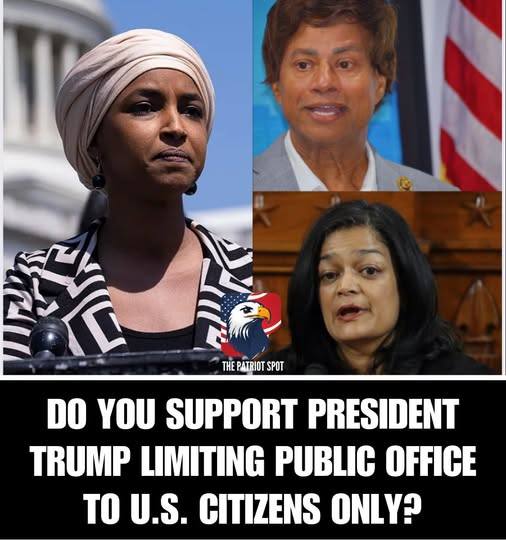
A contentious new idea has entered the American political arena: barring anyone who is not a U.S. citizen from holding any public office. Propelled by former President Donald Trump and his allies, this proposal aims to erect a clear, legal wall around positions of authority. It sparks a fundamental debate about the relationship between identity, trust, and democratic participation. Is citizenship the only reliable proof of loyalty sufficient for governance, or is this a needless barrier that contradicts the nation’s pluralistic heritage?

Those in favor argue with clarity and conviction. They see citizenship as the non-negotiable ticket for entry into the room where decisions are made. Their case rests on principles of sovereignty and security, emphasizing that in a dangerous world, the nation must be vigilant about who wields its power. The complex challenges of foreign policy, border security, and national spending, they argue, should be the sole province of individuals whose primary legal and patriotic identity is American. This position appeals to a desire for clear boundaries and a government that is demonstrably “of the citizens, by the citizens.”
However, a chorus of criticism highlights the potential costs of such a rule. Detractors see it as an affront to the contributions of immigrant communities and a rejection of practical wisdom. Many non-citizens are long-term residents, business owners, and pillars of their neighborhoods; their lived experience and expertise could be invaluable in public roles. Excluding them from office, critics say, undermines the representative nature of democracy and could make government less effective and less connected to the reality of the communities it serves. It prioritizes a document over decades of demonstrated investment.

The legal landscape adds another layer of complexity. The Constitution sets specific citizenship requirements for national offices, but intentionally left room for states to define qualifications for others. A sweeping federal ban would override that state-level discretion, sparking not just political battles but legal ones concerning states’ rights and the limits of federal power. It would standardize a single vision of eligibility across a nation built on the idea of layered, distributed governance.
This debate is about more than a rule change; it is about storytelling. One narrative insists that America must protect itself by tightening the circle of power, ensuring leaders are fully and formally assimilated. The other narrative celebrates a more open, aspirational America, where leadership can be earned through action and dedication, even before the final step of naturalization is complete. The outcome will help decide whether the path to the highest levels of American civic life is a narrow gate or an open road, defined by paperwork or by proven commitment. The answer will resonate far beyond any single election cycle.