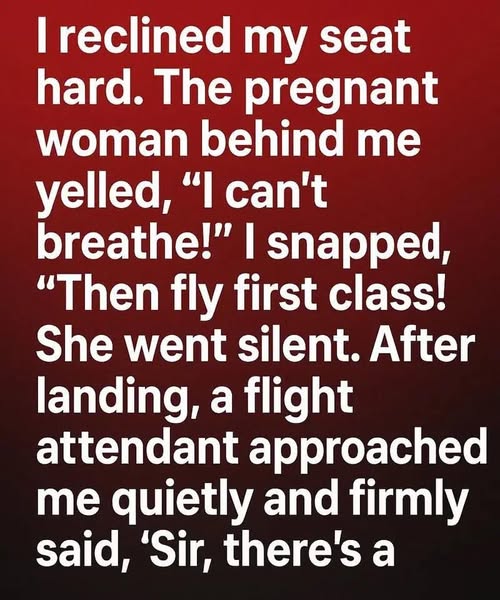
We often think of travel as a transition between points on a map, but sometimes it becomes a journey within ourselves. I boarded a flight one evening, exhausted and eager for the simple comfort of a reclined seat and a few hours of quiet. As I settled in and leaned back, a soft voice from the row behind me broke through my anticipation. A woman apologized, explaining she was having some difficulty breathing. In my fatigue, I heard an inconvenience, not a plea. I responded curtly, mumbling about the short flight and my need for sleep, and left it at that.
It was a passing moment, quickly buried under the hum of the engines, but it refused to stay quiet. A sidelong glance later revealed what my impatience had blinded me to: the woman was visibly pregnant, her hand resting on her belly, quietly enduring the discomfort I had worsened. My minor comfort had come at the direct cost of her ease. The weight of that realization settled over me, heavier than any travel fatigue. For the rest of the flight, the silence behind me felt louder than any noise, a quiet reproach to my thoughtless choice.
The true lesson came not from the woman herself, but in a gentle comment after we landed. A flight attendant approached me and, without a hint of accusation, softly noted how even a slightly reclined seat could significantly impact someone in that condition. It was not a scolding; it was an education in compassion. In that moment, I understood the difference between not doing harm and actively doing good. I had managed the former but failed entirely at the latter, choosing personal convenience over simple human kindness.
That brief exchange in a crowded aisle has since reshaped my approach to shared spaces. I realized empathy is not a grand, abstract virtue but a practical series of small decisions. It lives in the pause before we act, the moment we consider the invisible realities of those around us. Now, I ask before reclining my seat. I offer to help with an overhead bag. I share a smile with a stressed parent. These are tiny actions, but they are conscious choices to be part of someone’s solution rather than an addition to their burden.
The woman on that plane needed only a few inches of space to breathe more easily. My failure was not one of malice, but of awareness. I was so focused on my own need for rest that I became blind to a more pressing need beside me. Travel, I’ve learned, is not just about transporting our bodies from one place to another. It is a test of our humanity in confined spaces. The true destination is often a more considerate version of ourselves, and sometimes, you have to go all the way to 30,000 feet to finally look around and see it.