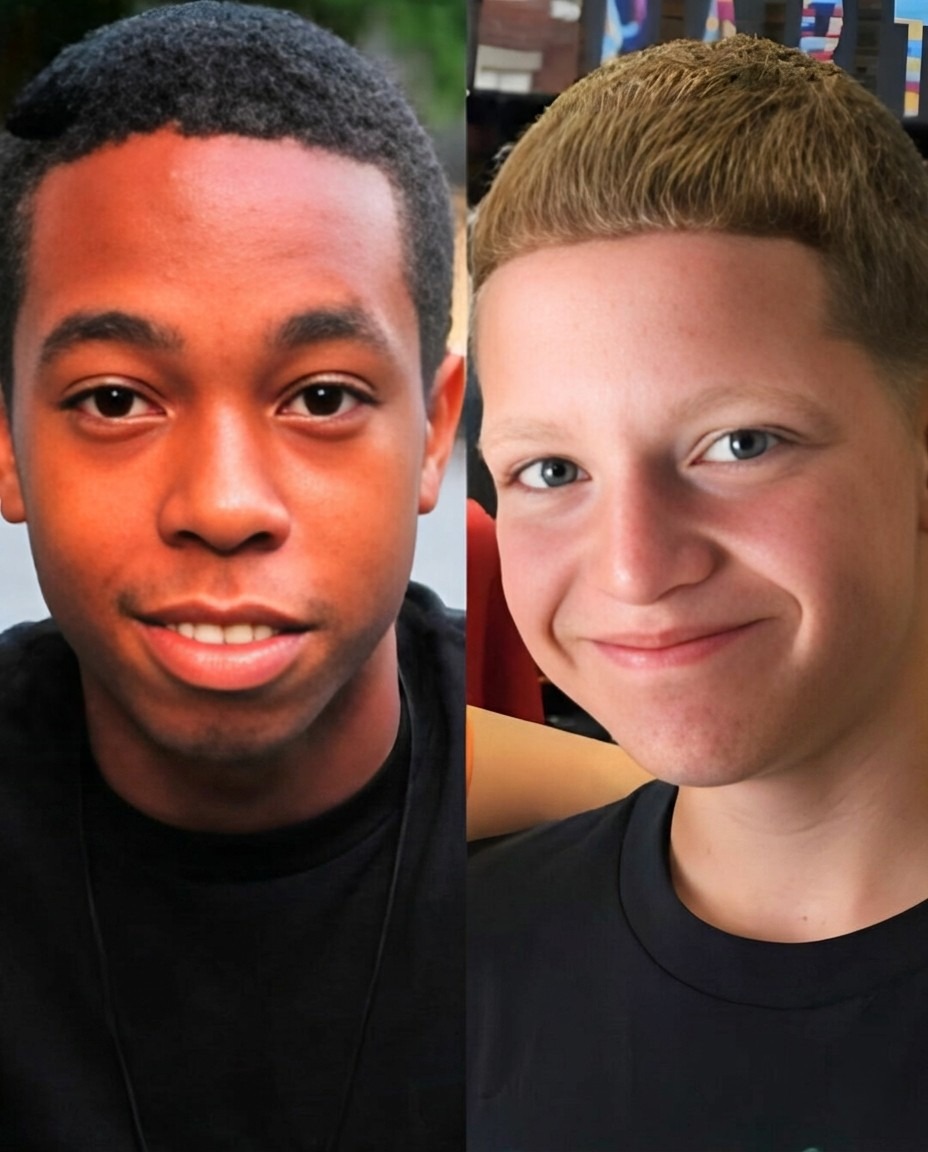
Nobody asked them to do it. Nobody trained them for it. They were just two teenage boys — the kind you pass on the sidewalk and barely notice — leaning on their bikes in the summer heat when they saw something no child should ever have to experience.
A man walked away with 5-year-old Jocelyn Rojas. She was supposed to be playing outside. She was supposed to be safe.
And in that single, awful second — while most of us would have been paralyzed, reaching for a phone, waiting for someone with a uniform and a badge to show up — these two boys made a choice.
They got on their bikes and went after him.
No hesitation. No waiting for permission. No “someone else will handle it.” Just two pairs of legs pumping hard through the streets of Lancaster, eyes locked on a stranger who had a little girl that wasn’t his.
They tracked him. They stayed close. They didn’t let him disappear into the afternoon like something that was never going to be found.
And then they confronted him.
Two teenagers. On bikes. Against a grown man who had already done the unthinkable. They forced him to stop.
He let Jocelyn go.
“The entire thing lasted only minutes.” — Lancaster Police
Minutes. Because two boys closed the distance fast enough to interrupt it. Because they were raised — by someone, somehow — to believe that other people’s emergencies are your business too.
When reporters asked one of them afterward why they did it, he gave the most deflating, most beautiful, most teenage answer imaginable.
He shrugged.
“I just felt like it was the right thing to do.”

No speech. No GoFundMe. No press conference. Just a kid who saw a little girl in danger and couldn’t make himself look away.
Jocelyn went home. She was reunited with her family. She got to grow up.
Because of two boys on bikes who hadn’t been asked, hadn’t been trained, hadn’t been paid — and did it anyway.
The Quiet Heroism of Ordinary Youth
The media often seeks heroes who fit the template: medals, accolades, certificates, or public recognition. But sometimes heroism isn’t something you train for. Sometimes it’s raw, instinctual, and completely unassuming.
These boys were not part of any neighborhood watch. They weren’t police cadets, Eagle Scouts, or volunteers at summer camps. They were two teenage boys enjoying a typical summer afternoon in Lancaster, the sun beating down on their necks, the wind rushing past them as they leaned on their bikes.
Yet, within seconds of witnessing a dangerous act, they demonstrated a level of courage that many adults lack.
The truth about heroism is often simpler than we imagine. It’s not always about preparation. It’s about empathy. It’s about the unspoken understanding that someone’s suffering demands action. And it’s about the moral compass guiding choices even in the absence of supervision or instruction.
In the end, heroism may be nothing more than the ability to recognize what is right — and act on it immediately.
The Streets That Taught Courage
Lancaster is a city like many others. Streets lined with homes, parks dotted with playgrounds, neighbors going about their routines. For most children, a summer afternoon is filled with the laughter of friends, soccer balls, and ice cream trucks. For these boys, that afternoon became something far more consequential.
As they pedaled through the city streets, the distance between them and danger closed. Each turn of the wheel was fueled by adrenaline and a singular purpose: keep the little girl safe.
It’s worth pausing to consider the stakes. A 5-year-old child in the wrong hands, streets that can conceal, strangers who can vanish into crowds. Any hesitation could have resulted in tragedy. And yet, without a second thought, these boys committed themselves to action.
This isn’t merely a story of bravery. It’s a reminder of the environments that shape our children. Somewhere in their upbringing — a mix of parents, teachers, mentors, and community — they learned responsibility, courage, and compassion.
Confronting Fear in Real Time
Most of us, when confronted with sudden danger, freeze. It’s an evolutionary response: our minds struggle to weigh options while the clock ticks relentlessly. But these boys acted in real time. They confronted fear, uncertainty, and the possibility of harm with resolve.
They didn’t carry weapons. They didn’t rely on technology. They didn’t calculate the odds of success. They acted because in that moment, the right thing was clear.
When the man was finally stopped, and Jocelyn released, the boys’ roles as protectors were complete. And yet, their humility is as remarkable as their courage. They didn’t seek praise. They didn’t expect thanks. Their reward was seeing a child safe, alive, and returned to her family.
In a world often obsessed with recognition and reward, their example is a powerful reminder that morality need not seek applause.
Ripples Through a Community
News of their heroism spread quickly. Reports highlighted their bravery, local police praised their quick thinking, and neighbors marveled at the audacity and selflessness of these two teenagers.
But beyond headlines, the story left a more profound impact. Children in Lancaster learned a lesson about courage. Adults were reminded of the value of fostering empathy in youth. And the broader community was presented with a case study in the unexpected power of ordinary citizens to affect real change.
This isn’t simply about two boys on bikes. It’s about the ripple effect of action. One act of bravery can inspire countless others, teaching lessons of courage, morality, and personal responsibility that textbooks often cannot convey.
Beyond the Headlines: Lessons in Humanity
What makes this story resonate is not just the danger that was averted. It’s the humanity displayed in a split second. The world often emphasizes fame, accolades, and high-profile recognition, but here, the most vital qualities were simple: empathy, quick thinking, and moral clarity.
The boys’ heroism challenges common perceptions. True courage doesn’t need medals. True bravery doesn’t require public validation. It exists quietly, sometimes in plain sight, sometimes in the hands of those we least expect — teenagers riding their bikes on a summer afternoon.
And it’s a reminder that the capacity to act rightly exists in each of us. When faced with emergencies, we are all called upon to decide: will we act, or will we wait? These boys chose action.
The Unseen Mentors
Behind every child capable of such moral clarity, there are often unseen mentors: parents, teachers, community members who instill values not through lectures but through living examples. Perhaps it was a parent reminding them to help others. Perhaps a coach or a neighbor demonstrating integrity and courage.
We may never know the precise combination of influences that shaped these two boys. But we do know this: they absorbed something essential. And when the moment came, they acted without hesitation.
Courage Is Contagious
The story of Jocelyn Rojas’ rescue teaches us that courage can ripple outward. The bravery of a child or teen can inspire others, not through grand gestures, but through visible, undeniable action.
Communities thrive when individuals step forward in moments of need. Whether it’s a simple act of neighborly assistance or the rescue of a child from harm, such actions remind us that humanity is stronger when we act for others.
The boys’ story is a testament to the fact that heroism is not reserved for the trained or the famous. It is available to anyone willing to act, to anyone willing to place the welfare of others above fear, hesitation, or social convenience.
What We Can Learn
- Empathy matters: Seeing someone in distress and feeling compelled to help is the root of heroism.
- Immediate action saves lives: Hesitation can cost precious moments, but decisive action can prevent tragedy.
- Ordinary people can be extraordinary: Courage does not require fame, money, or weapons.
- Values are learned early: The influence of mentors, families, and communities cannot be overstated.
- Humility enhances heroism: The boys sought no reward, demonstrating that true bravery is selfless.
A Call to Action
As readers, we are left with a question: how can we cultivate the moral courage exemplified by these two boys in our own lives and communities? How do we teach the next generation to act when it matters most, without hesitation, without expectation of reward, simply because it is the right thing to do?
Perhaps it begins with small lessons: noticing when someone needs help, offering assistance without being asked, teaching children that emergencies are everyone’s responsibility. The lessons are simple, but their impact can be profound.
The Lasting Legacy
Jocelyn Rojas grew up because two teenagers acted. The streets of Lancaster are safer today because ordinary citizens can rise to extraordinary challenges. And for those two boys, their legacy is not a trophy, a medal, or a headline — it is the knowledge that they did right in the moment it mattered most.
Their story will be told for years, not because of who they are, but because of what they did. It is a reminder that courage can exist quietly, and heroism is sometimes just two bikes, two hearts, and a decision to act.
And in that choice lies the hope of a community, the promise of humanity, and the enduring truth that doing the right thing — even when no one is watching — is always worth it.