A CHILD INHERITED
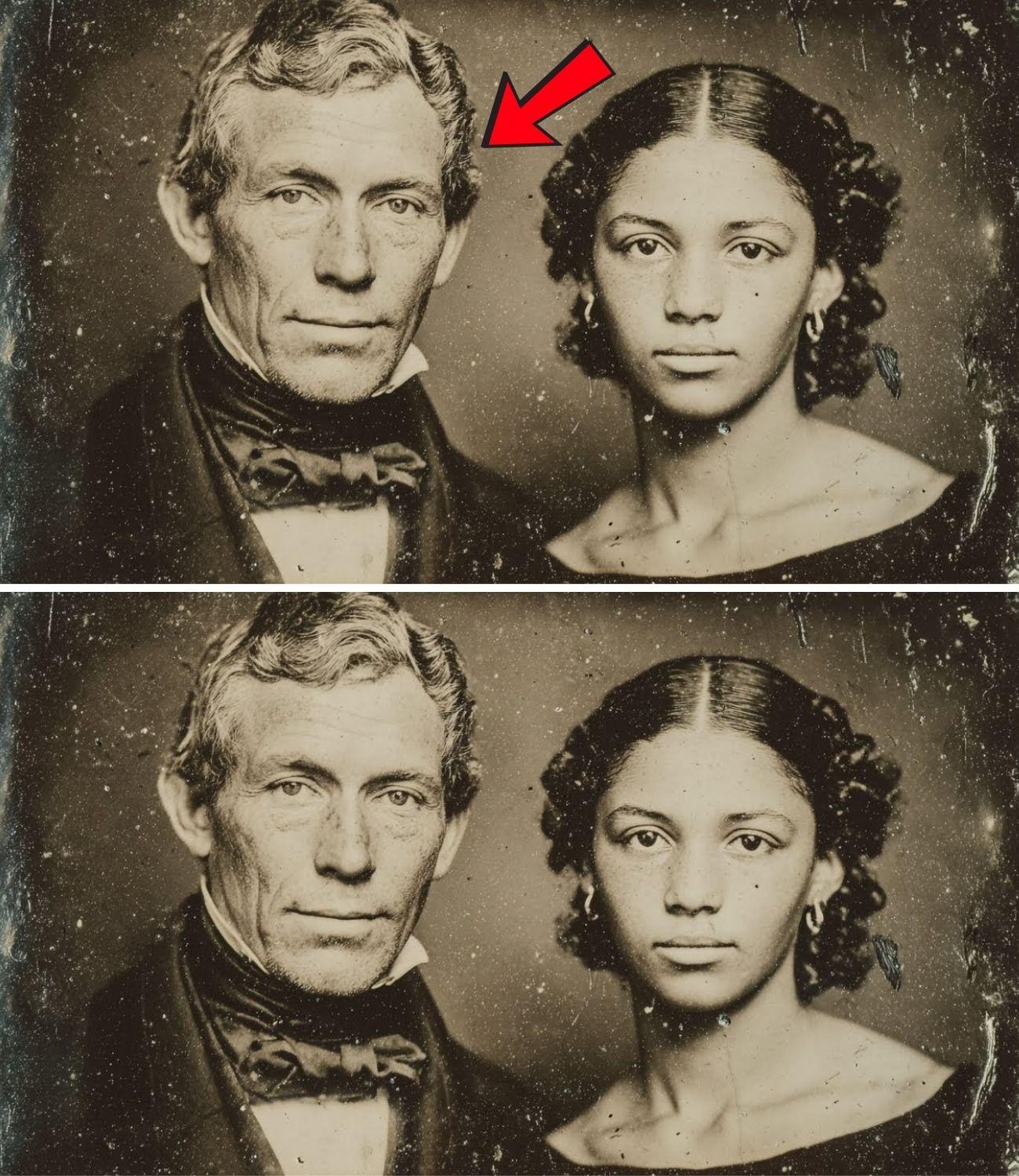
In 1782, Monticello, Virginia, was a place of order, hierarchy, and inherited authority. Thomas Jefferson, thirty-nine, had just lost his wife Martha after the birth of their sixth child. Grief weighed heavily on him, isolating him in the sprawling mansion where hundreds of slaves labored under strict schedules, tending fields, kitchens, and household tasks. Among the slaves Jefferson inherited from his wife’s dowry was the Hemings family. Elizabeth Hemings, matriarch of the family, had already endured a lifetime shaped by bondage, having borne twelve children, six of them sired by Martha’s father, John Wales. One of those children was Sally Hemings, a delicate, light-skinned girl, just nine years old at the time, half-sister to Jefferson’s deceased wife. The law, the household, and the social order now rendered her Jefferson’s property. Her arrival at Monticello marked the beginning of a life that would be lived in the shadows of privilege, power, and secrecy.
CHILDHOOD AMID PRIVILEGE AND CONTROL
Sally Hemings’ early years at Monticello were unlike those of other enslaved children. While most were sent into the fields by age seven or eight, Sally was assigned to the main house. She served as a maid, helped in the kitchen, cleaned the rooms, and assisted Jefferson’s family directly. She lived in close proximity to the white family, witnessing dinners, private conversations, and the subtleties of power. This proximity was unusual and came with its own burdens. Jefferson’s rules for the house were strict; yet Sally and her siblings were afforded privileges due to their bloodline — children of Martha’s father, Wales, the same blood that connected Jefferson’s late wife and Sally Hemings. Those privileges gave her access to spaces that other enslaved people could not enter, but also placed her in constant proximity to power and scrutiny.

JEFFERSON IN POLITICS AND EUROPE
As the years passed, Jefferson became increasingly absorbed in public life. He traveled constantly, serving as Governor of Virginia, and later as a diplomat in France. In 1784, he embarked on a journey that would last five years, far longer than the two he had originally planned. He carried with him his eldest daughter, Patsy, leaving the younger children with relatives in Virginia. Jefferson’s Parisian life was a world apart from Monticello — elegant dinners, salons filled with philosophers, and social events attended by the European elite. Yet his thoughts often turned homeward. He missed his daughters, the order of his household, and the people who kept Monticello functioning.
By 1787, Jefferson made a decision that would alter the trajectory of Sally Hemings’ life: he would bring his younger daughter, Polly, then nine, to Paris. A chaperone was required, someone trustworthy to accompany the girl during the six-week voyage across the Atlantic. At the last minute, the adult woman who was supposed to make the journey fell ill. Jefferson arranged for Sally Hemings, now fourteen, to accompany his daughter instead. Documents from the ship’s captain note her age and role in the travel, emphasizing that Sally was to act as a caretaker for Jefferson’s child — a responsibility that placed her in unprecedented proximity to Jefferson himself.
PARIS AND THE SEED OF A SECRET
In Paris, Jefferson maintained his diplomatic presence while overseeing the household. The city’s salons, architecture, and cultural vibrancy contrasted sharply with the rigid order of Monticello. Yet for Sally, Paris offered a different set of experiences and pressures. She observed the sophistication and leisure of the European elite, performing her duties with poise despite being both a child and a slave. Jefferson, forty-four at the time, was the legal guardian of her and the orchestrator of her role. While publicly she appeared merely as a chaperone, the private dynamic that would emerge between them began to take root — a power imbalance defined by age, race, and social hierarchy, but also a relationship that would extend over decades.
The environment in Paris provided a unique vantage point: Sally saw both the privileges Jefferson carried and the social expectations that constrained him. While other young enslaved people remained in servitude at Monticello, Sally experienced proximity to education, culture, and decision-making processes unavailable to most of her peers. Her presence at Jefferson’s residence and within his household’s orbit created the conditions for the long-term relationship that would remain a tightly held secret in American history.
RETURN TO MONTICELLO AND THE BEGINNING OF CHILDREN
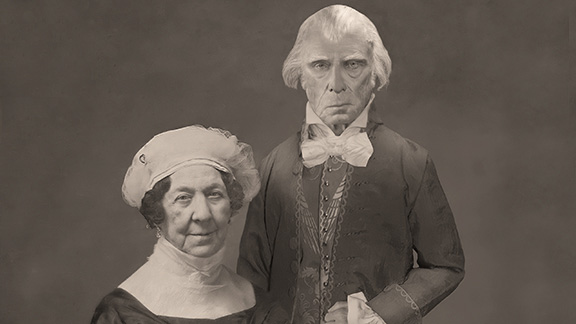
After several years in France, Jefferson returned to Monticello, bringing Sally Hemings with him. By then, she had reached an age where, under the social norms of the time, her proximity to Jefferson as both caretaker and household member created an intimate environment that historians have documented through letters, inventories, and later oral histories. Over the course of the next decades, Jefferson fathered six children with Sally Hemings. These children were born into slavery, as dictated by the laws of the time, yet were fathered by the man who had penned the Declaration of Independence. The children were light-skinned, their features strongly resembling Jefferson himself, and their presence at Monticello was a living testament to a deeply complicated intersection of power, family, and secrecy.
Sally Hemings’ role within Monticello remained largely invisible to the broader public. While Jefferson navigated his political life, she maintained her duties, raised children, and endured the extraordinary pressures of serving a household in which she occupied multiple, contradictory roles: slave, caretaker, mother to the President’s children, and half-sister to his deceased wife. Each birth, each milestone, and each household interaction occurred under a veil of discretion and unspoken compliance enforced by the institution of slavery and the social hierarchies of the time.
SILENCE AND SECRECY
For two centuries, Jefferson never publicly acknowledged the relationship. Historical records and correspondence suggested hints, but political expediency and societal norms dictated silence. The children of Sally Hemings were quietly integrated into Monticello’s household in ways that allowed them survival without public scrutiny. Jefferson’s own reputation, heavily tied to his writings and political leadership, depended upon maintaining this secret. Historians and biographers struggled for generations to untangle the private realities of Monticello from the public persona of its owner.
The secrecy endured until DNA evidence in the late 20th century confirmed the paternal link between Jefferson and Hemings’ descendants. For two hundred years, the story was obfuscated, whispered in local lore, documented in estate inventories, and occasionally noted in private correspondence, but never publicly confirmed. The revelation reshaped American historical understanding, forcing scholars to grapple with the contradiction between Jefferson’s public assertions of equality and his private actions as a slave owner and father of children by an enslaved half-sister-in-law.

LEGACY AND CONTROVERSY
The story of Thomas Jefferson and Sally Hemings is more than scandal; it is a lens into the contradictions of early American society, the pervasive power imbalances of slavery, and the complexities of human relationships within an institution designed to enforce domination. Sally Hemings survived, raised six children, and navigated a life constrained by law and circumstance yet intertwined with the most powerful man in America. Jefferson’s silence, while politically expedient, has left historians with ethical questions and moral debates that continue to this day. Their lives, intertwined through coercion, inheritance, and secrecy, reveal a darkly complex portrait of the early republic: one in which the ideals of liberty and equality existed side by side with exploitation and systemic injustice.
Monticello remains, both as a physical estate and a symbol of history’s contradictions, where the legacy of Jefferson and Hemings continues to prompt reflection, study, and debate. Through Sally Hemings’ children and descendants, the hidden narrative of Monticello endures — a testament to survival, endurance, and the human costs of a society built on stark inequality.