“Epstein Introduced Us”: FBI Files Directly Contradict Melania Trump’s Surprise White House Denial
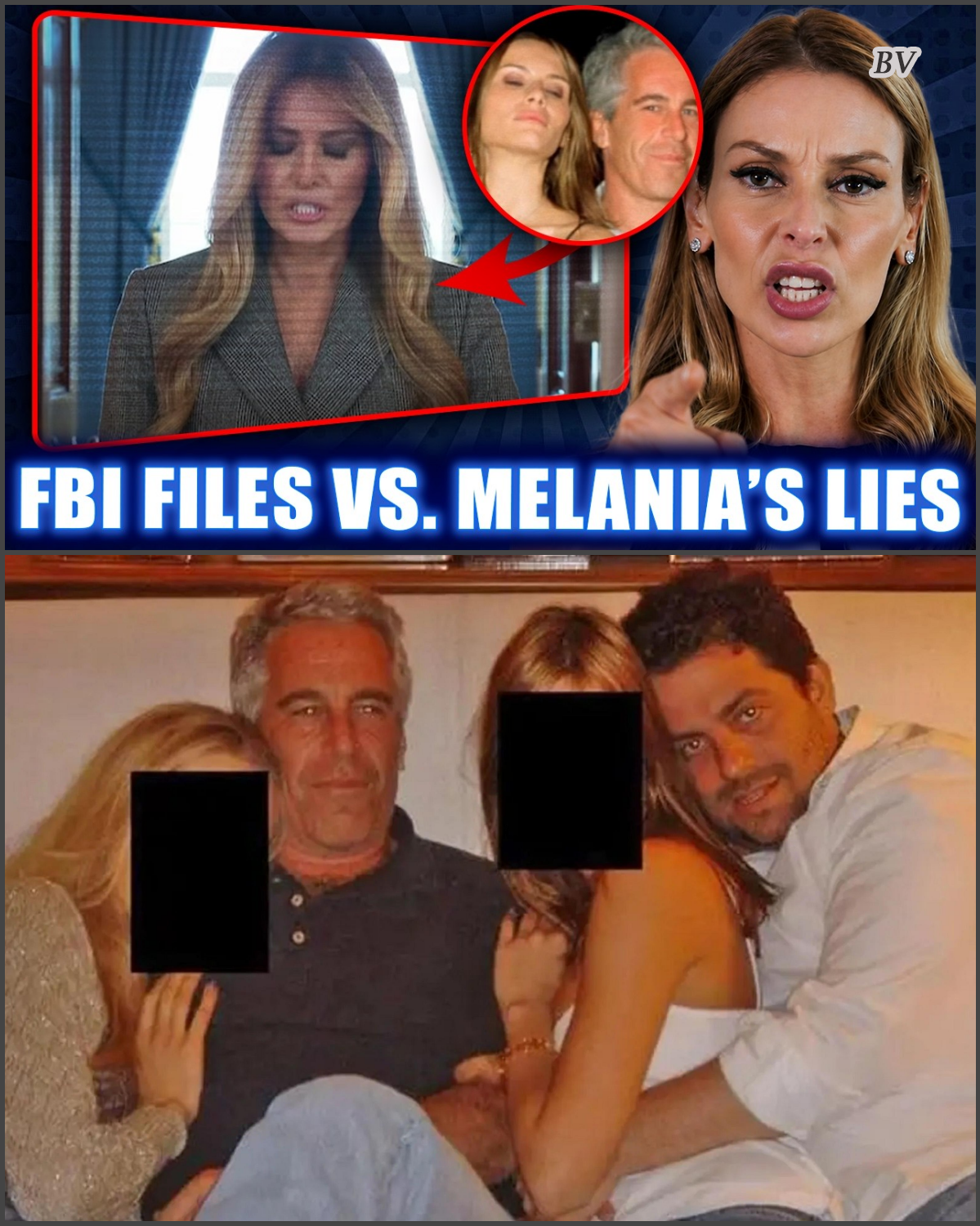
In a moment that stunned even seasoned White House reporters, First Lady Melania Trump stepped into the grand foyer on April 9th with no warning, no briefing, and no visible coordination with her husband’s staff.
She began speaking about Jeffrey Epstein — unprompted. In a carefully worded statement, she denied any meaningful relationship with the convicted sex offender or his accomplice Ghislaine Maxwell, insisting she met Donald Trump by chance at a New York party in 1998 and that her polite reply to an email from Maxwell was nothing more than casual correspondence.

What should have been a moment of damage control quickly turned into something far more volatile.
Instead of calming the growing storm around the First Lady and the Epstein files, Melania’s surprise appearance appears to have ignited fresh controversy, contradictions, and uncomfortable questions that refuse to go away.
The very next day, the timeline grew even stranger. A Brazilian model named Amanda Angaro, who claims she flew on Epstein’s private jet as a teenager and met Ghislaine Maxwell during that flight, had posted a series of aggressive, personal threats directed at Melania.
She claimed to have known the First Lady for 26 years and warned that she would “tear down” what she called Melania’s “corrupt system.”
Within hours of Melania’s public statement, every single one of those posts vanished without explanation.

The coincidence was impossible for many observers to ignore. A woman with direct alleged ties to Epstein’s modeling recruitment network issues public threats.
The First Lady responds with an unannounced denial. The threats disappear. The sequence has left investigators, journalists, and online sleuths scrambling to connect the dots.
Then came the document that turned a controversy into a full-blown crisis. Just days after Melania’s statement, a 2019 FBI witness interview surfaced as part of the ongoing Epstein file releases.
The witness, a Polish woman who worked inside Epstein’s operation in the mid-2000s, told federal agents that Jeffrey Epstein himself — not Paulo Zampoli or anyone else — introduced Melania Knauss to Donald Trump.
The same document also alleged that Epstein and Zampoli had attempted to purchase Elite Models together and that Epstein frequently attended castings at Zampoli’s agency.
Three conflicting accounts of the same meeting now exist in the public record. Melania says it was pure chance.
Paulo Zampoli, currently serving as Trump’s Special Envoy for Global Partnerships, claims he made the introduction at a party he hosted.
The FBI witness says Epstein made the introduction. They cannot all be true. The contradictions have left survivors of Epstein’s trafficking network furious.
In a blistering joint statement, fifteen victims rejected Melania’s call for new congressional hearings, describing it as “deflection” and “retraumatization.”
They accused the system of continuing to shield powerful enablers while exposing survivors to danger.
One survivor, Marina Lerta, posted a raw video response: “You want to retraumatize us… tell our stories again and then do absolutely nothing?
That sounds like a terrible idea.” The backlash has been swift and emotional. Another survivor told MSNBC she heard blame being placed on victims in Melania’s remarks.
The gap between the First Lady’s intended message and how survivors received it could not be wider.
Adding to the tension is the central figure who connects many of these threads: Paulo Zampoli.
The man who discovered Melania in Milan, helped secure her visa, and brought her to America is now a senior Trump administration official.
He is also the same man named in the FBI document as Epstein’s alleged business partner in modeling ventures.
Amanda Angaro has publicly accused Zampoli of using his influence to have her detained and deported during a custody battle.
Yet Zampoli remains in his powerful White House-adjacent role, largely silent on the growing questions.
The Justice Department’s handling of the Epstein files has only deepened public suspicion. Acting Attorney General Todd Blanch, Donald Trump’s former personal attorney, met in person with Ghislaine Maxwell in prison last year.
Shortly afterward, Maxwell was transferred to a more comfortable facility in Texas. Survivors described the move as smelling of a cover-up.
Blanch now oversees the very Epstein investigation that could produce more damaging documents involving the First Lady and her inner circle.
Meanwhile, author Michael Wolff claims to possess hours of recorded interviews with Jeffrey Epstein himself.
When he began speaking publicly about possible Melania-Epstein connections, Melania’s team reportedly hit him with a billion-dollar legal threat.
Instead of silencing Wolff, the move backfired spectacularly. He countersued under anti-SLAPP laws and launched a GoFundMe that raised over $800,000 from more than 25,000 donors.
The public’s willingness to fund a legal fight against the First Lady sent a clear message: skepticism runs deep.
The Epstein Files Transparency Act legally mandates further document releases, yet survivors and watchdogs say compliance remains incomplete.
Names have been exposed, files allegedly withheld, and the chain of custody now runs through officials with direct personal ties to the people under scrutiny.
Melania Trump’s unannounced April 9th statement was clearly designed to shut down speculation. Instead, it has done the opposite.
Every new layer — the deleted threats, the contradicting FBI witness, survivor outrage, the Maxwell prison meeting, and the billion-dollar legal threat — has made the story move faster and grow louder.
For three decades, Jeffrey Epstein operated in elite circles with apparent impunity. His death in custody and Maxwell’s conviction were supposed to mark the end of the scandal.
Yet the files keep trickling out, the contradictions keep multiplying, and the questions keep getting more uncomfortable for those in power.
Why did Melania feel the need to address Epstein so suddenly and without warning? Why did the threats against her vanish immediately afterward?
Why does an FBI document directly contradict her version of meeting her husband? And why does the man at the center of so many of these connections still hold a senior position inside the Trump administration?
These are no longer fringe conspiracy questions. They are being asked by mainstream reporters, survivors with firsthand experience, and a public that has grown deeply cynical about official narratives surrounding the Epstein case.
As more files are scheduled for release under the Transparency Act, the pressure on the White House and the Justice Department will only intensify.
The First Lady’s attempt to close the book appears instead to have opened a new and more dangerous chapter.
The survivors have delivered their message clearly: they have done their part. Now it is time for those in power to do theirs.
Whether that means full document release, sworn congressional testimony from key figures like Zampoli, or accountability for how the files have been handled, the demand for truth grows louder with every contradiction.
Melania Trump walked into the White House foyer hoping to steady the narrative. What she triggered instead was a fresh wave of scrutiny that shows no sign of slowing down.
The Epstein story, long declared dead by some, is very much alive — and it is moving straight toward the highest levels of power once again.
The coming weeks and months will reveal whether the contradictions can be explained away or whether they represent something far more serious.
For now, one thing is certain: the denial did not end the conversation. It only made the world listen more closely.