
The Day a Pair of Trousers Challenged an Entire Courtroom
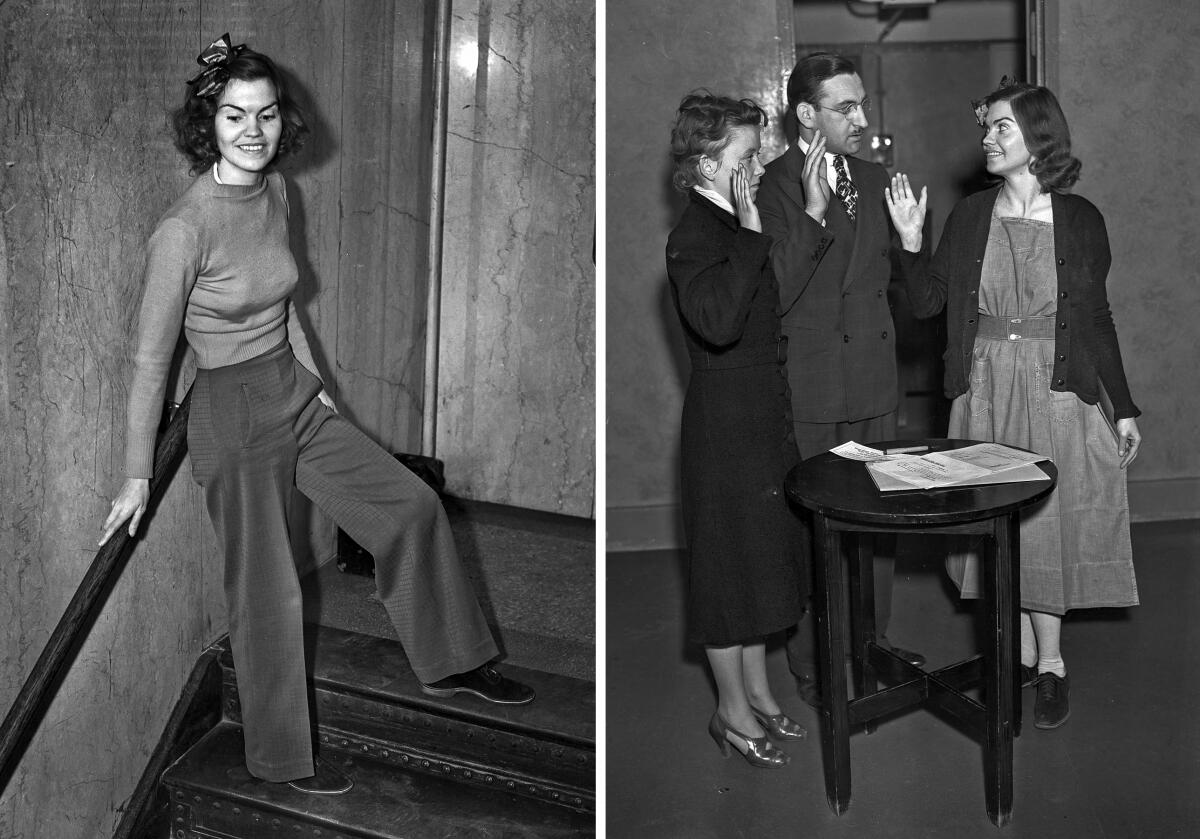
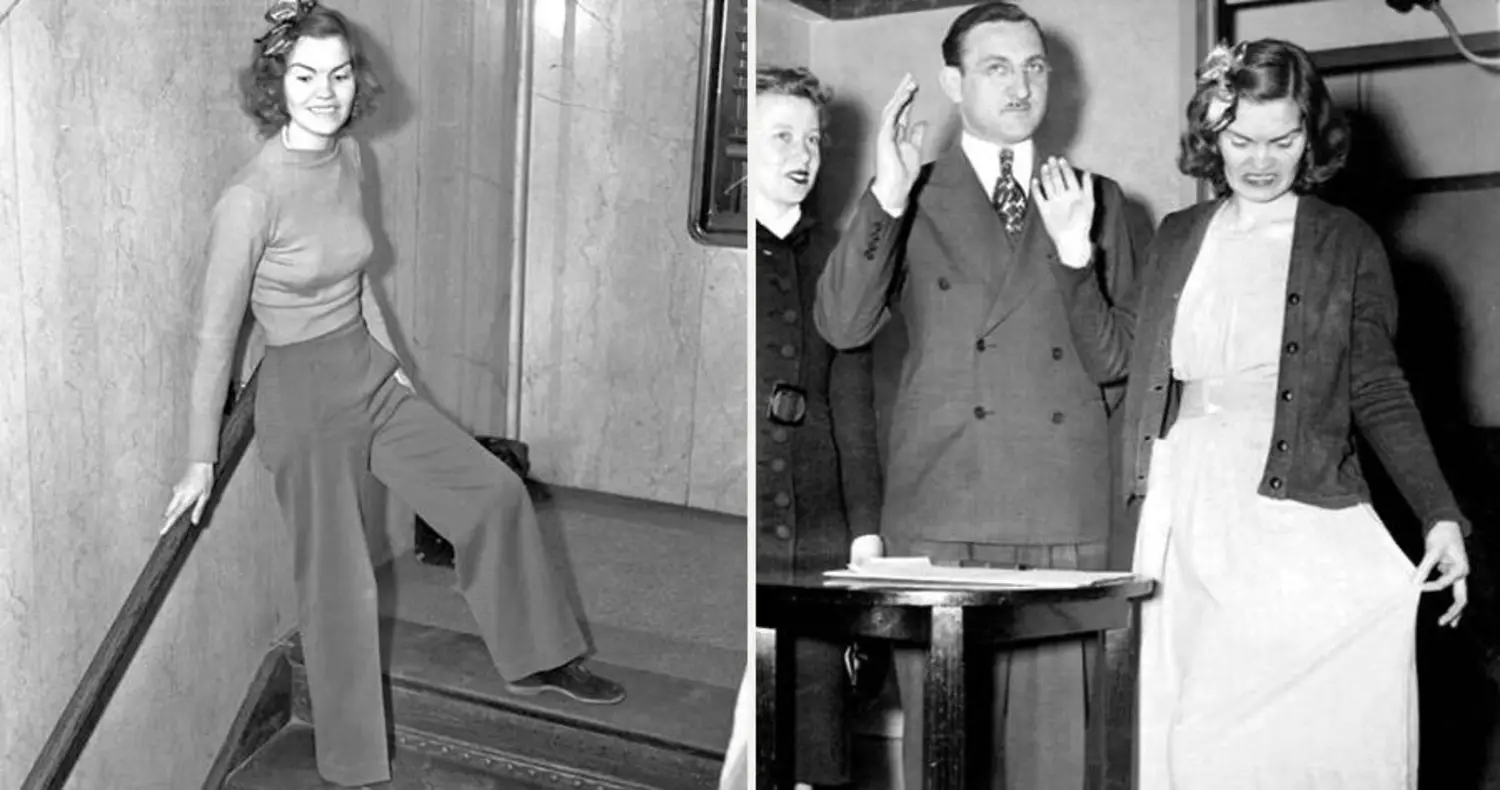
On November 9, 1938, Helen Hulick walked into a Los Angeles courtroom expecting to do something completely ordinary. She was a 29-year-old kindergarten teacher who had been called as a witness in a burglary case involving two men accused of breaking into her apartment building. She was not the person on trial. She had committed no crime. She was not there to defend herself or argue a personal case. She was simply there because she had information that could help the court understand what had happened. Like any responsible citizen, she arrived prepared to answer questions honestly and fulfill her civic duty. But before Helen ever reached the witness stand, the courtroom atmosphere changed completely. The judge’s attention was not focused on the burglary, the evidence, or the testimony she was prepared to provide. Instead, his attention went to one unexpected detail: the clothes she was wearing. Helen had arrived wearing trousers, something she had considered completely normal for years. To her, they were comfortable, practical, and appropriate. She had worn slacks since she was a teenager, especially because they allowed her freedom of movement while working as a teacher. She did not wear them to make a political statement. She did not wear them to challenge authority. She simply wore them because they were part of who she was.
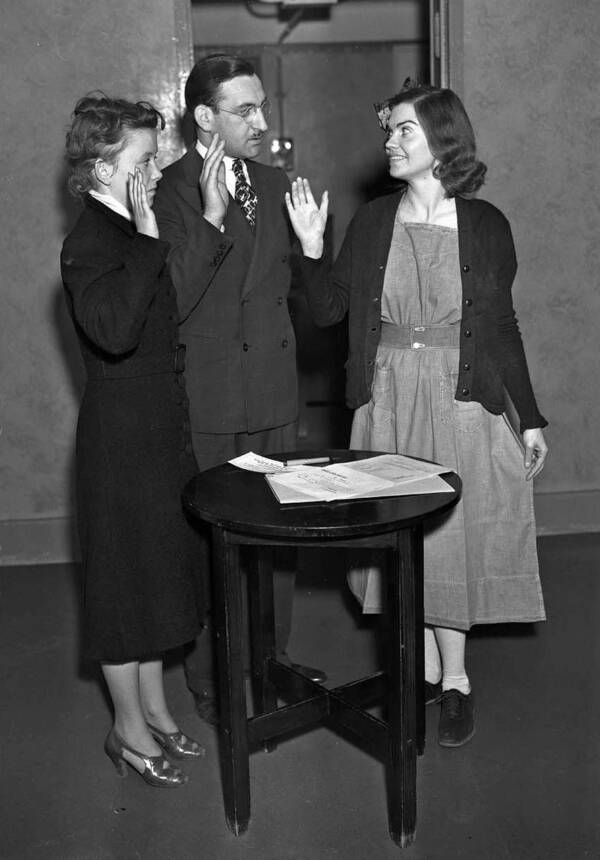
Judge Arthur S. Guerin, however, saw the situation differently. In his courtroom, he believed women should appear in traditional feminine clothing, and he considered trousers inappropriate for a female witness. Before allowing Helen to testify, he ordered her to leave the courtroom and return wearing a dress. The trial was delayed, not because of missing evidence or legal complications, but because a woman had entered a courtroom wearing pants. For Helen, the demand was confusing and frustrating. She understood that courts required respect, but she struggled to understand how her clothing affected her ability to tell the truth. She was not asking for special treatment. She was not refusing to cooperate with the legal process. She simply believed that her appearance had nothing to do with her credibility as a witness. Instead of quietly accepting the order, Helen respectfully refused to change. When she returned several days later wearing the same type of clothing, the judge repeated his demand and warned her that she could be punished for contempt of court if she continued to appear dressed that way. At that moment, Helen faced a decision that would define her place in history. She could change her clothes, avoid conflict, and continue with her normal life, or she could stand by her belief that she had done nothing wrong. For many people, the safer choice would have been obvious. But Helen understood that the issue had grown beyond a simple disagreement about fashion. It had become a question of whether someone could be denied the right to participate in the justice system because they did not fit another person’s idea of how they should look.
Helen chose not to apologize for being herself. Judge Guerin found her in contempt of court and sentenced her to five days in jail. She was taken away from the courtroom in handcuffs, creating one of the most unusual legal stories of the year. Newspapers across the country quickly picked up the story of the young kindergarten teacher who had been imprisoned not because she lied, broke the law, or disrupted the court, but because she refused to replace her trousers with a dress. The image of Helen being escorted away shocked many readers. Editorial writers questioned whether the courtroom had lost sight of its true purpose. A witness had arrived to provide important testimony, yet the discussion had turned entirely toward her appearance. Letters poured in from people who debated whether a judge should have the authority to control a woman’s clothing in such a way. Some supported the idea that courtrooms should maintain traditional standards, while others believed the punishment was excessive and unfair. The controversy quickly became larger than Helen herself. It became a national conversation about changing expectations for women and the growing tension between old traditions and a changing society.
A Small Courtroom Battle That Reflected a Changing America
Helen Hulick’s case arrived during a period when America was slowly transforming. In the late 1930s, women were increasingly entering workplaces, pursuing careers, and taking on responsibilities outside the traditional roles society had assigned to them. Clothing was becoming part of that transformation. For generations, dresses and skirts had been considered the expected standard for women in public spaces, while trousers were often associated with men or with specific forms of labor. But the modern world was changing. Women were teaching, working, traveling, and participating in activities where practical clothing made sense. Helen’s choice to wear trousers reflected that shift, even though she never intended to become a symbol of it.
As public attention grew, the legal question surrounding her punishment moved beyond personal opinion. The issue before the courts was not whether a judge preferred women to wear dresses. The question was whether clothing had any connection to a person’s ability to serve as a witness. Eventually, the California appellate court reviewed the case and reached a decision that changed everything. The court determined that Helen’s clothing did not affect her competence, honesty, or ability to provide testimony. Her choice of clothing was unrelated to the purpose of the trial, and therefore the contempt ruling against her was overturned. The decision allowed Helen to return to court and finally complete the testimony she had originally been called to provide. On January 17, 1939, she appeared again, this time wearing a formal evening gown. But by then, the important victory had already happened. The courtroom had been reminded that justice should focus on facts, evidence, and truth — not on whether a person matched someone else’s expectations of appearance.
History soon moved in a direction that made Helen’s struggle seem even more significant. Only a few years later, the United States entered World War II, and millions of American women stepped into roles that required practical clothing. Women worked in factories producing military equipment, built ships, supported military operations, and filled jobs that had previously been dominated by men. Trousers became a necessity rather than a controversy. What had once caused a woman to be removed from a courtroom became ordinary clothing worn by millions. The world that had criticized Helen’s choice eventually adopted it. Yet Helen’s greatest contribution would not come from the courtroom battle that made her famous. The story that truly defined her life was not about what she wore. It was about what she gave to others.
The Educator Who Turned Personal Courage Into a Lifetime of Service
After the courtroom controversy disappeared from newspaper headlines, Helen Hulick continued living her life with the same determination that had carried her through that difficult moment. She did not spend the rest of her years chasing attention or defining herself by the incident that had made her famous. Instead, she returned to the work she cared about most: education. After marrying, she became known as Helen Beebe and dedicated herself to helping children overcome challenges that many people misunderstood. Her passion eventually focused on children with profound hearing loss, and she became one of the most respected figures in speech and hearing education.
Helen understood what it felt like to be judged before being understood. She knew how damaging it could be when society focused on limitations instead of possibilities. Because of that understanding, she approached every child with patience and belief. She believed that children with hearing difficulties were not defined by what they could not do. They simply needed the right guidance, support, and opportunity. She established the Helen Beebe Speech and Hearing Center, creating a place where children and families could receive specialized assistance. For more than forty years, she devoted herself to improving communication skills, building confidence, and helping young people discover their own voices.
Her impact reached far beyond the children she personally taught. Families who came to her center carried her lessons into their communities. Professionals trained under her guidance continued her methods and expanded her influence. Many children who might once have been overlooked gained opportunities because Helen believed they deserved them. Unlike her courtroom story, this part of her life rarely appeared in national headlines. There were no dramatic photographs, no newspaper debates, and no public controversy. But the quiet work she performed every day changed far more lives than the five days she spent in jail ever could.
In 1985, Lafayette College honored Helen Beebe with an honorary doctorate, recognizing her decades of dedication to education and service. By that time, the young woman once criticized for wearing trousers had become a respected educator whose influence extended across generations. The same courage that allowed her to stand in a courtroom had guided her through a lifetime of helping others overcome barriers.
The Legacy of a Woman Who Refused to Be Defined by One Moment
Helen Beebe passed away in 1989, leaving behind a story that contained two very different chapters. The first was the story many people remembered: a young woman in 1938 who walked into court wearing trousers and refused to change, even when it cost her five days in jail. The second was the story that deserved even greater recognition: a woman who spent decades helping children communicate, learn, and believe in themselves.
Her courtroom stand became history because it represented a moment when society was forced to question old assumptions. It showed that sometimes progress begins with an ordinary person making an ordinary choice and refusing to accept that choice as wrong simply because others disagree.
But her greatest achievement was not winning an argument about clothing.
Her greatest achievement was proving that courage is not only found in dramatic moments that attract public attention.
Sometimes courage is standing quietly for what you believe is right.
Sometimes courage is spending forty years helping children find their confidence.
Sometimes courage is choosing kindness after experiencing judgment.
Many people remember Helen Hulick as the woman who went to jail because she wore pants.
But history should remember Helen Beebe as something much greater.
She was a teacher who opened doors.
A mentor who changed lives.
A woman who proved that one act of self-respect can become the beginning of a much larger legacy.
Her courtroom battle became the headline.
Her lifelong dedication became the true story.