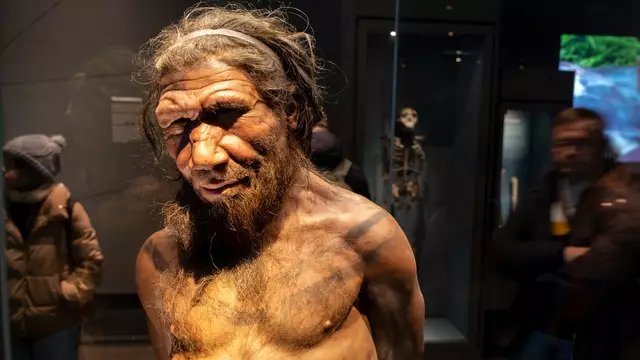
The fate of the Neanderthals has long been one of history’s great mysteries. Conventional wisdom held that these ancient humans were a separate branch on our family tree that was brutally pruned by our smarter, more aggressive Homo Sapiens forebears. But science is now rewriting this chapter of our past. Instead of a story of violent replacement, emerging evidence suggests a tale of peaceful integration. The key to solving this ancient cold case isn’t found in a new fossil dig, but in the genetic code of billions of people alive today.
The discovery that changed everything was the identification of Neanderthal DNA within modern humans. Anyone with ancestry from Europe, Asia, or the Americas carries a small but significant percentage of Neanderthal genes. This genetic legacy is the smoking gun that proves our ancestors did not simply wipe out the Neanderthals; they mingled with them. This interbreeding created hybrid families, and over time, the biological and cultural boundaries between the two groups blurred and eventually dissolved. The distinction faded away through connection, not conflict.
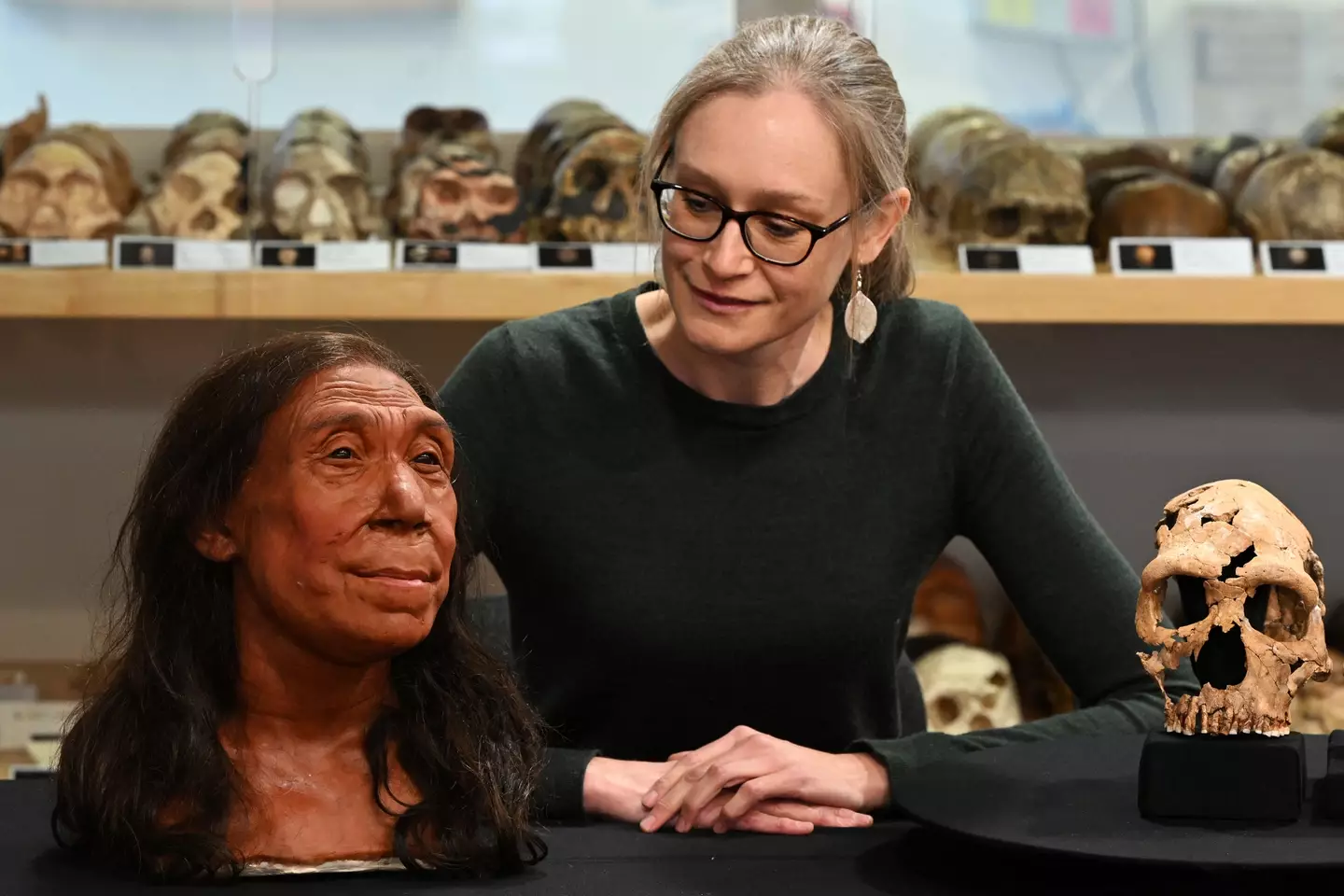
Supporting this intimate theory, a recent study published in the journal Nature used sophisticated mathematical modeling to demonstrate how this process could have unfolded. The researchers proposed that the disappearance of Neanderthals as a distinct population was not a sudden event but a gradual fading. As bands of Homo Sapiens spread across Eurasia, their encounters with Neanderthal communities led to interbreeding. Given that Homo Sapiens populations were likely larger, their genetic influence would have steadily diluted the Neanderthal lineage over countless generations.
This model provides a “robust explanation” for the demographic shift that occurred around 40,000 years ago. It accounts for the fact that Neanderthals lived in small, scattered groups, making them more susceptible to being genetically absorbed by a more numerous and mobile population. The research also aligns with revised timelines showing that Homo Sapiens left Africa in multiple waves, far earlier than once believed, creating ample opportunity for these populations to meet and mix over a long period.
.jpg)
While factors like climate instability certainly posed challenges, the new science points to assimilation as the primary reason we no longer see a separate Neanderthal species. This transforms our understanding of human evolution from a linear progression to a braided stream, where different lineages converged. The Neanderthals did not go extinct in the classic sense; they merged with us. Their legacy is not one of bones and tools in a museum, but a living inheritance carried in the cells of a significant portion of humanity, a silent testament to our deeply interconnected origins.