My 12-year-old daughter always rushed to the bathroom as soon as she came home from school. When I asked, “Why do you always take a bath right away?” she smiled and said, “I just like to be clean.” However, one day while cleaning the drain, I found something.
My daughter Lily was twelve years old when I began noticing something that didn’t feel right. Every afternoon, the moment she stepped through the front door after school, she would quietly remove her shoes, drop her backpack by the wall, and head straight to the bathroom. Within seconds, the shower was running.
No greeting. No snack. No pause.
When I asked her about it, she always gave the same answer. A polite smile. Calm eyes.
“I just like to be clean.”
At first, I accepted it. I was a single father doing his best to keep life steady after a divorce that had drained more than just money. Lily was a good kid. Quiet. Responsible. If long showers helped her unwind, I wasn’t going to micromanage her.
The bigger change in our lives had come a year earlier, when I remarried. Karen was efficient, organized, and believed deeply in discipline. She wasn’t cruel in obvious ways. She didn’t raise her voice. She didn’t insult Lily outright. But the house changed the moment she moved in. The air felt tighter. Mistakes were noticed. Silence was rewarded.
Karen volunteered at Lily’s school twice a week. She insisted it was good for bonding. Lily never complained.
The showers grew longer. Forty minutes. Sometimes nearly an hour. The water bill climbed. Karen complained about waste. I defended Lily half-heartedly, already tired of choosing sides.
Then Karen introduced a new rule. Lily was responsible for cleaning the downstairs bathroom every weekend.
“Responsibility builds character,” she said.
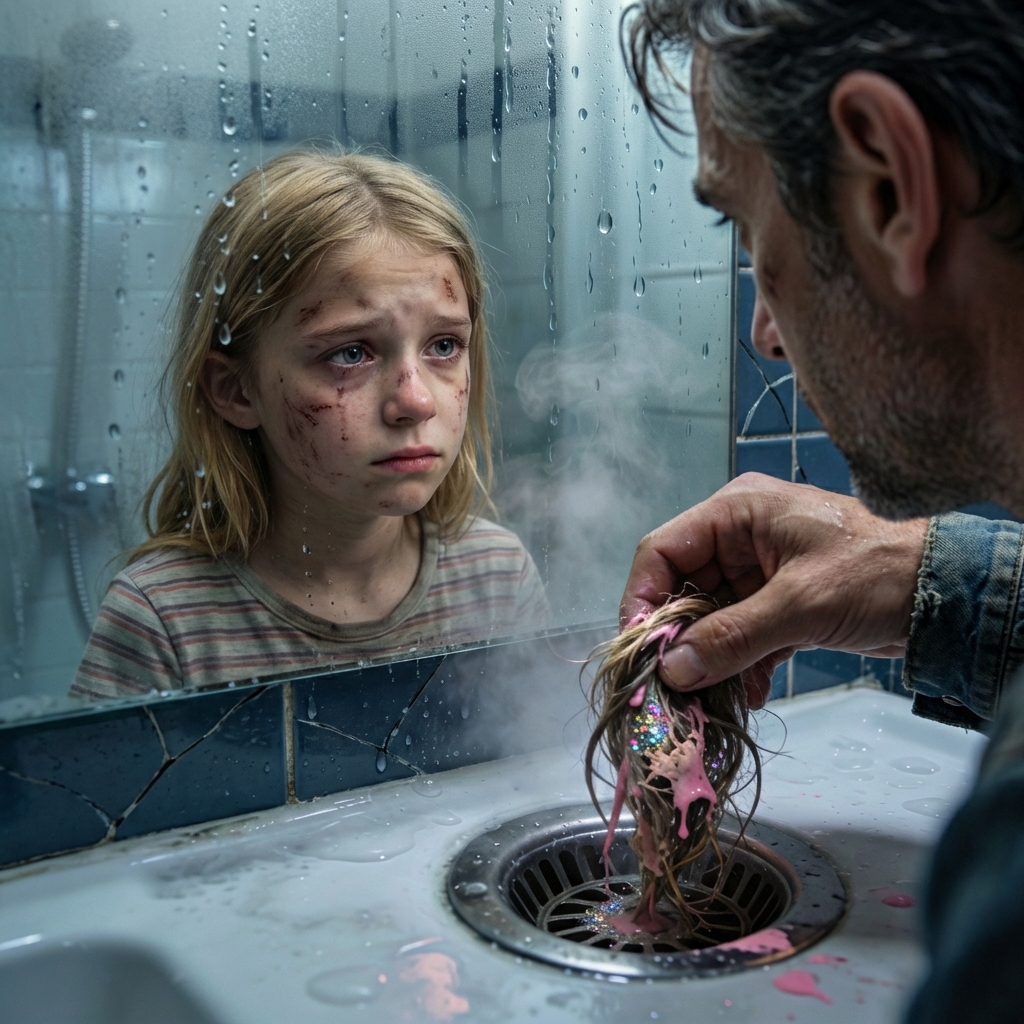
One Saturday, I decided to help. I knelt beside the tub and unscrewed the drain cover. What came out wasn’t soap residue. It wasn’t normal hair buildup. It was thick, clumped, mixed with dried pink paint, hardened glue, and flecks of glitter that caught the light.
None of it belonged to us.
As I stared at it, my chest tightened with a memory. Weeks earlier, Lily had come home with glitter stuck in her hair. She’d brushed it out quickly before dinner. I hadn’t asked.
Upstairs, the shower began running again.
That was the moment I understood. The showers weren’t about being clean. They were about removing something. And whatever it was, my daughter was washing it away every single day.
PART 2 — What She Learned To Wash Away In Silence
The next afternoon, I came home early. I didn’t announce myself. The shower was already running upstairs.
When Lily finally came down, her skin was flushed from the heat. Her hair was damp, neatly brushed. She avoided my eyes.
I showed her what I’d found in the drain. I didn’t raise my voice. I didn’t accuse. I just waited.
Her shoulders collapsed.
“I didn’t want to make things worse,” she said quietly.
What followed came out slowly. Carefully. Like something fragile she’d been holding together alone.
Karen had been supervising Lily during art club and after-school activities. She never hurt Lily outright. She used accidents. Spilled paint during art class, always on Lily. Slime smeared into her hair during science projects. Glue brushed onto her sleeves and backpack, left to dry before Lily could react.
Other kids watched. Some laughed. Some stayed silent.
Karen always had an explanation.
“She’s clumsy.”
“She needs to be more careful.”
“Cleanliness matters.”
Then came the notes. Small slips of paper left in Lily’s locker on volunteer days. Nothing threatening. Just reminders.
Be tidy.
Clean girls are respected.
Don’t embarrass me.
Lily learned quickly. She stopped crying. She stopped asking for help. She learned to erase everything before coming home. The showers weren’t comfort. They were survival.
That night, I confronted Karen.
She laughed first. Then she cried. Then she accused Lily of lying for attention. She told me I was choosing my child over my marriage, as if that were a betrayal.
The argument escalated fast. Years of avoidance cracked open in minutes.
Karen packed a bag and left that night.
Upstairs, Lily showered again. Longer than ever. Not because she was dirty, but because the habit had become armor. And I knew removing one person wouldn’t instantly undo the damage already done.
PART 3 — After The Door Finally Closed Behind Her
Karen’s absence didn’t fix everything. The house was quieter, but Lily still rushed to the bathroom every afternoon. The rule was gone, but the reflex remained.
I took time off work. I stayed home after school. I sat with Lily without forcing conversation. Some days we talked. Some days we didn’t. Both mattered.
I reported everything to the school. There was an investigation. Quiet. Controlled. Karen resigned from volunteering “for personal reasons.” That was all.
Lily struggled more with what never happened than what did. There was no apology. No accountability. Just silence.
One afternoon, months later, Lily came home and didn’t go upstairs. She sat on the couch instead, shoes still on, staring at the wall.
It felt monumental.
The showers shortened. The glitter disappeared. The drain stayed clean.
Healing didn’t arrive dramatically. It came in small moments. A skipped routine. A laugh that sounded lighter. A day when Lily forgot to scrub her hands raw.
I learned something I wish I’d understood earlier. Harm doesn’t always announce itself. Sometimes it hides behind discipline. Behind authority. Behind adults who know exactly how far they can go without being questioned.
A year later, I sold the house. We moved somewhere smaller. Quieter. A place without history embedded in the walls.
PART 4 — The Things Children Learn When Adults Look Away
I used to think betrayal required a single act. One moment you could point to and say, this is where everything broke. I was wrong.
Betrayal can be a pattern. A series of small decisions made by someone who understands power and knows how to use it quietly.
Lily doesn’t define herself by what happened. She learned early that survival doesn’t always look dramatic. Sometimes it looks like washing paint out of your hair and smiling anyway.
I carry guilt. Not for what I didn’t know, but for how long I accepted discomfort as normal. For mistaking silence for peace.
Today, Lily is older. She still likes long showers. Some habits don’t disappear completely. But now they are choices, not defenses.
If this story feels familiar, it’s because things like this happen more often than we admit. They slip through cracks. They’re minimized. They’re dismissed as misunderstandings.
We don’t live in fear anymore. We live attentively. And that difference matters.
Some stories don’t need outrage to be real. They just need to be seen.