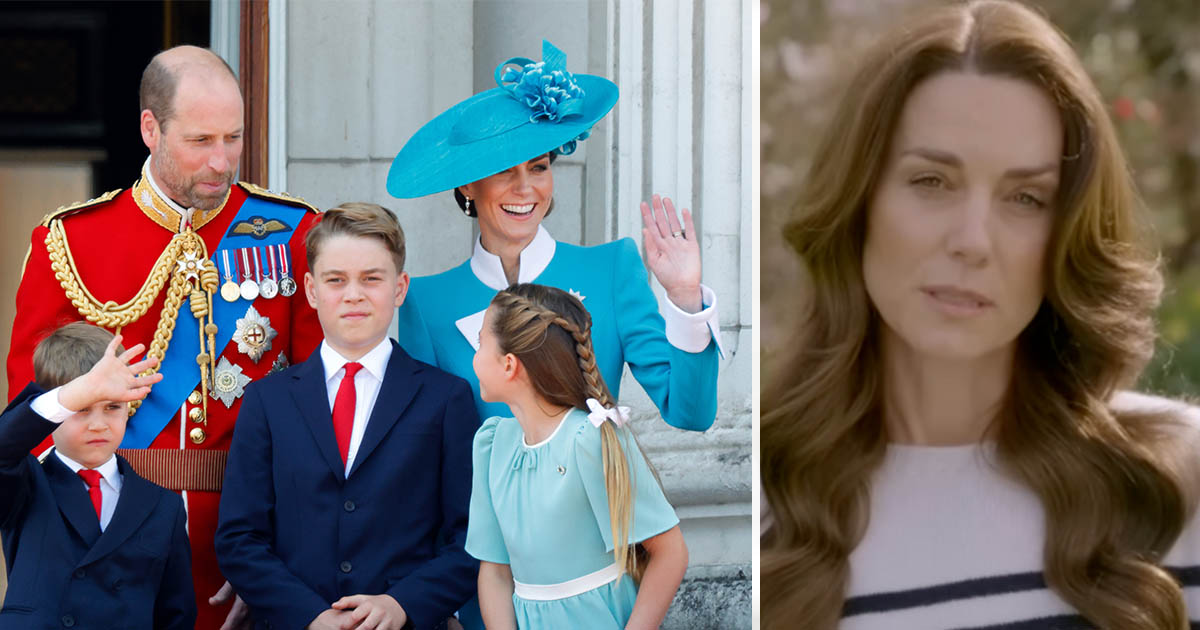
When a parent faces a serious illness, the entire family embarks on an unexpected and daunting journey. For the Prince and Princess of Wales, this personal challenge unfolded in the most public of arenas. Following Kate’s courageous announcement of her cancer diagnosis in March of last year, the family retreated from the spotlight to focus on what truly mattered: her recovery and the well-being of their children. The world has since learned that the Princess is in remission, a cause for celebration, but the story of how they sheltered and guided Prince George, Princess Charlotte, and Prince Louis through this time is a powerful lesson in parenting.
In her initial video message, Kate Middleton was remarkably candid about the family’s process. She revealed that a significant part of her recovery involved taking the time to explain the situation to her children in an age-appropriate manner. The need to manage this privately for the sake of their young family was her and William’s top concern. She emphasized the importance of reassuring them of her well-being and her path to getting stronger every day, a message of hope tailored for young ears grappling with a frightening reality.
Recently, Prince William expanded on this private chapter, offering a deeper understanding of their approach. While promoting his Earthshot Prize initiative in Brazil, he spoke about the “difficult questions” that arose from George, Charlotte, and Louis. He shared that their family strategy was rooted in radical honesty. They made the conscious choice not to shield their children from the truth, but to include them in the process, explaining both the good and the bad news as it unfolded.
William’s insight reveals a parenting philosophy built on trust and communication. He believes that confronting challenges together and talking through why certain things happen is what strengthens a family unit. By acknowledging that their children might feel upset and that some questions don’t have clear answers, he normalized the complex emotions that accompany such a trial. This approach demonstrates a profound understanding that children need context and reassurance, not just protection from difficult facts.
The Wales family’s experience, though unique in its setting, is deeply relatable. It shows that regardless of status, the core principles of navigating a family health crisis remain the same: leaning on one another, prioritizing open dialogue, and finding strength in unity. Their story is not just one of royal duty, but of a mother and father working tirelessly to provide their children with stability, honesty, and love during one of life’s most difficult storms.