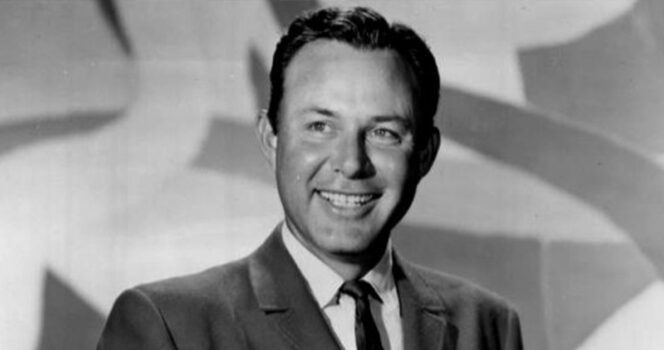
In the landscape of American music, certain songs possess the rare power to transcend genre and generation. Jim Reeves’ 1960 classic, “He’ll Have to Go,” is one such masterpiece. More than just a hit, it was a cultural event that effortlessly dissolved the boundaries between country and pop music. With its smooth, velvet-like vocals and understated orchestration, the track didn’t just climb the charts—it redefined what a country song could sound like and introduced the world to the sophisticated style of “Gentleman Jim.”

The song’s origins are as compelling as its melody. It was born from a snippet of overheard conversation, a moment of real human drama that songwriters Joe and Audrey Allison transformed into a universal story. The opening line, a gentle request to “Put your sweet lips a little closer to the phone,” immediately draws the listener into an intimate, late-night scene of longing and romantic negotiation. This raw emotional core, wrapped in a polished musical arrangement, gave the song its widespread appeal.
The production, helmed by the legendary Chet Atkins, was a study in subtlety. Instead of a grand arrangement, the focus remained squarely on Reeves’ rich baritone voice, which conveyed both confidence and vulnerability. This minimalist approach created an atmosphere of quiet intensity, making every listener feel as though they were eavesdropping on a private and poignant moment. The formula proved irresistible, propelling the song to the top of the country charts and to a formidable number two position on the pop charts.
This crossover success was a significant moment for country music, proving its potential to captivate a mainstream audience without sacrificing its soul. Reeves became an international ambassador for the Nashville Sound, a more refined and orchestral style that he helped pioneer. His untimely death in a 1964 plane crash tragically cut short a brilliant career, but it cemented his status as a legendary figure whose influence would endure long after he was gone.
The legacy of “He’ll Have to Go” is a testament to its timeless quality. It has been covered by countless artists and featured in films and television, continually finding new audiences. The song demonstrated that the most powerful connections are often made through simplicity and genuine emotion. Jim Reeves left behind a blueprint for artistic integrity, showing that a heartfelt plea, delivered with grace and sophistication, can indeed become a song for the ages.