My husband’s 5-year-old daughter barely ate. “She’ll get used to your cooking,” he’d say. But the night he left on a business trip, she whispered, “Mama, you need to know about the salt.” Confused, I listened as she told me a secret about her late mother’s “special ingredient.” I immediately called the police ….
The autumn winds in Seattle have a way of getting under your skin, a damp chill that settles deep in your bones and refuses to leave. It was late October when I stood on the porch of the Victorian house I now called home, watching the dead leaves swirl across the driveway. They skittered over the pavement like nervous whispers, mirroring the anxiety that had taken permanent residence in my chest.
My name is Rachel Harrison, and just six months ago, I believed I had finally stepped into the fairy tale I had been denied for so long.
I had spent my thirties as a medical clerk at the local General Hospital, a job that required precision, patience, and a high tolerance for other people’s pain. My life was a series of quiet routines: filing records, organizing schedules, and returning to a lonely apartment. I had made peace with my solitude, especially after a fertility specialist shattered my hopes of bearing children. “It would be very difficult,” he had said, a polite medical euphemism for “impossible.”
Then came Michael Harrison.
We met at a business meeting between the hospital administration and his pharmaceutical company. Michael was the sales manager—charismatic, articulate, with a calm demeanor that felt like a safe harbor. He had warm eyes and a smile that made you feel like the only person in the room. When I learned he was a widower raising a five-year-old daughter alone, my heart didn’t just break for him; it opened.
“Emma needs a mother,” he had told me during our third date, his hand covering mine across the white tablecloth of Le Pichet. “And when I see you with her… I see hope.”
Those words were the key to a lock I thought had rusted shut. We married in a small, intimate ceremony at a chapel in Queen Anne. Emma, with her cascading blonde hair and large, soulful blue eyes, looked like a porcelain doll in her white flower girl dress. She walked down the aisle carrying a bouquet of baby’s breath, silent and ethereal.
But now, three months into the marriage and two months into living together, the fairy tale was fraying at the edges.
“Good morning, Emma!” I chirped, forcing a brightness into my voice that I didn’t feel.
It was 7:00 AM. The kitchen smelled of vanilla and sizzling butter. I had woken up an hour early to make pancakes—fluffy, golden discs stacked perfectly, topped with fresh berries and a dusting of powdered sugar. It was the kind of breakfast that belongs in a magazine.
Emma sat at the large oak table, her legs swinging listlessly. She looked at the plate, then at me, her blue eyes devoid of the childish spark I yearned to see.
“Good morning,” she whispered, barely moving her lips.
She picked up her fork, pushed a blueberry to the side of the plate, and then put her hands in her lap. She took a tiny sip of orange juice. That was it.
“Emma, honey, you need to eat a little more,” Michael said, not looking up from his tablet. He was dressed in his crisp navy suit, the picture of corporate success.
Emma flinched. It was a small movement, a tightening of her shoulders, but I saw it.
“However,” Michael continued, his voice dropping an octave, laced with a sudden, sharp harshness, “wasting food is a bad habit.”
The air in the kitchen grew heavy. Emma seemed to shrink into herself, becoming smaller, trying to disappear into the high-backed chair.
“It’s okay, Michael,” I interjected quickly, placing a hand on his shoulder. “It’s okay, Emma. You don’t have to force yourself if you’re not hungry.”
I smiled gently at her, desperate for a connection. Emma shook her head, her eyes darting to her father before she slid off the chair. “May I be excused?”
Michael sighed, a sound of profound irritation. “Go.”
As Emma hurried out of the room, Michael turned to me, his expression softening into an apologetic grimace. “I’m sorry, Rachel. She still hasn’t gotten used to the change. She was so accustomed to Jennifer’s cooking… my late wife. She’s just confused by the new flavors.”
Jennifer. The ghost in our machine. Michael rarely spoke of her, other than to say she died suddenly of an aggressive illness. He claimed it was too painful to discuss details, and I, respecting his grief, never probed.
“I wonder if my cooking just doesn’t suit her taste,” I said, my voice trembling slightly. “I’ve bought three new cookbooks this week.”
“Time will solve it,” Michael said, standing up and kissing my cheek. It was a perfunctory kiss, lacking the heat of our courtship. “You are very kind, Rachel. You’ll make a good mother. She just needs to accept that things are different now.”
He grabbed his briefcase and left. I stood alone in the kitchen, staring at the untouched stack of pancakes. The syrup had soaked into them, turning them into a soggy, unappetizing mess.
I felt a cold prickle of unease on the back of my neck. It wasn’t just picky eating. I had seen children be picky; I worked in a hospital, I saw stubborn kids every day. This was different. When I looked at Emma, I didn’t see defiance.
I saw fear.
What was a five-year-old girl so afraid of that she would starve herself in a house full of food?
The pattern became a suffocating routine. Every meal was a battleground where no weapons were drawn, but the casualties were mounting.
I threw myself into research. I finished my shifts at the hospital and went straight to the library or the grocery store. I researched “child-friendly menus,” “psychological impacts of stepparenting,” and “nutritional deficits in minors.”
I made spaghetti with homemade marinara sauce, cutting the vegetables so small they were invisible. Untouched.
I made adorable bento boxes with rice shaped like pandas. Untouched.
I baked chocolate chip cookies that filled the entire house with the scent of comfort. Emma sniffed the air, her eyes lighting up for a second, before a mask of indifference slammed down over her face.
“Sorry, Mama. I’m not hungry.”
That phrase. Sorry, Mama. She called me Mama, which made my heart soar, but she said it with the tone of someone apologizing for a sin.
Two weeks later, the call came from the daycare.
“Mrs. Harrison?” The teacher’s voice was hesitant. “We’re concerned about Emma. She left her lunch untouched again today. And… she seems lethargic. She didn’t want to play during recess.”
“Does she have any specific dislikes?” I asked, gripping the phone receiver until my knuckles turned white.
“No,” the teacher said. “We offered her crackers, fruit, even a juice box. She just shakes her head. Rachel… she’s losing weight.”
That night, I decided to confront Michael properly. He was in the living room, watching the evening news, a glass of scotch in his hand.
“Michael, we need to take her to a doctor,” I said, standing between him and the television. “She hasn’t eaten a proper meal in over a week. She’s going to get sick.”
Michael didn’t blink. “You’re being neurotic, Rachel.”
“Neurotic?” I bristled. “The school called. She’s lethargic. Look at her, Michael! Her clothes are hanging off her.”
“Children are like that,” he said dismissively, swirling the amber liquid in his glass. “They go through phases. When she gets truly hungry, she’ll eat. Animals don’t starve themselves, and neither do children.”
“She is not an animal!” I was about to raise my voice when I heard the creak of a floorboard.
Emma was standing in the doorway of the living room, wearing her oversized pajamas. She looked like a specter, her skin pale and translucent.
“Mama…” her voice was a rasp. “I want some water.”
I rushed to the kitchen, pouring a glass of mineral water with trembling hands. When I handed it to her, I felt the vibration of her body. She was shaking.
“Here, sweetie,” I whispered.
She drank it greedily, water spilling down her chin. Michael didn’t even turn his head.
The next day, I left work early. I didn’t ask Michael for permission; I just took Emma to the pediatrician.
The waiting room was filled with the noise of coughing kids and cartoons blaring from a TV, but Emma sat on my lap, silent as a statue.
“Dr. Evans,” a young woman with a kind face, examined Emma thoroughly.
“No physical abnormalities,” Dr. Evans said later, sitting across from me in her office while Emma played listlessly with a wooden block in the corner. “Her weight is in the 10th percentile, which is concerning but not critical yet. It looks like stress.”
“Stress?”
“A mother’s death is a massive trauma,” Dr. Evans explained gently. “And then a new marriage, a new mother figure… there can be an unconscious resistance. It’s a control mechanism. Eating is the one thing she can control.”
“But I love her,” I pleaded, tears stinging my eyes. “I treat her like my own flesh and blood.”
“I know,” Dr. Evans patted my shoulder. “Build trust. Don’t force food. It will take time.”
We went home. Michael was already there, his car parked in the driveway.
“What did the doctor say?” he asked as we walked in.
“Stress,” I said curtly. “No physical blockage.”
Michael looked relieved—too relieved. “See? I told you. You worry too much.”
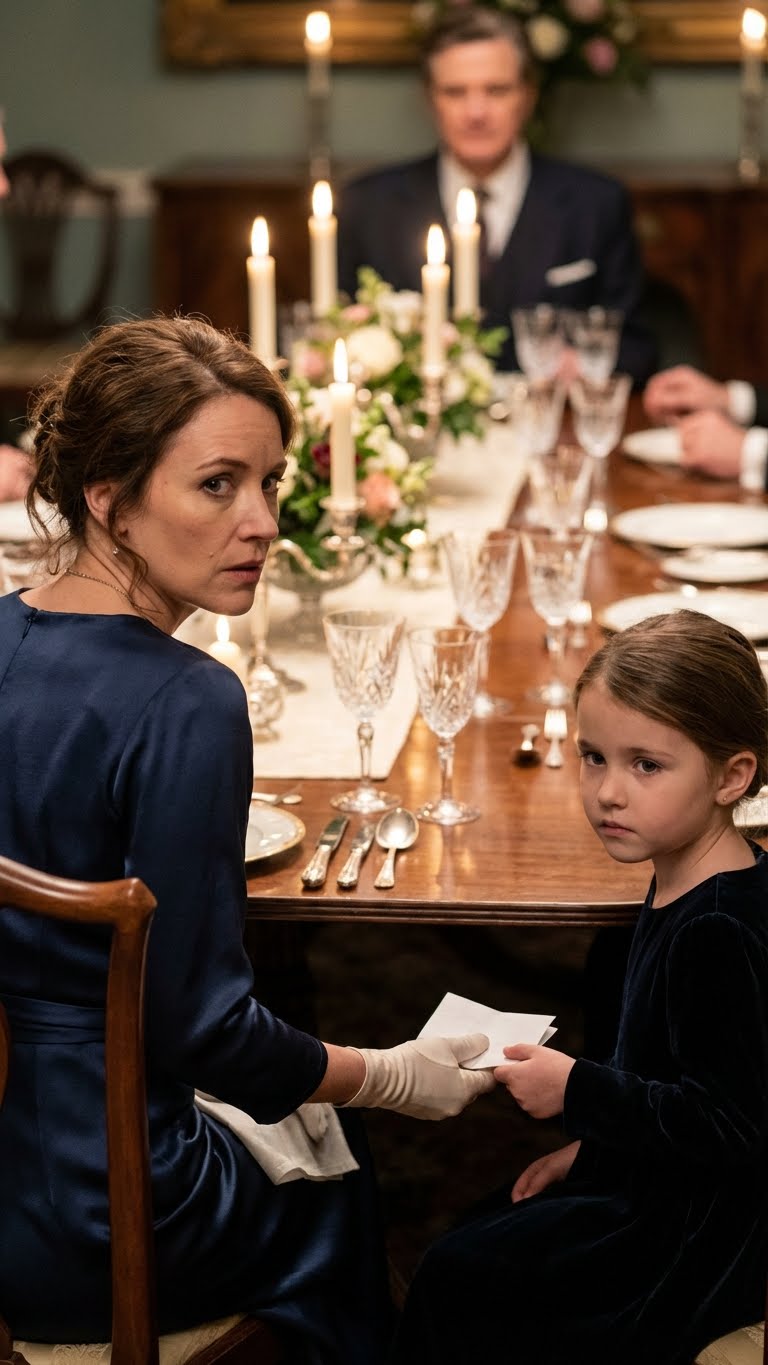
Dinner that night was chicken rice and corn soup. Comfort food.
“Emma, please,” I begged, kneeling beside her chair. “Just one bite. For Mama?”
Emma looked at the spoon. Her lower lip trembled. Tears pooled in her large eyes. “Sorry, Mama. I’m really not hungry.”
Bam!
Michael slammed his hand on the table. The silverware clattered loudly.
“Enough, Emma!” he roared.
I jumped. Emma clung to the armrests of her chair, her face draining of all blood. It was the first time I had seen Michael truly angry. His face was contorted, his eyes bulging.
“Rachel slaved over this stove for you! It is rude to refuse it!”
“Michael, stop!” I grabbed his arm. The muscle beneath his shirt was hard as rock. “Shouting will only make it worse!”
He breathed heavily through his nose, staring at his terrified daughter. Then, as quickly as the storm arrived, it vanished. He composed himself, adjusting his cufflinks.
“Sorry,” he muttered. “But it’s not good to waste your cooking.”
He reached out and pulled Emma onto his lap. The girl went stiff as a board.
“Emma,” he said, his voice dropping to a terrifyingly smooth purr. “Don’t you want to eat because it’s different from Daddy’s cooking?”
Emma nodded, a tiny, jerky movement.
“Is Mama’s cooking… different?”
Emma nodded again.
“What kind of food did Jennifer make?” I asked, desperate for a clue. “Michael, you have to tell me. Was it spicy? Bland? Did she use specific herbs?”
Michael looked at me, his eyes dead. “I don’t remember. It was just… ordinary. Simple.”
“Then I’ll make simple,” I vowed.
But the next day, the salt rice balls went uneaten.
The plain udon noodles went cold.
The buttered toast grew stale.
“Sorry, Mama. Not hungry.”
Two weeks passed. I was breaking. I cried in the bathroom at work. I cried in the shower. And one night, I cried in the kitchen over a tray of untouched meatloaf.
Michael walked in, patting my back. “Rachel, isn’t there a problem with your cooking?”
I spun around. “What?”
“Emma never refused to eat like this before,” he said coldly. “Maybe you’re just not… domestic. Maybe you should try to be more like Jennifer.”
“But you won’t tell me anything about her!” I screamed, the frustration finally boiling over. “You won’t tell me her recipes! You won’t tell me anything!”
“It’s painful to remember,” he snapped. “But for Emma’s sake, figure it out.”
He left the room.
I stood there, feeling like a failure. Was I the problem? Was my food poison to this child?
The next morning, Friday, Michael stood at the door with his suitcase.
“I’ll be back Monday night,” he said. “Three days. Regional branch visits.”
He didn’t kiss me goodbye. He just walked to his car.
Up in the window, behind the curtain, I saw Emma watching him leave. As his car disappeared around the corner, her shoulders dropped.
The monster was gone. And for the first time in months, the house felt like it could breathe.
Saturday morning dawned bright and clear. With Michael away, the oppressive atmosphere in the house lifted like fog burning off in the sun.
“Emma?” I called out softly. “What would you like to do today?”
She looked at me, gauging my reaction. “I want… to go to the park.”
It was a wish. A real, spoken desire. My heart leaped.
“Done,” I said. “I’ll pack a lunch.”
We went to Kerry Park. Emma ran. She actually ran. She pumped her legs on the swing, her hair flying behind her like a golden banner. For lunch, I had made simple ham sandwiches. I watched, holding my breath, as she picked up a triangle.
She took a bite. Then another.
“Is it… is it good?” I asked, my voice choking.
She nodded, a shy smile touching her lips. “I like Mama’s sandwiches.”
I had to look away to hide the tears. She ate. She was capable of eating. It wasn’t physical.
But that evening, as the sun set and the shadows lengthened in the kitchen, the fear returned.
We made dinner together. She helped wash the lettuce, standing on a step stool. It felt like a breakthrough. But when we sat at the table, the food sat between us like an accusation.
“Emma?”
She stared at the plate. Her hands began to tremble again.
“Sorry, Mama. I’m not hungry after all.”
“But you ate at the park!” I cried out, unable to stop myself. “Why? What is different here?”
She didn’t answer. She just looked at me with those large, terrified eyes, filled with a complex emotion I couldn’t decipher. It looked like pity.
That night, after I put her to bed, I sat in the living room, the silence of the house pressing in on me. Why? Why was she better at the park? Why did the house itself seem to trigger the starvation?
The clock struck 10:00 PM.
Pat. Pat. Pat.
Small footsteps.
I turned. Emma stood there in the dark hallway. She was trembling so violently her teeth were chattering.
“Mama?”
“Emma, sweetie, what’s wrong?” I stood up.
She walked toward me slowly, her eyes darting around the room, checking the corners, checking the shadows.
“I can only talk when Daddy isn’t watching,” she whispered.
A chill, colder than the Seattle wind, swept through me. I knelt down. “Daddy isn’t here. He’s far away. You’re safe.”
She grabbed the fabric of my sweater, bunching it in her tiny fists.
“Mama… there’s something I have to tell you.”
“Tell me.”
“The previous Mama… Jennifer… she stopped eating too.”
My blood froze. “What?”
“Daddy got angry,” Emma whispered, tears spilling over. “He said, ‘Why won’t you eat?’ Then… then Daddy started mixing white powder into the previous Mama’s food.”
The world stopped spinning.
“White powder?” I repeated, my voice barely audible.
“Emma saw it,” she sobbed. “Daddy said it was medicine. But after she ate it, the previous Mama got strange. She got sleepy. She couldn’t walk. She fell down a lot.”
“Oh my god,” I gasped, covering my mouth.
“And then… the previous Mama died.” Emma looked straight into my eyes, her gaze piercing through my soul. “Daddy said she was sick. But Emma knows. After the white powder, she died.”
She took a deep breath, her little chest heaving.
“I’m scared the new Mama will become the same way. Daddy might mix white powder into the new Mama’s food too. So Emma doesn’t eat… to show Daddy that food is bad? No… I don’t eat so…” She struggled with the words. “I want to protect the new Mama. If I don’t eat, maybe Daddy won’t put the powder in your food.”
I stared at this five-year-old girl. She wasn’t rejecting me. She wasn’t being difficult. She was starving herself to keep me safe. She thought if she refused food, she could disrupt the cycle. She was a human shield.
“Emma,” I pulled her into my arms, hugging her tighter than I ever had. “You were trying to protect me?”
She nodded against my chest, her tears soaking my shirt. “But I’m tired now… Daddy is a bad person.”
The puzzle pieces slammed together into a horrific picture. Michael’s reluctance to talk about Jennifer. The vagueness of her “illness.” The insurance. The isolation.
“Emma,” I said, pulling back and gripping her shoulders. “You are safe. I will protect you. We are going to make a phone call.”
“To who?” she asked, eyes wide.
“The police,” I said, my voice steady for the first time in months. “We have to tell them everything before Daddy comes back.”
I looked at the phone. It was our only lifeline, and Michael was due back in 48 hours.
The police arrived forty minutes later. No sirens, just a stern knock at the door.
Detective Johnson was an older man with graying temples and tired eyes. Detective Rodriguez, a younger woman with a sharp, intelligent gaze, accompanied him.
“Mrs. Harrison, please explain,” Johnson said, sitting on the edge of the sofa.
I held Emma on my lap. “My stepdaughter wants to testify about the death of my husband’s former wife.”
The room went silent.
Detective Rodriguez knelt down. “Emma, you don’t have to be afraid. Can you tell us what you saw?”
Emma hesitated, looking at me. I nodded. “Be brave, honey.”
“Daddy put white powder in the previous Mama’s food. Every day. It was in small bags… like this.” She pinched her fingers to show the size. “He kept them in his desk.”
“Where is the desk?” Johnson asked sharply.
“The study. Upstairs. It’s always locked,” Emma said. “But… Daddy isn’t here.”
Johnson was on his radio instantly. “Get a warrant. Judge Miller is on call. We have a suspected homicide involving a minor witness.”
By dawn, the house was swarming. A search team arrived. They ushered Emma and me to a nearby hotel for safety, but I refused to leave until I knew.
At 10:00 AM, Johnson called us back to the lobby. His face was grim.
“Mrs. Harrison,” he said. “Emma was telling the truth.”
My legs gave out. I sank into a chair.
“We found large quantities of prescription sedatives and tranquilizers in a hidden safe behind the bookshelf. Amounts far exceeding any therapeutic use. Michael Harrison abused his pharmaceutical license to acquire them.”
“And… Jennifer?” I whispered.
“We found a diary,” Rodriguez said softly, holding up a plastic bag containing a worn leather notebook. “And correspondence with insurance companies. He increased Jennifer’s policy three months before she died. And… he took out a policy on you, Rachel. One month ago.”
The room spun. A policy on me.
“The diary details her symptoms,” Rodriguez continued. “Drowsiness, confusion, muscle weakness. It matches chronic sedative poisoning perfectly.”
“So, I was next,” I said, the reality crashing down on me like a tidal wave. “If Emma hadn’t stopped eating… if she hadn’t made such a fuss…”
“He likely would have started on you soon,” Johnson confirmed. “He needed the ‘problem’ with Emma to settle down first so he could focus on the next… target.”
I looked at Emma. She was coloring in a book Detective Rodriguez had given her. This tiny, fragile child had stood between a murderer and his prey.
“What do we do?” I asked.
“He returns tomorrow night?” Johnson asked.
“Yes.”
“We’ll be waiting,” Johnson said, his eyes hard as flint. “We need you to act normal. If he calls, you answer. You tell him nothing has changed.”
At that moment, my phone rang.
Michael.
“Answer it,” Johnson whispered. “Speaker.”
I swiped the screen. “Hello, Michael?”
“Rachel,” his voice was smooth, charming. “How is everything? Is Emma eating?”
A wave of nausea hit me. He didn’t care about her nutrition. He wanted to know if the “obstacle” was clearing up so he could proceed.
“Same as before,” I lied, forcing my voice to remain steady. “She’s still not eating much.”
“I see,” he sighed. “I’ll be back tomorrow night. We need to… handle this situation definitively.”
“Okay. Safe travels,” I said.
Click.
“Handle this situation definitively.” The words hung in the air like smoke.
He wasn’t planning to wait anymore.
The arrest was swift and surgical.
Police intercepted Michael at Sea-Tac Airport the moment he stepped off the plane. We weren’t there, thank God. We watched it on the news from the safety of the hotel room.
“Pharmaceutical Executive Arrested in Cold Case Homicide.”
The headline flashed across the screen.
“Daddy is gone?” Emma asked, watching the footage of Michael being shoved into a squad car, his face hidden by a jacket.
“Yes, baby,” I said, stroking her hair. “He can’t hurt anyone ever again.”
“Does the new Mama hate Emma now?” she asked, looking up at me. “Because Emma told on Daddy?”
My heart broke into a thousand pieces. I grabbed her face gently in my hands.
“Emma, look at me. You saved my life. You revealed the truth for your first Mama. You are the bravest person I have ever met. I love you more than anything in this world.”
She collapsed into me, sobbing—deep, heaving sobs of relief that had been bottled up for a year.
The trial was a sensation. Michael denied everything, arrogant to the last. But the evidence was overwhelming. The drugs, the insurance records, the diary.
And Emma.
She stood on the witness stand, a small figure in a big chair, and pointed a finger at her father. She told the jury about the white powder. She told them about her mother falling asleep and never waking up.
The jury deliberated for less than three hours.
Guilty. First-degree murder.
Michael was sentenced to life without parole. As they led him away, he looked back at us. His eyes weren’t angry anymore; they were empty. He was a hollow man, void of a soul.
Six months later.
The kitchen was messy. Flour dusted the countertops, and a smudge of tomato sauce was on my cheek.
“Okay, Chef Emma,” I said, handing her a spatula. “Flip it.”
Emma, now looking healthy with rosy cheeks and a few gained pounds, concentrated hard. She slid the spatula under the hamburger patty and flipped it.
“Perfect!” I cheered.
“I want to make the hamburgers the previous Mama made,” she had told me earlier. “The real ones.”
We were reclaiming the memories. We were scrubbing the poison off of them.
We sat at the table. The burgers were a little uneven, the buns slightly burnt, but to me, it looked like a feast.
Emma picked up her burger. She took a huge bite. Sauce dripped down her chin.
“It’s delicious!” she beamed, her blue eyes sparkling. “Rachel Mama’s hamburgers are the best in the world!”
“Rachel Mama.” The title was the greatest honor of my life. The adoption papers had been finalized last week. Jennifer’s parents, too elderly to care for a child, had given us their blessing.
“Does your tummy hurt?” I asked, the old habit of worry dying hard.
“No,” she shook her head vigorously. “Because Rachel Mama doesn’t put bad things in. Rachel Mama is kind.”
That night, I tucked her in. The autumn wind was blowing outside again, but inside, the house was warm.
“Thank you for protecting me,” Emma murmured, her eyes drifting shut.
“We protected each other,” I whispered, kissing her forehead.
I walked to the window and looked out at the Seattle skyline. I thought of Jennifer. I hoped, wherever she was, she could see this. Her daughter was safe. Her daughter was happy.
And most importantly, her daughter was full.
Our family wasn’t bound by blood. It was forged in the fire of survival and sealed with trust. It was a bond that no poison could ever break.