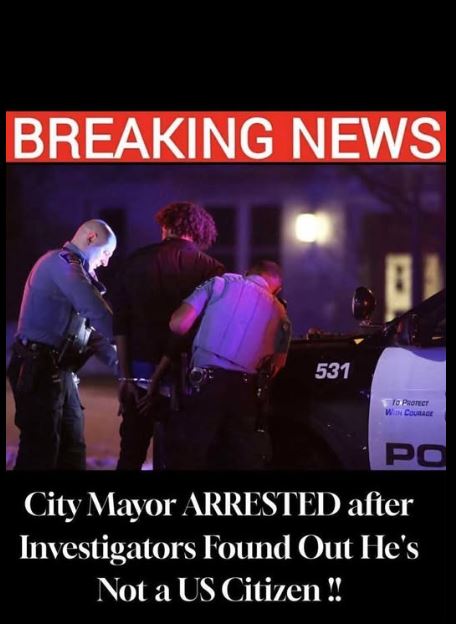
The mayor of a small Kansas town finds himself at the center of a significant state investigation and a heated political debate. Joe Ceballos, the mayor of Coldwater, has been charged with multiple felonies for allegedly voting in several elections despite not being a United States citizen. The charges, announced by Kansas Attorney General Kris Kobach and Secretary of State Scott Schwab, include voting while ineligible and perjury. If convicted, Ceballos could face more than five years in prison, marking a serious escalation in the state’s enforcement of election laws.
According to the official complaint, Ceballos is a Mexican immigrant with lawful permanent resident status. However, he is accused of willfully registering and casting ballots in elections held in 2022, 2023, and 2024. Both state and federal law explicitly limit voting rights to U.S. citizens. Investigators claim they have obtained what they describe as “unassailable evidence” that Ceballos was not a citizen during his time in public office, which included a stint on the city council before he was elected mayor of the small Comanche County municipality.
The case came to light through a relatively new tool in the state’s arsenal: access to a federal immigration database. This system allows Kansas officials to cross-reference voter registration rolls with Department of Homeland Security records to identify inconsistencies. Officials stated that while the voter registration system operates on trust, expecting individuals to truthfully affirm their citizenship, this case represents a clear breach of that trust. The discovery has prompted a wider review of voter lists as part of the state’s routine maintenance to remove ineligible individuals.
The charges have immediately reignited longstanding political discussions about the prevalence and impact of voter fraud. Attorney General Kobach, a long-time proponent of strict election security measures, stated that the case proves non-citizen voting is a real and recurring problem. However, the case also recalls a previous legal defeat for Kobach; a federal judge struck down a Kansas law he championed that required proof of citizenship to register, citing a lack of evidence that such fraud was widespread enough to justify the law. The Ceballos case is now being held up by some as the very evidence that was previously deemed lacking.
As the legal process begins, with Ceballos scheduled for an initial court appearance on December 3rd, the political ramifications are unfolding. The outcome of his recent re-election bid has yet to be certified by state officials. The case places a national spotlight on the small town of Coldwater and fuels a contentious national conversation about election integrity, the tools used to ensure it, and the balance between security and access as the country looks toward future elections.