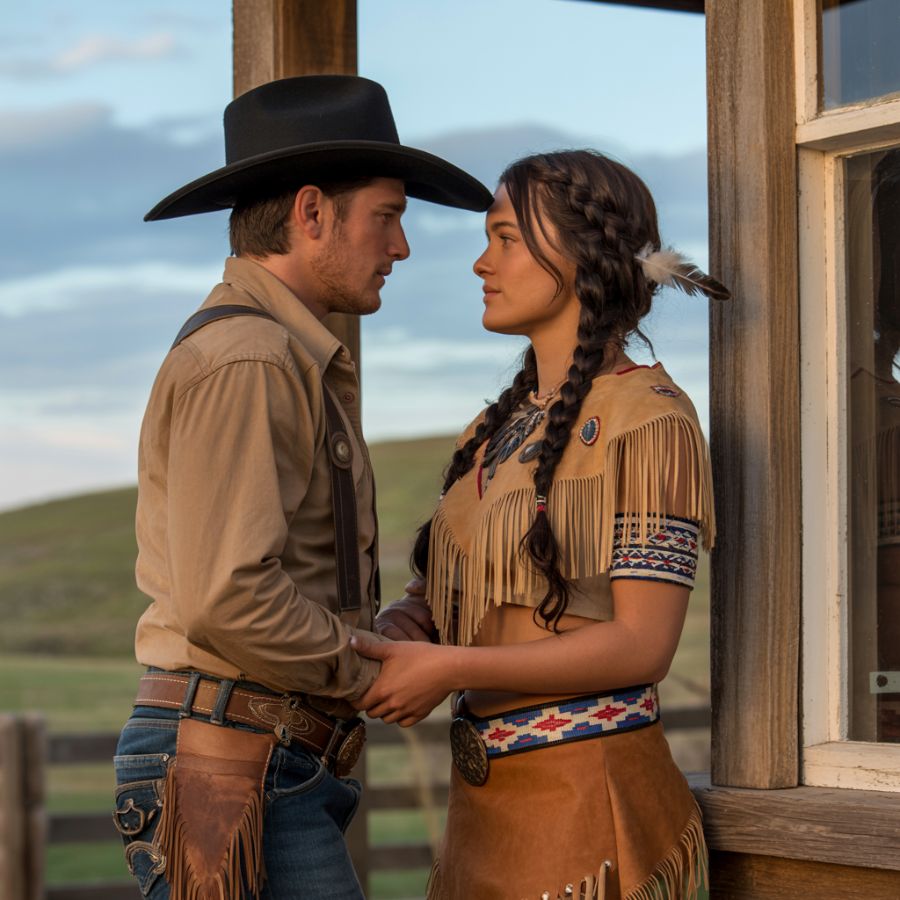
Amos Thorne was mending a fence in the fading light when the sound of frantic hooves shattered the quiet of his ranch. A horse collapsed at his gate, and its rider, a tall Apache woman, fell into the dust, clutching a bloody wound on her thigh. She was half-deid, hunted, and her desperate eyes held a warning: “They’re coming.” At fifty-eight, a widower steeped in three years of solitude, Amos faced a choice. Leave her to her fate, or bring her inside and invite the trouble that clearly followed her. Something in her shattered pride wouldn’t let him turn away.
He carried her into his cabin, the weight of her reminding him of the life he had lost. As he cleaned the deep gash in her leg, he saw more than the injury. She wore a brutal, leather corset, laced so tightly it cut into her flesh. She called it her cage, put on her as a child to “correct” her uncommon height and strength. Every breath was a struggle. She told him her name was Nita and that she was fleeing the Dalton brothers, men her dying father had forced her to marry. She had refused, and their idea of courtship was a hunt. As Amos stitched her wound, she made a fragile offer of trust. “Only tonight will I let you see me,” she whispered, meaning she would allow the corset to be removed so the festering wounds beneath could be cleaned.
Amos worked with the careful hands of a man used to repairing things, cutting the cruel laces one by one. When the leather prison finally hit the floor, Nita took her first full, unconstrained breath in years, a sound of pure, astonished relief. It was a moment of profound humanity, stripping away not just fabric, but a lifetime of enforced shame. That fragile trust was soon tested. Dust on the horizon signaled the Daltons’ arrival. With minutes to spare, they concocted a desperate lie. Using an old marriage certificate of Amos’s late wife, altered with a drop of Nita’s blood, they presented themselves as a long-married couple. The ruse, born of sheer nerve, worked just long enough to send the brothers away suspicious, but not convinced.
In the quiet that followed, Amos realized his empty ranch was no longer a home, but a target. He offered Nita a path forward: they would leave together, not as pursued and pursuer, but as partners. To make their story unassailable, they rode to town and made the lie truth, legally marrying before a skeptical clerk. It was a marriage of necessity, a pact for survival. But on the courthouse steps, a deeper promise was made. He vowed never to make her feel small; she vowed to be a true partner. From a night of blood and fear, a bond was forged—not of passion, but of fierce, mutual protection and a shared claim to a freedom neither thought they’d find again.