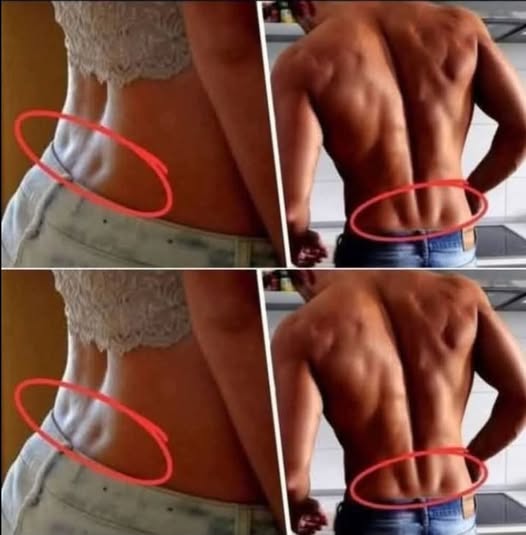
Have you ever caught a glimpse of two small, symmetrical indentations just above where the back curves into the hips? They’re subtle, often hidden, but unmistakably there. These intriguing little hollows have floated through history with names fit for mythology, yet their true story is written in our own biology. Far from being random folds of skin, they are a quiet signature of our unique anatomical blueprint, a feature that has fascinated artists, physicians, and admirers for generations.
These dimples are a gift of genetics, not gym routines. They are formed by a specific structural relationship where the skin attaches directly to the deep ligaments of the sacroiliac joint in the pelvis. This means you are simply born with the potential for them, inherited like the color of your eyes. No amount of exercise or diet can create them if the underlying architecture isn’t there. This inherent rarity is precisely what makes them so captivating—they are a natural marker of individuality, a small detail that sets some bodies apart.
Historically, these dimples have been draped in symbolism. In women, they are often called the “dimples of Venus,” named for the Roman goddess of beauty and love. This wasn’t merely poetic flattery; it reflected a cultural association with fertility, grace, and classical aesthetics. For men who possess them, they’ve been termed the “dimples of Apollo,” linking them to ideals of strength and athletic form. This historical lens shows how a simple anatomical trait can be elevated into a cross-cultural symbol of human appeal.
From a modern, practical standpoint, these dimples are completely benign. Having them doesn’t grant superhuman vitality, nor does lacking them indicate any health concern. They are neutral, harmless features. However, it is true that a lower body fat percentage can make them more pronounced, as leaner tissue reveals the underlying bone and ligament structure more clearly. This is why they are often visible on athletes and dancers, leading to their association with fitness and a toned physique.
Ultimately, these two small hollows serve as a beautiful reminder of human diversity. They underscore that our bodies are maps of personal history and heredity, dotted with unique landmarks. Whether you have them and see them as a point of quiet confidence, or you’ve just discovered their meaning, they symbolize the elegant variation in our design. In a world chasing uniform ideals, such natural distinctions are worth noticing and celebrating as the charming quirks that make us uniquely ourselves.