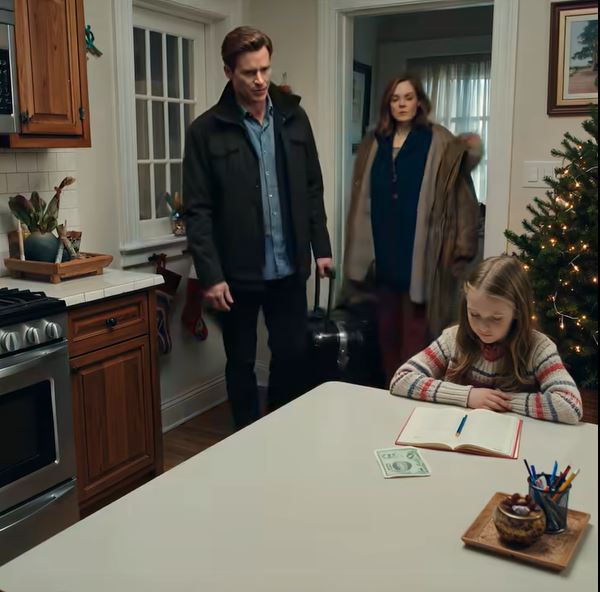
Imagine coming home to an empty house at twelve, with nothing but a fifty-dollar bill and a note saying your parents are gone for a month. That was my reality. The silence wasn’t peaceful; it was a heavy, teaching silence. It taught me to listen to a house’s moods, to stretch a can of soup over two days, and to understand that sometimes the people who should protect you are the ones who leave you most vulnerable. I didn’t just get through that month; I built a fortress of self-reliance brick by solitary brick.
The world continued outside my window—school bells rang, friends laughed about their weekends, families gathered in cars—while I became an expert in invisibility. I mastered the art of the non-answer, the polite smile that hid an empty fridge. A postcard from my mother, cheerfully telling me to “feed the fish” we didn’t own, hurt more than any sharp word. It was proof I was an afterthought. In that void, a cold, clear voice took root inside me: if you don’t take care of yourself, no one will. It was a terrible lesson for a child, but an invaluable one for the adult I was forced to become.
When my parents returned, they encountered not a daughter, but a quiet administrator of her own life. The shock on my father’s face was priceless. He had expected drama, a mess, a cry for help—something to justify his actions. My calm competence was a mirror reflecting his failure, and he couldn’t look away. The following years were a slow-motion unraveling of his authority. Every good grade, every responsible choice I made was a step further away from his influence, a step toward a door I was determined to walk through alone.
That door led to a career of service. In the Marines, the discipline was external, but the core was already there, hardened in that lonely house. I found a family that valued the traits I’d learned in desolation: resilience, vigilance, and an unshakable sense of personal responsibility. The final meeting with my father in a formal briefing room wasn’t about revenge; it was about truth. He had to acknowledge, in front of peers and protocol, the person his choices had helped shape. The power was no longer his to wield.
Today, I carry that faded note not as a scar, but as a cornerstone. The story isn’t about what was taken, but about what was built in the empty space. My parents gave me the hardest gift: the necessity of my own strength. I don’t thank them for the pain, but I acknowledge the formidable woman it produced. The journey from that kitchen table to a place of command was long, but every step was sure, because the first and hardest step was taken alone at the age of twelve.