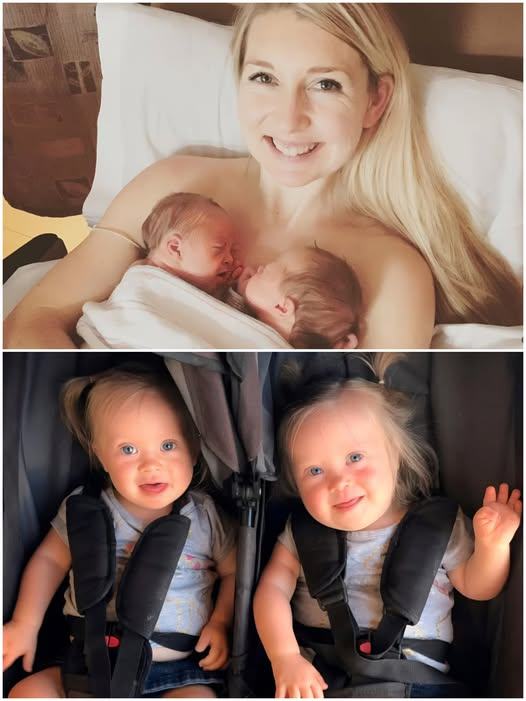
Imagine the moment: you’re expecting identical twins, a rare and joyous event. Then, imagine that joy being met not with celebration, but with a repeated, solemn offer. For Rachael Prescott, that was her reality. At multiple appointments, doctors reviewed her scans and gently, persistently, suggested abortion after her girls were diagnosed with Down’s syndrome.
The experience left Rachael and her husband, Cody, reeling. The medical conversations felt cold, focused on potential deficits rather than preparing them for the beautiful, if different, path ahead. It was a moment that revealed a stark gap between how medicine often views disability and how families actually experience it.
Choosing to look beyond the prognosis, Rachael and Cody turned down further testing. They decided they didn’t need a confirmed label to love their children. This act of faith set the tone for everything that followed. Against many predictions, Rachael had a natural birth. One twin, Charlotte, had a heart defect repaired successfully at six months; her sister, Annette, had none. The family braced for difficulty but was met instead with resilience and light.
What surprises many is the Prescott’s authentic narrative: one of overwhelming happiness, not tragedy. “Everyone expected grief,” Rachael notes. “But there was only love.” She describes the twins’ extra chromosome not as a burden, but as a part of their unique blueprint—one that brings a special warmth and determination to their family.
Life today is a whirlwind of typical toddler chaos, just on a slightly different timeline. Charlotte and Annette are the center of a lively home with two older brothers. Their milestones—a first wobbly step, a shared giggle—are celebrated with immense pride. The challenges are real, but they are woven into the fabric of a rich, loving, and normal family life.
Rachael now uses her voice to reframe the conversation around Down’s syndrome. She shares snapshots of their daily life—the mess, the laughter, the achievements—to show what a diagnosis often obscures: the person. Her story is a powerful testament to choosing hope over fear, and to discovering that the greatest joys often come from the unexpected paths we are asked to walk. It’s a reminder that every life has inherent value, and that a family’s love is the most powerful prognosis of all.