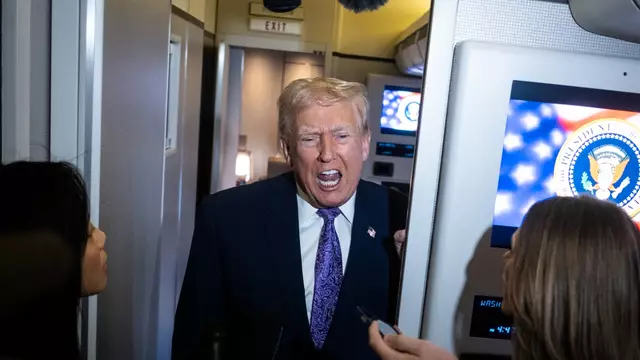
The job of a White House correspondent is to seek answers and hold officials accountable. This week, ABC News’s Rachel Scott performed that core function, asking President Trump about a transparency promise he made days earlier. The reward for her diligence was a public flogging, as the president labeled her “obnoxious” and “terrible” for simply quoting him back to himself.
The clash was rooted in a commitment made on December 3. In response to a question from Scott’s colleague, Selina Wang, about releasing video of a military strike, President Trump had offered an unequivocal “no problem.” Fast forward to Monday, and Scott sought an update on that pledge. Rather than address the timeline or any changed circumstances, Trump flatly denied ever making the statement, dismissing the inquiry as “ABC fake news.”
This created a surreal moment where the factual record—a readily available transcript—directly conflicted with the president’s present assertion. Scott’s persistence in following the thread, asking if he would now order the release, was met not with policy discussion but with personal insult. The president’s pivot to attack the messenger, rather than clarify the message, has become a hallmark of such interactions.
The incident underscores the challenging environment for journalists tasked with covering this administration. A straightforward follow-up question, the bread and butter of political reporting, is reinterpreted as an act of hostility. For some viewers, the president’s ire is itself a metric of journalistic integrity, with comments on forums noting that being called “terrible” by Trump is often a sign a reporter is doing their job correctly.
Beyond the personal drama, the substantive issue remains shrouded. The video in question, reportedly shown to Congress privately, sits at the center of questions about military accountability and public transparency. By redirecting the focus to a war of words with a reporter, the underlying matter of the unfulfilled promise is effectively sidelined. The episode serves as a case study in how personal antagonism can drown out substantive inquiry in the modern media-political sphere.