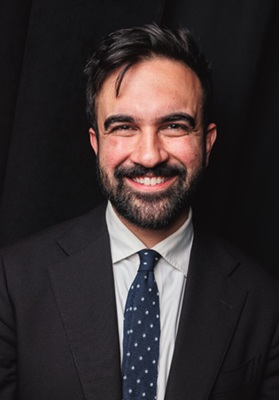
Less than forty-eight hours after winning New York City’s mayoral race, Zohran Kwame Mamdani stepped onto the steps of City Hall flanked by doubled security and a wall of cameras. The 34-year-old mayor-elect had just received the final vote tally—50.4 %, nearly a million ballots—making him the first Muslim and first Ugandan-born mayor in the city’s 400-year history. But the confetti had barely settled before a darker headline re-surfaced: the Texas man who spent the summer promising to “put a bullet through” Mamdani’s head had been indicted on 22 felony counts, including hate-crime aggravated harassment. The juxtaposition—historic triumph beside fresh evidence of violent hatred—has turned the transition period into a high-wire act between celebration and self-preservation.
Threats That Pre-Dated the Ballot Box
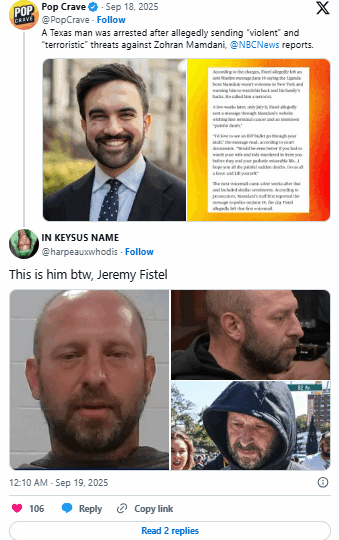
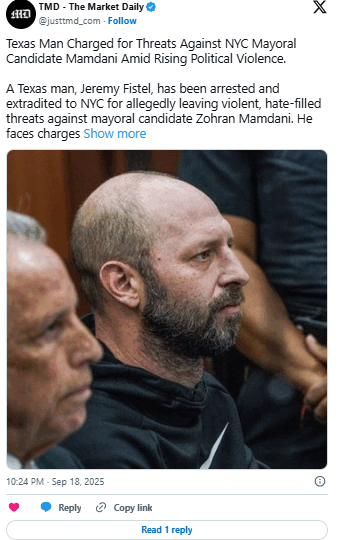
Court documents unsealed Friday reveal a months-long barrage of voicemails, e-mails, and Instagram DMs sent by 41-year-old Jeremy Fistel of Lubbock, Texas. One message, typed in all caps, warned Mamdani to “return to Uganda before you meet an IDF-style ending.” Another described a dream in which the mayor-elect’s family were “butchered like goats.” Investigators traced IP addresses and phone records; Fistel was arrested in August and now faces up to 15 years in prison. Queens DA Melinda Katz called the indictment “a warning that threats against elected officials—especially those rooted in racism and Islamophobia—will be prosecuted aggressively.”
Mamdani’s campaign had already adopted bunker-level protocols: rallies announced only hours beforehand, RSVPs vetted through encrypted forms, a private security detail that shadowed him long before the polls opened. Staffers were trained to spot suspicious packages; volunteers learned de-escalation techniques usually reserved for embassy guards. “We never wanted the threats to become the story,” campaign manager Aisha Hussain told reporters, “but we also refused to let fear shrink the campaign.”
A Victory Speech Aimed at Two Audiences
On election night, as confetti drifted over a jubilant crowd in Queensbridge Park, Mamdani opened his victory remarks with a line aimed as much at Trump Tower as at his own supporters: “Donald Trump, since I know you’re watching, I have four words for you—turn the volume up.” The taunt drew roaring applause and immediate right-wing backlash; within minutes, conservative influencers recycled old clips of Mamdani rapping as “Mr. Cardamom,” claiming the city had elected a “socialist TikToker.” But the mayor-elect doubled down, pledging to “dismantle the culture of corruption that lets billionaires treat New York like their private ATM.”
Policy Meets Protection
Transition insiders say the incoming administration will push a progressive trifecta in its first 100 days: good-cause eviction legislation, a city-funded subway-fare discount for low-income riders, and a surcharge on luxury real-estate transfers to fund public-school repairs. All three proposals directly confront real-estate interests that have bankrolled opponents in every borough. “We knew winning would make enemies,” Mamdani said Friday. “We intend to keep making them—until renters, workers, and commuters feel the city belongs to them.”
Security, meanwhile, is being expanded, not scaled back. NYPD’s Counterterrorism Bureau has assigned a permanent detail; the Secret Service—still guarding former President Trump—has offered threat-assessment assistance. Even the venue for next week’s victory rally is being kept secret until 24 hours beforehand, a precaution once reserved for visiting heads of state.
The Burden of Firsts
Friends say Mamdani sleeps little, fielding congratulatory calls from London, Lagos, and Lahore while reviewing intelligence briefings on lone-wolf threats. “He carries the weight of every Muslim kid who’s been told to lower their gaze,” says Imam Khalid Latif, who led Friday prayers at the campaign’s volunteer hub. “But he also carries their hope that one day they won’t have to.”
For now, the mayor-elect plans to keep walking precincts, keep riding the subway, and keep speaking—louder, not softer. “Fear wins when we whisper,” he told supporters Thursday night. “So we’re going to keep shouting—about rent, about rights, and about the right to exist in this city without looking over our shoulder.”
Whether the threats fade or intensify, Mamdani’s transition team is preparing for a mayoralty unlike any New York has seen: part policy laboratory, part security operation, part symbol of a changing America. The arc of history may bend toward justice, but tonight it is flanked by bodyguards—proof that progress and peril can share the same motorcade.