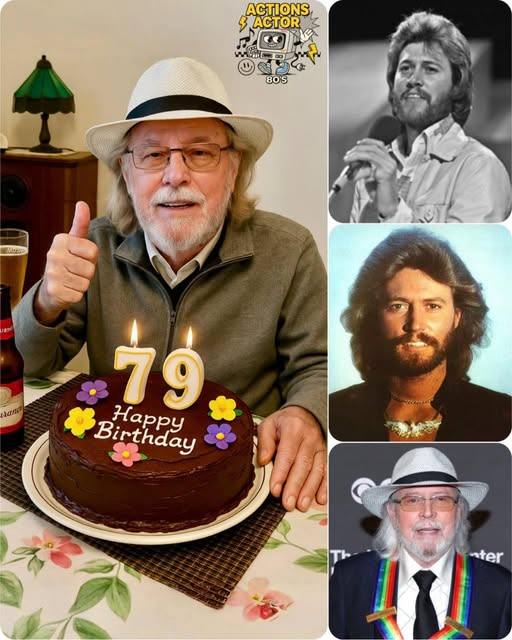
Behind every great singer is often an even greater songwriter, and in Barry Gibb, the world found both. As the principal architect of the Bee Gees’ vast catalogue, Gibb’s true instrument was not just his famous falsetto, but his unparalleled ability to translate universal feelings into unforgettable melody. His 79th birthday offers a moment to look beyond the iconic stage presence and recognize the quiet, relentless craft of a man whose work forms the backbone of pop music history. His songs, whether bursting with dance-floor energy or brimming with tender reflection, share a common thread: an emotional honesty that connects directly with the listener’s heart.
The story begins with three brothers and a shared dream. Growing up, music was the family business, and Barry, as the eldest, naturally steered the ship. The Bee Gees’ early work revealed a stunning maturity in songwriting, with hits like “To Love Somebody” and “Words” showcasing a gift for lyrical economy and sweeping, soulful melody. This period established a crucial fact: the Gibbs were songwriters first, capable of profound emotional depth years before they ever set foot on a disco floor. Barry’s leadership in this creative process laid the foundation for everything that followed.
Then came the revolution. When the Bee Gees aligned with the disco phenomenon, Barry’s songwriting didn’t shrink—it expanded. He harnessed the genre’s rhythm to serve the song’s emotion, creating sophisticated narratives within four-minute symphonies of beat and harmony. “How Deep Is Your Love” is not a disco song at heart; it is a profound love letter, amplified by a perfect production. This duality is Barry Gibb’s masterstroke. He never sacrificed substance for style, which is why those songs outlived the disco era itself, remaining radio staples and wedding playlist essentials for generations.
In the decades since, Barry’s role as a songwriter-for-hire cemented his legend in industry circles. His collaborations read like a who’s who of music royalty, each project bearing his signature touch: soaring choruses, impeccable structure, and that ineffable emotional pull. Writing for voices as distinct as Streisand’s or Rogers’ required a chameleonic skill, proving his concepts were stronger than any one performance style. This phase highlighted that his gift was generative; he didn’t just create hits for himself, but helped shape the sound of contemporary pop and country for others.
Now, as the last Bee Gee, Barry carries a legacy that is both a beautiful memory and a living influence. Modern artists constantly mine the Bee Gees songbook for its timeless qualities, a tribute to the solid songwriting beneath the iconic production. Celebrating Barry Gibb is to celebrate the very essence of pop songcraft—the hard work of turning feeling into form. His birthday reminds us that while trends come and go, a perfectly written song, born from heart and honed by brotherly harmony, is truly forever.