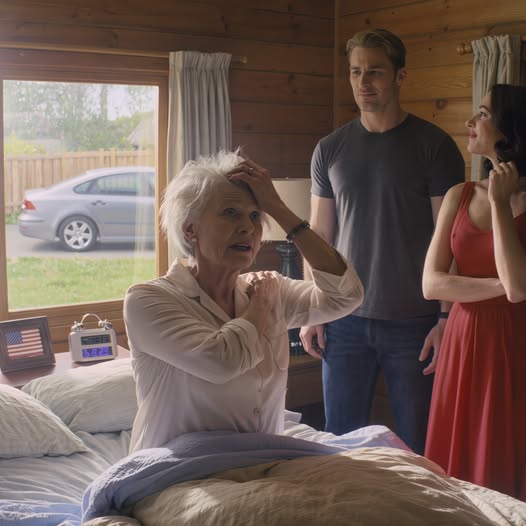
There is a unique kind of pain that comes not from strangers, but from the people you call family. It’s a quiet Sunday, the kind I used to cherish, until I learned that my sanctuary was no longer safe, not even in my own sleep. I woke from a nap feeling strangely light, a chill on my neck where my hair should have been. My hands flew to my head, meeting ragged ends where my long, silver hair had once fallen down my back. For thirty years, I had cared for it; it was my connection to my late husband, a living memory. Now it was gone, hacked away unevenly as I slept.
I found them in the living room, my son Ethan and his wife Lauren, as if it were any ordinary afternoon. My shock was met with a cold smile from Lauren. “Now you know your place,” she said. The words hung in the air, sharp and deliberate. I looked to my son, the boy I raised, for some sign of outrage, for defense. Instead, he shrugged from his armchair. “Mom, you need to learn a lesson,” he told me. “You were too old for that hair anyway.” In that moment, the home I’d shared with them out of love transformed into a foreign land where I was a visitor, an inconvenience to be managed and corrected.
The following days were a blur of quiet agony. I moved through the house like a ghost, listening to their laughter, fulfilling the unspoken duties of a live-in cook and maid. I discovered a real estate magazine under their sofa, a page circled showing luxury condos. A note in Lauren’s handwriting read, “With the sale of the old lady’s house, this is affordable.” The “old lady.” That was their plan. They were waiting for me to fade away so they could sell my history, my garden, my lemon tree, and pocket my future.
Something fundamental shifted inside me, a quiet click of finality. This was not about hair. It was about sovereignty. I made an appointment with my lawyer, the same man who had handled my husband’s affairs. With a calm I didn’t know I possessed, I instructed him to draw up a formal eviction notice and to cancel the substantial monthly financial support I provided them. The house was mine, left solely to me, and I was reclaiming it.
When the papers were delivered, the atmosphere shattered. Lauren screamed about family and homelessness. Ethan pleaded, accusing me of cruelty. “You’re my only son,” I told him, my voice steady despite the earthquake in my heart. “But loving you cannot mean erasing myself. You have thirty days to leave.” The justice was not sweet, but it was necessary. It was the first, hardest lesson in a new chapter: that sometimes, the deepest love requires the strength to say a firm, unyielding no. My place, I finally understood, was not beneath anyone’s thumb, but firmly within the boundaries of my own respect.