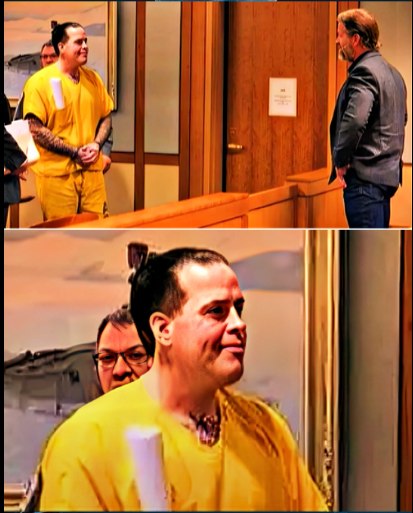
In the vast, unforgiving landscape of Alaska, a man named Jason made a choice that would cost him his freedom. His story is not a simple tale of crime and punishment, but a deeply complex narrative about the shadows of a traumatic childhood and a desperate, violent quest for redemption. Haunted by years of neglect and abuse, Jason used the state’s public registry not for information, but as a hunting list. He sought out convicted child offenders, believing the system had failed to protect the innocent. His path led him to break into homes armed with a hammer and a furious sense of justice, a mission that would ultimately end with a 23-year prison sentence. Yet, as the judge delivered the verdict, Jason offered a quiet smile to his brother, a silent signal that he believed his sacrifice had meaning.

Jason’s early life provided the fuel for his later fire. He and his brother grew up in an environment devoid of safety or stability, victims of relentless physical and emotional pain. Their mother, herself damaged, could not shield them. The brothers learned to rely solely on each other in a world that seemed indifferent to their suffering. This profound neglect planted seeds of anger and a powerful, protective instinct. As Jason matured, the memory of his own powerlessness festered. He watched as other offenders seemed to move through the justice system without facing what he deemed appropriate consequence, and a disillusionment with legal avenues took root.
This disillusionment hardened into a grim purpose. Jason began to meticulously track individuals on the offender registry. He was not content with monitoring; he felt a compelled duty to act where he felt the law did not. In his mind, he was a shield for potential future victims, intervening with brutal force to incapacitate the threats. He saw his hammer not merely as a weapon, but as an instrument of prevention. This calculated vigilantism escalated during a confrontation where an offender fought back, resulting in serious injury. In that moment of violence, the line between protector and perpetrator, which had always been thin in Jason’s mission, blurred beyond recognition.
The legal consequences were swift and severe. Arrested and charged with serious crimes including assault, Jason became a controversial figure. Public opinion split, with some hailing him as a flawed hero and others condemning him as a dangerous criminal. In his cell, Jason grappled with his actions. He understood his methods were extreme, yet he clung to the core belief that his intention—to stop harm—was righteous. He regretted the violence but not the underlying drive to protect. This internal conflict defined his stance as he faced trial, a man torn between the morality of his aim and the criminality of his acts.
The courtroom scene was the culmination of his painful journey. As the judge sentenced him to decades behind bars, Jason’s smile to his brother was a powerful, wordless communication. It spoke of acceptance, of a price paid willingly for a cause he believed in, and of a bond forged in shared trauma. Jason’s legacy is a challenging one, forcing us to examine the limits of a broken justice system and the human cost of taking the law into one’s own hands. His story remains a poignant, troubling testament to how deep pain can twist into action, and how a quest for justice can itself become a crime.