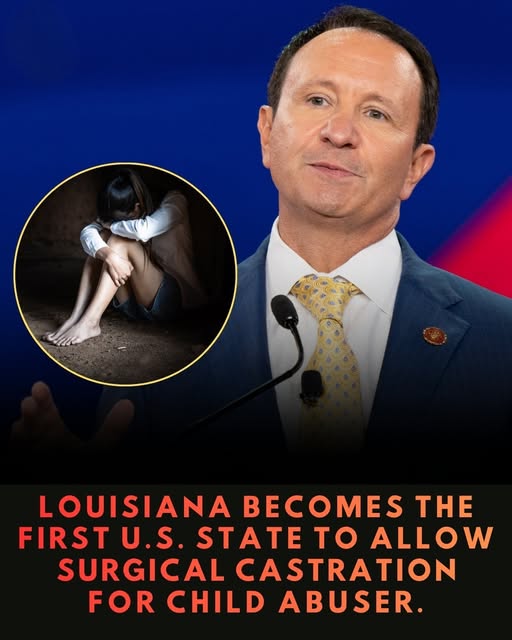
Louisiana has become the first state in the nation to pass a law requiring surgical castration for individuals convicted of severe sex crimes against children under the age of 13. The controversial legislation, known as Act 651 and signed by Governor Jeff Landry, represents one of the most drastic measures ever taken in the United States to combat child sexual abuse. The law mandates the procedure for offenders found guilty of aggravated crimes, such as rape, and imposes additional prison time for those who refuse to comply. This move has ignited a fierce national debate, pitting the desire for ultimate punishment against deep-seated legal and ethical concerns.
Proponents of the law argue that it is a necessary and powerful tool to protect society’s most vulnerable. They state that the permanent physical consequences of surgical castration are a just response to the lifelong trauma inflicted upon child victims. Supporters point to the high rates of recidivism among sex offenders and contend that this measure is the only sure way to prevent a predator from reoffending. For many advocates and victims’ rights groups, the law sends an unambiguous message that the state will use every means at its disposal to safeguard children.
However, the law faces significant opposition and is expected to be challenged in court. Critics, including civil liberties organizations and legal scholars, argue that it violates the U.S. Constitution’s Eighth Amendment prohibition against cruel and unusual punishment. They assert that mandating an irreversible, invasive surgical procedure crosses a dangerous line. Furthermore, opponents raise ethical questions about the state’s power to compel a medical procedure against a person’s will, arguing it infringes on fundamental bodily autonomy.
Beyond the legal battles, there is a debate over the law’s effectiveness. Some experts in criminal justice and psychology argue that the focus should be on rehabilitation and treatment, not just punitive measures. They suggest that addressing the underlying psychological issues driving sexual offending is a more complex but ultimately more successful path to protecting the public. As Louisiana forges ahead with this unprecedented law, the nation watches closely, grappling with the difficult balance between justice, vengeance, and the limits of state power in the fight against heinous crimes.