As a parent to a child with a disability, you become accustomed to the stares, the unsolicited advice, and the pity. But nothing prepares you for the active cruelty that can come from your own family, disguised as “help.” Our story is a stark reminder that for many disabled children, the greatest barriers aren’t physical; they are the people who refuse to see their humanity. My daughter, Mia, uses a wheelchair. She is intelligent, joyful, and fully capable of living a rich life—on her own terms. My family, however, saw her chair as a problem to be solved.
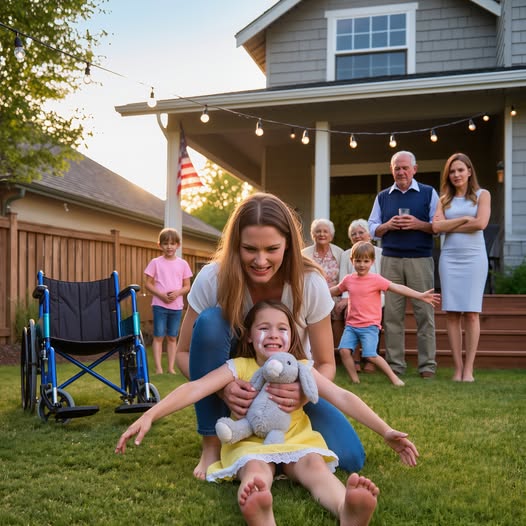
The family reunion was supposed to be a celebration, but for us, it became a trap. My sister, insisting she was helping, took Mia to the backyard to “play” with the other children. What that actually meant became horrifyingly clear when I heard Mia’s panicked cries. I arrived to find the other children jumping on her legs. This wasn’t playful roughhousing; it was a physical assault based on the dangerous and ignorant belief that enough pressure could somehow “fix” her. They were causing her real pain and terror under the guise of making her walk.
The most devastating part was the reaction of the adults. My parents and sister didn’t stop the children; they defended them. Their words revealed a deep-seated ableism that I had been unwilling to confront. “They’re just kids,” my mother said, dismissing the violence. “Shouldn’t have brought her,” my sister sneered, blaming the victim. But my father’s comment cut the deepest: “We are just trying to toughen her up.” This statement laid bare their belief that Mia’s disability was a weakness of character, a flaw that needed to be beaten out of her through literal force. Their laughter as she sobbed confirmed that her comfort and dignity meant nothing to them.
In that moment, I understood that my family did not see my daughter as a whole person. They saw her as a broken project. I got Mia out of there immediately, but my response didn’t end there. I knew this was bigger than a single awful afternoon; it was a fundamental failure to recognize Mia’s right to safety and bodily autonomy. I pursued every legal avenue available to hold them accountable, not for revenge, but to send a message: disabled children are not puzzles to be solved or objects to be “toughened.” They are people who deserve respect and protection.
Our world is now smaller, but it is infinitely safer and filled with people who see Mia for the wonderful person she is. The journey toward true inclusion is long, and it must start within our own families. When it doesn’t, our duty as parents is clear. We must choose our children, without apology, every single time. I chose Mia, and in doing so, I gave her the freedom to thrive in a world that we now curate with love, understanding, and zero tolerance for cruelty.