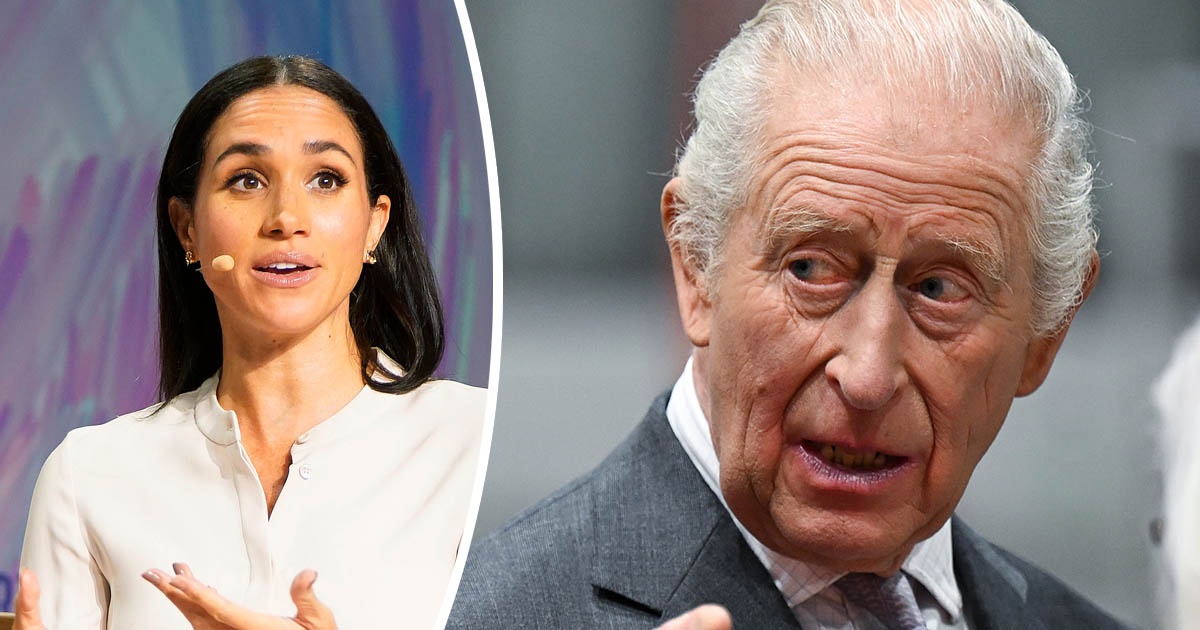
In the carefully coded world of royal communications, even a single word can carry profound meaning. The revelation that King Charles III once privately referred to Meghan, the Duchess of Sussex, as “Tungsten” is one such instance. This nickname, reported by insider Charlotte Griffiths in 2018 as a “term of endearment,” provides a rich text for analysis, offering a window into Charles’s perceived view of his daughter-in-law’s character and her role within the family during their earlier years.
To understand the nickname is to understand the element itself. Tungsten is known for two primary properties: its extreme hardness and its possession of the highest melting point of any metal. It is resistant to bending, breaking, or losing its form under intense pressure. When applied to a person, being called “Tungsten” is an acknowledgment of formidable inner strength, resilience, and an unyielding nature. This was not a casual or fluffy term of affection; it was a deliberate characterization of Meghan as a person of significant fortitude.
The context of their relationship makes this label even more intriguing. According to royal biographers, the initial introduction was strained, with Charles and his team feeling “crushed” by the sudden announcement of Harry and Meghan’s relationship, as it threatened to derail media coverage of his own important work. The fact that their relationship evolved to a point where Charles would use such a descriptor suggests a development from initial friction to a recognition of her qualities.
The reported reasoning behind the nickname is equally analytical. The insider suggested that Charles admired Meghan for “the backbone she gives Harry,” whom he saw as “a bit of a softy.” In this light, “Tungsten” is more than a personal compliment; it is a strategic observation. Charles, a man born into a system that values duty and resilience above all, may have been acknowledging that Meghan’s strong, unwavering character provided a necessary counterbalance for his son. It symbolizes a moment where she was not seen as an outsider disrupting the monarchy, but as a strong element that could fortify it from within, a perspective that has undoubtedly changed in the years since.