The Quiet Protest: Lily Tomlin’s Historic Walk-off on The Dick Cavett Show
On March 31, 1972, a seemingly ordinary moment on The Dick Cavett Show would forever change the dynamics of American television. It wasn’t a dramatic protest or a loud confrontation, but rather a quiet act of refusal that sent shockwaves through the entertainment world. The scene unfolded when rising comedy star Lily Tomlin, seated next to Hollywood heartthrob Chad Everett, made a decision that would inspire millions: she chose dignity over politeness, respect over discomfort, and left the stage when faced with a comment that struck her as deeply offensive. This quiet protest became one of the most iconic moments in television history, one that demonstrated the power of choosing silence and the courage to walk away from disrespect.
1. Introduction to The Moment
The Dick Cavett Show was a late-night television staple during the 1960s and 1970s, known for its more intellectual and sometimes irreverent take on celebrity interviews. With its cool, relaxed style, Cavett’s show became a platform where stars of the era would open up, often sharing candid thoughts and engaging in lively discussions. Cavett’s wit and charm were key to the show’s appeal, and as a host, he was admired for his conversational approach. However, on this particular episode, the stakes were higher than usual. What started as a friendly chat between two celebrities—Cavett, Everett, and Tomlin—would soon take a turn for the worse.
Lily Tomlin, who was then an up-and-coming comedic force, had quickly become one of the most recognized figures in television. She had already established herself with her role on Rowan & Martin’s Laugh-In, where her unique brand of comedy and ability to parody societal norms made her a standout. Chad Everett, on the other hand, was a beloved Hollywood actor, known for his roles in popular dramas. Together, they were an unlikely pairing for an evening talk show, but Cavett’s ability to mix personalities made the interaction intriguing for viewers.

ONE SENTENCE. ONE SILENT EXIT. TV HISTORY CHANGED. 📺🔥 No shouting. No argument. No second chances. When Lily Tomlin calmly stood up and walked off The Dick Cavett Show, she delivered one
2. The Setting of the Show
The 1970s were a time when television had its own unspoken rules and norms. Late-night television shows were the epitome of “polite entertainment.” The boundaries were clear: there was a sense of civility that permeated the talk show circuit, a standard to which guests adhered, and often, the format required entertainers to smile and laugh in the face of uncomfortable comments. The audience expected light banter and harmless jokes that stayed within the realms of politeness.
Dick Cavett’s approach was one of the more sophisticated talk show formats of the time. He prided himself on his intellectual and sometimes serious conversations with his guests. Yet, when Chad Everett sat down with him on this particular evening, the mood was light, relaxed, and following the expected script. Little did the audience know, a comment from Everett would soon disrupt that calm atmosphere.
3. The Moment of Tension
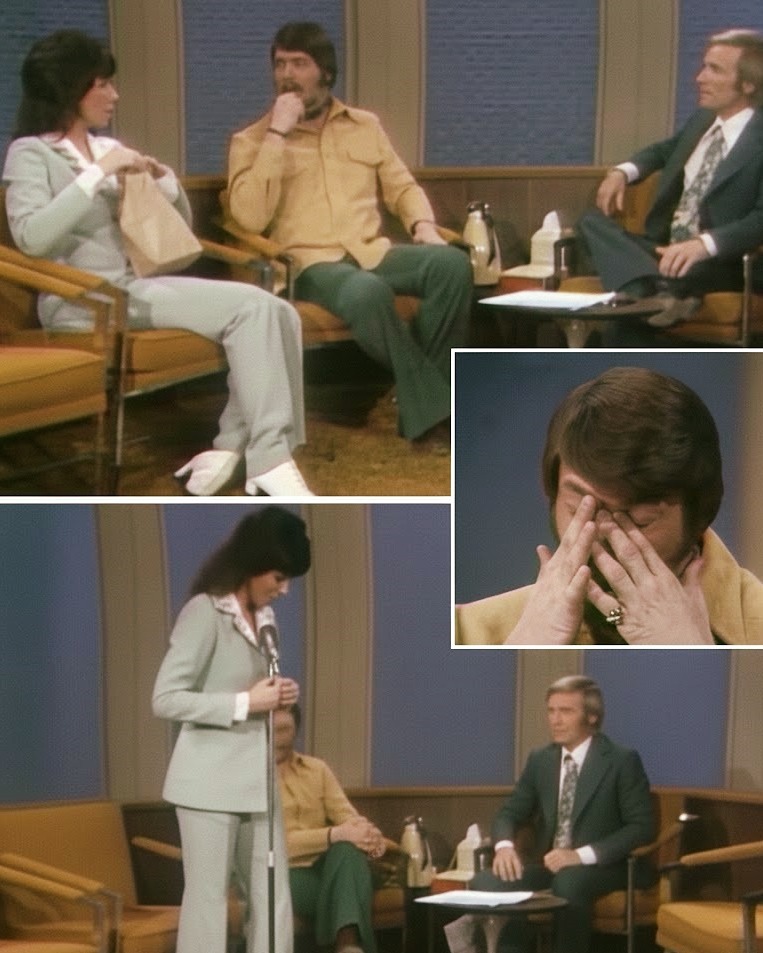
The moment occurred during a casual exchange when Cavett asked Everett about his possessions. Without missing a beat, Everett listed his animals—a couple of horses and dogs—but then, in an offhand manner, added his wife to the list, saying, “She’s the most beautiful animal I have.” The audience responded with nervous laughter, and Cavett, sensing the discomfort, gently offered a lifeline by asking, “Would you like to reconsider that order?”
But Everett didn’t take the hint. Instead, he doubled down, looking directly into the camera and reaffirming his comment about his wife being “the most beautiful animal” he owned. The room went silent, and the tension was palpable. The comment was jarring, and yet, the expectation was for Tomlin—seated next to Everett—to laugh it off, follow the script, and smooth over the awkward moment with a polite response. But Tomlin, a woman who had long been defying norms in her comedy, chose not to comply.
Lily Tomlin WALKS OUT After Chad Everett’s Controversial Comment! | The Dick Cavett Show – YouTube
4. Lily Tomlin’s Response
In that split second, Lily Tomlin made a decision that would go down in television history. Rather than laughing nervously or playing along, she stood up, looked at Everett and Cavett, and calmly declared, “I have to go.” With that, she walked off the stage, leaving the audience in stunned silence. The decision wasn’t accompanied by a shout or an overt declaration; instead, it was an act of quiet, dignified resistance. Tomlin refused to normalize the disrespect that had been casually thrown her way.
Her departure was a calculated statement of protest. It was a powerful response that said more than words could. She didn’t need to explain herself or make a scene. Her action spoke volumes, and it was a lesson in standing up for respect, even when societal expectations demanded conformity. Later, Tomlin reflected on the moment, recalling that it felt as though “angels carried her away.” In that moment, she chose to put her dignity first—her own emotional response over playing by the rules.
5. Cultural Impact
Tomlin’s decision to walk off set may have seemed like a small act in the grand scheme of things, but its cultural significance was immense. During the 1970s, gender roles were still heavily enforced, and women were often expected to smile through uncomfortable situations, to play nice, and to keep their opinions to themselves in public settings. Tomlin’s walk-off defied these expectations, and in doing so, she became a symbol of resistance.
Her action wasn’t just about rejecting one comment—it was a refusal to conform to the way women were expected to behave in public. It was a small, yet powerful statement that women didn’t have to smile through disrespect, and that their dignity was worth more than maintaining a “polite” persona.
While Everett’s comment was one that reinforced outdated gender norms and the objectification of women, Tomlin’s response shifted the conversation. She made it clear that women could refuse to accept such behavior without causing a scene. The moment was a quietly radical act in a time when women were still fighting for equality and agency over their own bodies and voices.
Women share the moment Lily Tomlin stormed off stage in 1972 when talk show guest referred to his wife as an ‘animal he owns’ after Saoirse Ronan row | Daily Mail Online
6. The Aftermath
The reaction to Tomlin’s exit from the show was mixed. Some applauded her bravery, while others—especially those in the media—questioned whether she had overreacted. In her reflections on the incident, Tomlin later expressed that it felt as if she had made an important stand for her own self-respect, rather than an act of political defiance. She had chosen not to normalize a moment that had felt disrespectful to her as a woman, and in doing so, she sparked a conversation about gender, dignity, and the importance of setting boundaries.
In the years that followed, Tomlin’s decision became a defining moment in her career. Her brand of humor and her courage in standing up to societal norms set her apart from many of her peers. She continued to push boundaries in comedy and in life, becoming a trailblazer for women in entertainment.
7. The Enduring Message
What Lily Tomlin’s walk-off demonstrates is that sometimes, silence speaks louder than words. In a world where we are often told to accept discomfort or silence in the face of disrespect, Tomlin’s refusal to do so was a call for change. It highlighted the power of personal boundaries and the importance of respecting others, especially women, in all circumstances.
Her quiet protest sent a clear message to her audience and to her peers: sometimes, walking away is the most powerful thing you can do. In a world where women were constantly expected to play along with inappropriate comments or laugh off disrespect, Tomlin showed that a firm stand could be made without raising a voice.
8. Conclusion
Lily Tomlin’s walk-off on The Dick Cavett Show was more than just an iconic television moment—it was a statement of resistance, a stand for dignity, and a lesson in the power of silence. In a single, composed action, she changed the conversation about how women could respond to disrespect. The legacy of that moment endures, reminding us that sometimes the most powerful protest is simply choosing not to participate in the culture of disrespect.
Tomlin’s act of walking off the stage remains a defining moment in television history, but more importantly, it continues to serve as a symbol of self-respect and the courage to choose dignity over comfort. She proved that, when faced with disrespect, you don’t have to laugh it off or endure it—you can choose to walk away and let your actions speak for you. And in that quiet moment, Tomlin did what few had the courage to do: she chose herself.
Lily Tomlin’s silent protest on tv show