
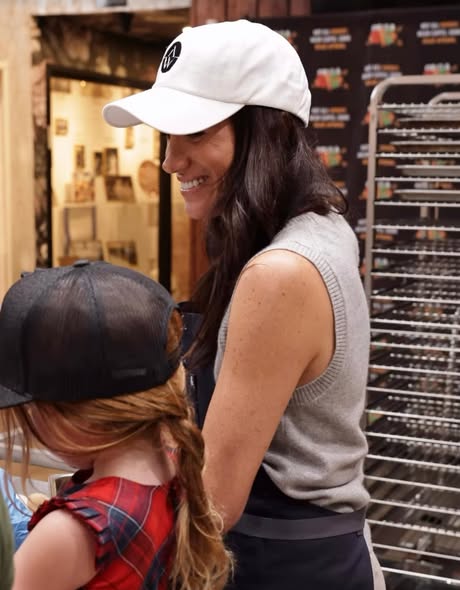
A family volunteering outing for Prince Harry, Meghan Markle, and their two children became the latest internet flashpoint over the holiday weekend. The Sussexes participated in a meal-packing event at a Los Angeles community kitchen, a gesture of service promoted by their foundation. Photos released from the event showed the couple and their young children, Archie and Lilibet, assisting with food preparation. While framed as a teachable moment about giving back, the online conversation swiftly veered into criticism and peculiar scrutiny of the family’s personal details.

Almost immediately, social media users zeroed in on Meghan’s appearance, criticizing her for not tying her hair back while handling food and for wearing an expensive Cartier bracelet during the volunteer work. The conversation then took a strange turn toward the children, with countless comments analyzing four-year-old Lilibet’s height and hair, comparing her to her six-year-old brother Archie. This led to baseless theories questioning the child’s age and even the authenticity of the photographs, with some users claiming the images were digitally manipulated.
This incident is not an isolated one. The public’s relationship with images of the Sussex children is complex and often critical. Earlier this year, Meghan faced backlash for sharing an Instagram story about bringing snacks home to her children from the Invictus Games in Canada, with some mocking the gesture. Conversely, her Labor Day post offering a rare, casual glimpse of Archie and Lilibet on the set of her Netflix show was met with a mix of appreciation and further analysis. Every appearance or mention seems to fuel a new cycle of intense public reaction.
The Thanksgiving volunteering episode illustrates a persistent dynamic: for Harry and Meghan, even well-intentioned, philanthropic actions are subject to a level of microscopic and often uncharitable examination that frequently overshadows the activity itself. The event, meant to demonstrate family values and charitable commitment, instead became another chapter in the ongoing public narrative where their every choice is dissected, debated, and often disparaged in the court of online opinion.