The Quiet Man Who Became America’s First Television Cowboy Hero
Hollywood has always loved loud legends.
The ones who enter a room and demand attention. The ones who build their reputation through headlines, controversy, and endless reminders of their own greatness. The entertainment industry has created countless larger-than-life personalities who became famous not only for what they did, but for how loudly they announced it.
But every once in a while, someone arrives who proves that greatness does not need noise.
Someone whose presence alone is enough.
Clint Walker was that kind of man.
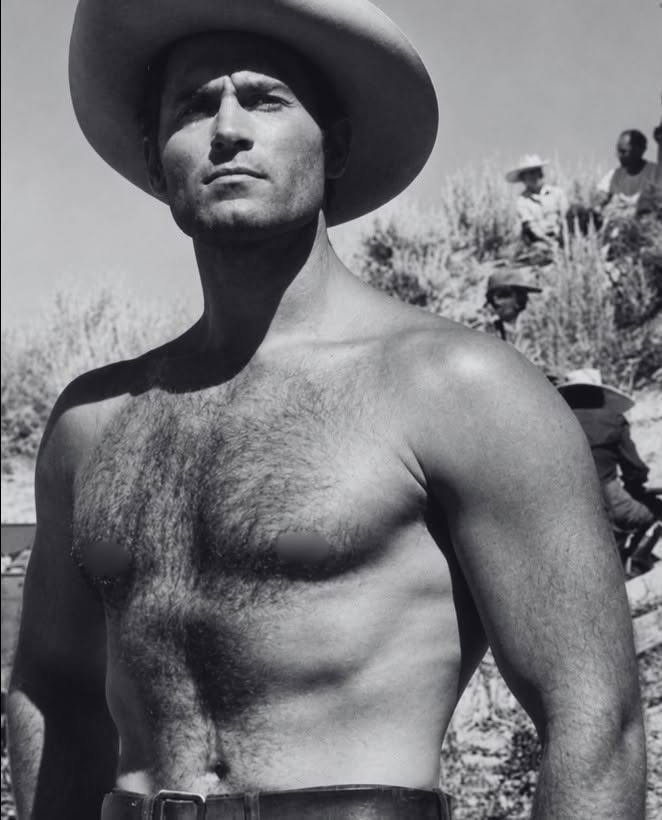
Standing 6 feet 6 inches tall with a powerful frame that seemed almost impossible to ignore, Walker looked like he had stepped directly out of an old American frontier painting. He had the size of a giant, the voice of a storyteller, and the calm confidence of someone who never needed to prove he was strong.
Yet the most remarkable thing about Clint Walker was not his height, his Hollywood career, or even the fact that he became one of television’s first true Western icons.
It was the way he lived.
For more than six decades, he represented a kind of masculinity that has become increasingly rare: quiet, disciplined, humble, and dependable.
He became famous playing heroes.
But behind the cameras, he spent his life showing people what real heroism looked like.
His story began far away from the bright lights of Hollywood, in a small Illinois town during a time when America was changing forever.
On May 30, 1927, Norman Eugene Walker was born in Hartford, Illinois.
The country was in the middle of the Roaring Twenties. Jazz filled city streets. Automobiles were transforming American life. The world seemed full of possibility.
Nobody looking at the newborn child could have predicted that he would one day become one of television’s most recognizable faces.
He was not born into Hollywood.
He was not born into wealth.
He was simply a young boy growing up in ordinary America, learning the value of hard work long before cameras ever pointed in his direction.
As a child, Walker developed the physical strength that would later become one of his trademarks. But unlike many actors who built their careers around being tough, Walker did not spend his early life trying to become an image.
He simply worked.
And work became the foundation of his character.
Before Hollywood, Clint Walker Learned What Real Hard Work Meant
Before millions of Americans knew his name, Norman Walker lived the kind of life that rarely makes movie scripts.
He took jobs that required patience, discipline, and physical endurance.
He worked as a merchant marine, traveling on ships and experiencing the demanding realities of life at sea. He worked as a factory worker. He served as a deputy sheriff. He worked security.
These were not glamorous positions.
They did not come with applause or recognition.
But they shaped the man he would become.
Every job taught him something about people. Every difficult day built his confidence. Every challenge strengthened the quiet determination that would later define his career.
By adulthood, Walker had grown into an extraordinary physical presence.
At 6 feet 6 inches tall, he was impossible to overlook.
People noticed him wherever he went.
But those who knew him understood something important: his size was never the most impressive thing about him.
It was his character.
Walker was not someone who used his appearance to intimidate others. He carried himself with calmness and respect. He had the rare ability to appear powerful without making anyone around him feel small.
That quality would eventually become the foundation of his greatest role.
But first, fate had to find him.
And fate found him in the most unlikely place.
A Hollywood hotel.
During the early 1950s, Walker was working security at the Sands Hotel in Las Vegas when his appearance caught the attention of people in the entertainment industry.
To Hollywood producers, he looked like something from another era.
The television world was searching for new heroes. Westerns were becoming increasingly popular, and audiences wanted characters who represented courage, honesty, and justice.
Then someone saw Clint Walker.
Not an experienced actor.
Not a trained performer.
Just a man with a presence that could not be taught.
Warner Bros. saw potential in him and made a surprising decision.
They cast him as the lead in a new television Western called Cheyenne.
It was a massive gamble.
Walker had almost no professional acting experience.
Hollywood was taking a former security guard and making him the star of what would become one of television’s most important early Western programs.
Many people wondered whether it would work.
Then America met Cheyenne Bodie.
And everything changed.
Cheyenne Bodie: The Hero Who Made Silence Powerful
When Cheyenne premiered in September 1955, audiences immediately recognized something different.
Clint Walker was not the kind of cowboy hero who needed constant speeches about bravery.
He did not swagger.
He did not constantly remind people how dangerous he was.
He simply walked onto the screen, and viewers believed him.
His character, Cheyenne Bodie, was a wandering hero of the American West. A former scout who traveled from town to town, helping people who needed protection before moving on to the next place.
He was strong but compassionate.
Fearless but controlled.
A man who carried a weapon but understood the responsibility that came with it.
Walker’s greatest acting skill was restraint.
He understood that sometimes the most powerful moments are quiet ones.
A simple look could communicate more than a long speech.
A calm sentence could carry more weight than a dramatic outburst.
His deep voice became one of his trademarks, sounding almost like it belonged to another time—a voice that seemed carved from the same landscape as mountains and open plains.
For eight years, millions of Americans welcomed Cheyenne Bodie into their homes.
Families gathered around their televisions to watch a different kind of hero.
Cheyenne was not a man searching for fame.
He was not chasing power.
He was simply doing what was right.
That message connected deeply with viewers.
At a time when America was experiencing enormous cultural changes, Clint Walker represented stability.
He represented honesty.
He represented the belief that strength meant protecting others, not controlling them.
The success of Cheyenne transformed Walker from an unknown former security guard into one of television’s biggest stars.
But fame never changed him.
That may have been the most surprising part.
The Hollywood Star Who Refused to Become a Hollywood Stereotype
Many actors struggle when fame arrives.
Some become obsessed with maintaining their image. Others chase attention long after their greatest work is behind them.
Clint Walker chose another path.
He treated fame almost like a responsibility.
He was grateful for success, but he never allowed celebrity to become his identity.
There were no endless scandals.
No desperate attempts to remain in the headlines.
No public performances designed only to attract attention.
Instead, Walker focused on his work, his family, and living a meaningful life away from the spotlight.
In many ways, he was ahead of his time.
Long before Hollywood embraced fitness culture, Walker maintained his body through discipline and natural training.
He believed in taking care of himself.
He stayed active.
He respected his health.
Even after becoming famous, he continued to live with the habits of the hardworking man he had always been.
But there was another side of Clint Walker that audiences did not always see.
The gentle side.
The artistic side.
The man who could sing.
Walker recorded music and showed a warmth that contrasted beautifully with his image as a powerful Western hero.
That contrast was part of what made him fascinating.
The man who could easily play a fearless gunslinger was also someone who appreciated quiet moments, music, and family.
He proved that toughness and kindness were not opposites.
They could exist in the same person.
And then, in 1971, Clint Walker faced the greatest challenge of his life.
A moment that nearly ended the story of one of Hollywood’s strongest figures.
The Ski Accident That Nearly Took the Life of a Hollywood Legend
In 1971, Clint Walker was enjoying one of his favorite activities: skiing.
He was at Mammoth Mountain in California when a routine day on the slopes suddenly turned into a life-threatening disaster.
Walker lost control and crashed.
The accident was severe.
A ski pole struck his chest and caused devastating internal injuries.
The object that was supposed to be part of his equipment had become a weapon against him.
The injury was dangerously close to his heart.
Doctors faced a terrifying situation.
This was not a simple accident.
This was the kind of trauma that could easily become fatal.
Emergency surgery followed.
For hours, his condition remained uncertain.
The world had known Clint Walker as a man who seemed almost impossible to break.
But now, even the strongest people could be vulnerable.
His fans waited.
His family hoped.
Doctors fought.
And somehow, the man who had played countless unstoppable heroes found himself fighting the battle of his own life.
Clint Walker survived.
Against expectations, he recovered.
Two months later, he left the hospital.
The injury that could have ended everything became another chapter in a life already filled with unbelievable moments.
But Walker did not return with dramatic speeches about his survival.
He did not turn the experience into a publicity campaign.
He simply continued living.
That was who he was.
Quiet strength.
No celebration.
No exaggeration.
Just moving forward.
Four More Decades of Work, Family, and Quiet Determination
After surviving the accident, Clint Walker continued his career.
He appeared in films.
He made television appearances.
He remained a familiar face to generations of viewers.
But as the years passed, his greatest achievement became something much simpler.
He maintained his dignity.
Many performers struggle when their most famous years are behind them.
Walker accepted aging with grace.
He did not desperately chase the spotlight.
He understood that a person’s value was not measured by how often their name appeared in headlines.
He continued to live quietly.
He stayed active.
He remained remarkably fit well into his eighties.
The giant who once dominated television screens became a symbol of longevity and discipline.
Fans who met him often described the same qualities:
Kind.
Respectful.
Humble.
Approachable.
The man who had played one of television’s toughest heroes was also one of its gentlest personalities.
When Clint Walker passed away on May 21, 2018, just days before his 91st birthday, the world remembered him not because of controversy or scandal.
They remembered him because of character.
In an entertainment industry often defined by dramatic headlines, Walker’s life stood out because it was remarkably steady.
He built a legacy without destroying others.
He achieved fame without becoming consumed by it.
He became a legend without ever acting like one.
The Legacy of Clint Walker: A Hero Beyond the Screen
Today, Clint Walker remains remembered as one of television’s greatest Western stars.
But his legacy goes far beyond the character of Cheyenne Bodie.
He represented something deeper.
A time when heroes were measured not by how loudly they spoke, but by what they did when nobody was watching.
Walker showed that true strength does not need constant explanation.
A strong person does not need to announce their strength.
A courageous person does not need to constantly prove their courage.
A good person does not need applause for every good deed.
Clint Walker lived those principles.
He stood 6 feet 6 inches tall, but his greatest qualities had nothing to do with his size.
His patience.
His humility.
His discipline.
His kindness.
Those were the things that made him unforgettable.
He survived an injury that could have taken his life.
He became a television pioneer without formal acting training.
He carried the image of a fearless cowboy while privately living as a thoughtful and gentle man.
Some actors spend their careers pretending to be heroes.
Clint Walker spent his life quietly showing people what one looked like.
In a world where attention is often mistaken for importance and noise is often mistaken for power, his example feels more meaningful than ever.
Because real strength has never needed to shout.
It does not demand recognition.
It does not seek approval.
It simply stands.
And Clint Walker stood tall until the very end.