The Child No One Stopped For
He was sitting alone beneath the heat of a Nigerian sky, too weak to cry, too hungry to ask for help, and too forgotten for the world to notice. His small body carried the terrible signs of neglect: ribs showing through his skin, a swollen belly from malnutrition, dust clinging to him like a second layer of suffering. People had passed him. Some had stared. Some had turned away. But no one had truly seen him.
At that moment, he was not yet known to the world as Hope. He was simply a child on the edge of life, abandoned in a place where superstition had stolen his family, his safety, and almost his future. He had no strength, no protection, and no promise that tomorrow would come. But sometimes, even when a story seems finished, one person arrives and refuses to let it end that way.
The Woman Who Refused to Look Away
When Anja Ringgren Lovén saw him, something inside her stopped. She had rescued vulnerable children before, but this little boy seemed almost beyond saving. He was not just hungry; he was fading. He was not just alone; he had been rejected by the very people who should have protected him. The sight could have broken her heart into silence, but instead, it moved her into action.
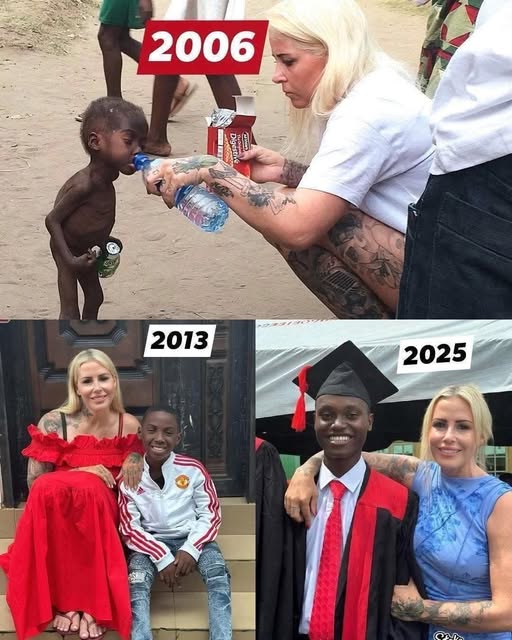
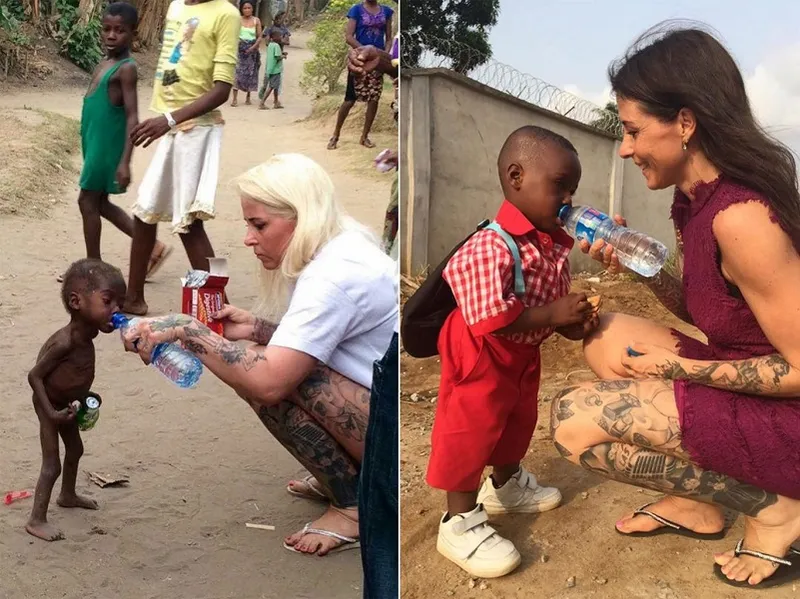
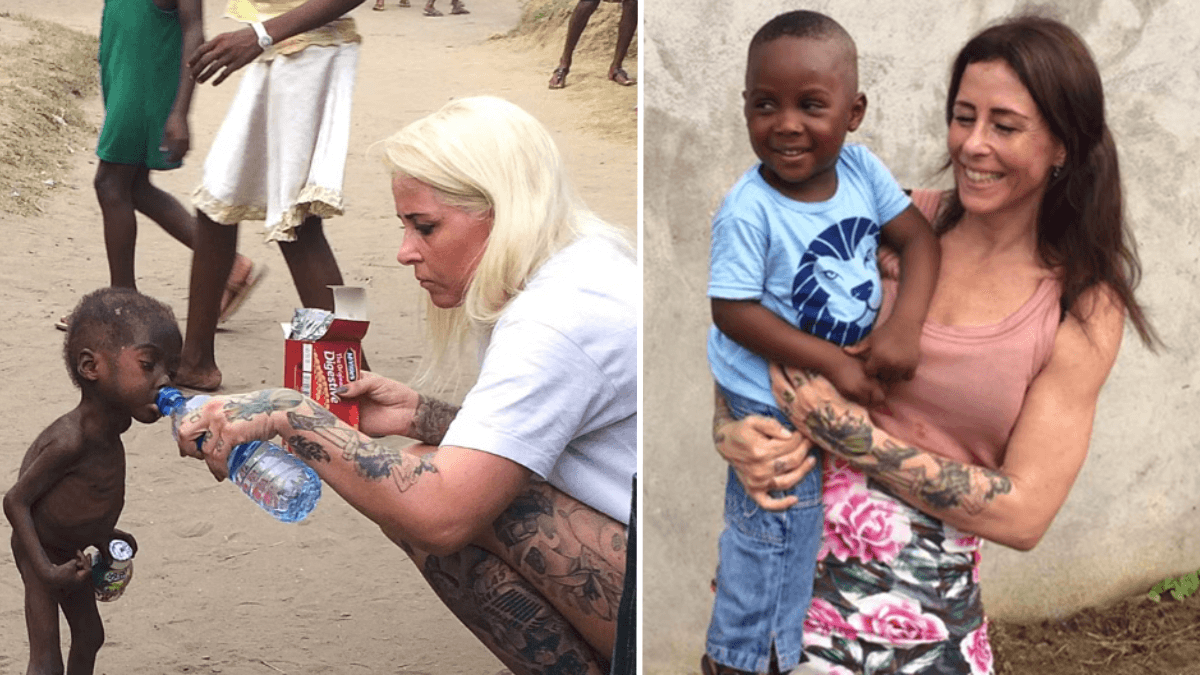
She knelt down near him with water and food, offering the first signs of care he may have received in far too long. It was a simple gesture, but in that moment, it carried the weight of a miracle. To the boy, it was not a speech, not a promise, not a grand announcement. It was water. It was kindness. It was someone saying, without words, “Your life still matters.”

A Rescue That Became a Symbol
The image of that rescue would later travel around the world. Millions of people saw a woman giving water to a starving child, and they felt the shock of what neglect can do to the innocent. But the photograph was never only about suffering. It was about the powerful moment when compassion steps into a place where cruelty has been allowed to live too long.
That boy was given a name that carried everything people were praying for: Hope. It was not just a name; it was a declaration. Hope that he would survive. Hope that he would heal. Hope that others like him would not be forgotten. In one small child, the world saw both the depth of human failure and the possibility of human goodness.
The First Battle Was Survival
After the rescue, Hope’s fight did not end. In many ways, it had only begun. His body was fragile, weakened by hunger, illness, and prolonged neglect. Doctors and caregivers had to work carefully, patiently, and urgently. Every meal mattered. Every treatment mattered. Every day he survived was another quiet victory against the darkness that had nearly taken him.
There were no instant miracles, no overnight transformation. Healing came slowly. His body had to learn safety again. His eyes had to adjust to faces that looked at him with love instead of fear. The child who had once been left to die now had people watching over him, feeding him, cleaning him, holding him, and believing that his life could still become something beautiful.
Learning to Live Again
As weeks turned into months, Hope began to change. His body grew stronger, but the deeper healing was harder to measure. A child who has been abandoned does not simply forget. Pain leaves invisible marks. Yet inside the care of Land of Hope, he began to discover something every child deserves to know: that the world can be safe, that adults can be gentle, and that home can mean protection.
He found rhythm in daily life. He found comfort in routine. He found a place among other children who also carried stories of rejection and rescue. Slowly, the boy once seen as unwanted became part of a family built not by blood alone, but by mercy. His life was no longer defined by the street where he was found. It was being rewritten by the hands that lifted him from it.
The Quiet Language of Hope
Hope’s journey was not the kind that fits neatly into a perfect fairy tale. He faced challenges that would remain with him, including difficulty with spoken language and hearing. But silence does not mean emptiness. Some children speak through words. Others speak through movement, expression, effort, and the light that returns to their eyes after years of darkness.
Those who cared for Hope learned to understand him beyond ordinary speech. They saw his intelligence in the way he observed the world. They saw his joy in movement. They saw his courage in the way he continued to learn despite obstacles. His story became even more powerful because it was not about becoming exactly like everyone else. It was about becoming fully himself.
The Classroom Door
When Hope began school, it was more than an educational milestone. It was an answer to every person who had once believed his life had no value. The classroom door represented a future that had almost been stolen from him. A pencil, a notebook, a desk, a teacher’s patience — these ordinary things became extraordinary in the hands of a child who had once been denied even the right to be safe.
Learning was not always easy. Hope had to work harder than many children around him. He had to navigate lessons, communication barriers, and the memories his young life carried. But each step forward mattered. Each page completed was a small act of victory. Every day he entered school, he proved that rescue is not only about saving a child from death. It is about giving him a future worth walking toward.
The Day He Graduated
Years after that heartbreaking rescue, Hope reached a milestone that once seemed impossible. He completed primary school, standing as living proof that love, education, and consistent care can transform a life. The boy who had once been too weak to stand in the street had now grown into a student with achievements, friendships, and a future opening before him.
For those who remembered the day he was found, the graduation was more than a ceremony. It was a full-circle moment. It was the sound of every prayer answered slowly. It was the sight of a child once marked by rejection now recognized for his effort. His certificate was not just paper. It was evidence that one act of kindness can echo across years and reshape the destiny of a human being.
What Hope Teaches the World
Hope’s story forces us to ask uncomfortable questions. How many children are ignored because their suffering is inconvenient? How many lives are lost because people choose fear over compassion? How often does the world walk past someone in need, telling itself that the problem is too big, too complicated, or too far away to matter?
But his story also offers an answer. You do not have to save the whole world to change the world. Sometimes, changing the world begins with one child, one cup of water, one decision not to look away. Anja could not erase every injustice that day, but she could reach for Hope. And because she did, a life that was nearly abandoned became a life filled with possibility.
The Miracle of One Act of Kindness
Today, Hope’s journey continues. His future is still unfolding, as every child’s future should. There will be more challenges, more lessons, more doors to open. But the most important truth has already been proven: he was never worthless. He was never beyond saving. He was never the terrible label others placed on him. He was, and remains, a child deserving of love.
From a hungry and abandoned boy to a hopeful graduate, his life stands as a reminder that compassion is not small. Kindness may look simple in the moment, but it can become the turning point of an entire lifetime. Somewhere, another child is waiting for someone to care. Somewhere, another story is not yet finished. And Hope’s life tells us that when love arrives in time, even the saddest beginning can become a miracle.