My grandfather, Abraham Miller, was the quietest man I ever knew. He lived in a weathered little cottage at the edge of a sleepy Nebraska town called Oakhaven, a place with cracked sidewalks and neighbors who still waved from their porches.
He didn’t talk much and never kept medals on the wall or photos in frames to brag about his past. If I ever asked about his military years, he would just smile and say, “That was a long time ago, kiddo.”
My parents treated that silence like proof that his life didn’t really matter. To my father, Steven, and my mother, Janet, Grandpa was just a difficult and stubborn old man.
They thought he was too poor to be useful and too quiet to be interesting, so he was rarely invited to dinner unless I pushed for it. My brother, Troy, used to joke that Grandpa’s biggest talent was making people feel awkward, and nobody ever told him to stop.
Then Grandpa got sick. I was stationed two states away in North Carolina with the Marine Corps when a neighbor named Mr. Henderson called to tell me Abraham had collapsed in his kitchen.
The paramedics had taken him to the local county hospital, but none of my family had shown up to see him. Not my mother, not my father, and certainly not my brother Troy.
I took emergency leave that same night and drove straight through the darkness. By the time I walked into his room, he was already fading away.
The room smelled like heavy disinfectant and stale coffee, making everything feel cold. He looked smaller than I had ever seen him, but when he opened his eyes and saw me standing there, he smiled.
“I guess you’re the one who remembered me,” he whispered in a raspy voice. I tried to comfort him by saying that Mom and Dad would be there soon.
Abraham gave the smallest shake of his head, looking tired rather than bitter. “They won’t come,” he said gently, and he was right.
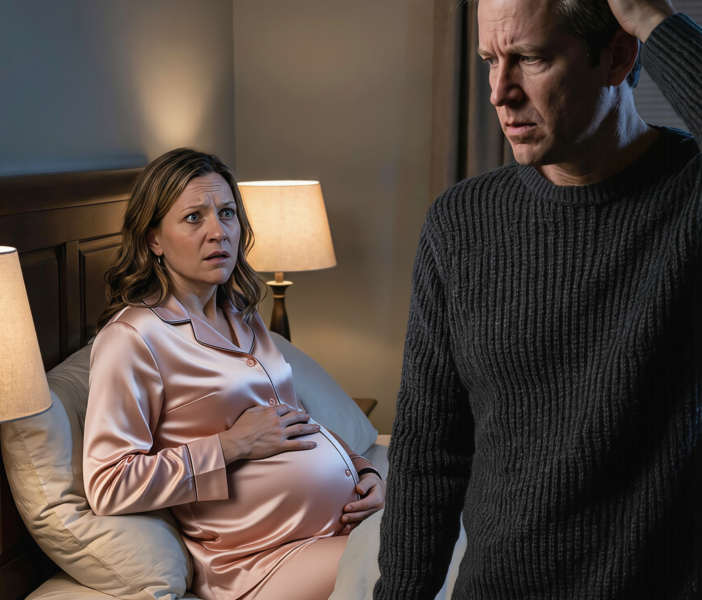
He died two days later without any drama or grand speeches. When I called my mother to break the news, she just sighed over the phone.
“At least he isn’t suffering anymore,” Janet said, and that was the end of the conversation. No one offered to help with the funeral or even asked where he would be buried.
I handled everything myself, organizing a small service with a simple wooden casket. There were only five people total, including the priest and the neighbor who had called me.
My parents didn’t show up, and Troy just sent a text saying, “Sorry, I’ve had a busy week.” After the service, I went back to Grandpa’s house to pack up what little was left.
Most of it was ordinary stuff like old jackets, VHS tapes, and a chipped coffee mug. Then, wrapped in a faded handkerchief in his bedroom drawer, I found the ring.
It was made of worn silver and felt heavy in my palm, with a strange geometric symbol etched into the metal. I remembered him wearing it every day of his life.
When I was a teenager, I asked him what it meant, and he told me, “It reminds me who I am.” I decided to keep it because it was the only thing of his I had left.
Three weeks later, my parents sold his house without a second thought. I went back to my base and tried to return to my routine, wearing the ring every day until I stopped noticing its weight.
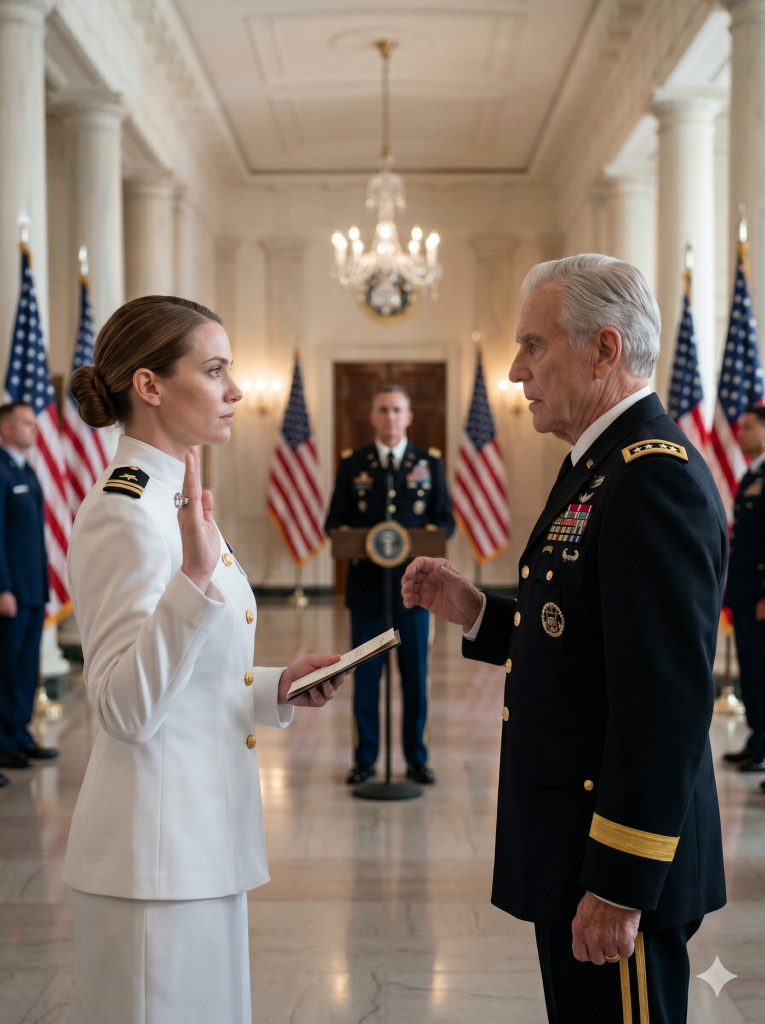
Eventually, I was invited to a formal military gala in Virginia honoring veteran service. I wore my dress uniform and slipped Grandpa’s ring onto my finger before heading to the hall.
The room was full of high ranking officers, flags, and the kind of practiced dignity these events always have. I was in the middle of a polite conversation when a high ranking general stopped dead in his tracks.
General Harrison Miller stared at my hand, and the color drained out of his face so fast it actually scared me. He stepped closer as if he were looking at a ghost.
“Where did you get that ring?” he asked with a voice that was barely a whisper. I felt a surge of nerves and told him it belonged to my grandfather.
The general didn’t blink and immediately asked for his name. When I told him it was Abraham Miller, the man swallowed hard and looked around the room.
“We need to talk in private right now,” he said, leading me away from the crowd and into a side office. That was the moment I realized the man my parents dismissed as nothing was someone far more important than we ever imagined.
General Harrison didn’t explain much at first, but his eyes stayed locked on the silver band. “Generals don’t usually react like this to old jewelry,” I said, trying to break the tension.
He didn’t laugh and instead asked for my unit and my grandfather’s full service history. “I’ll be in touch with you very soon,” he promised before walking away.