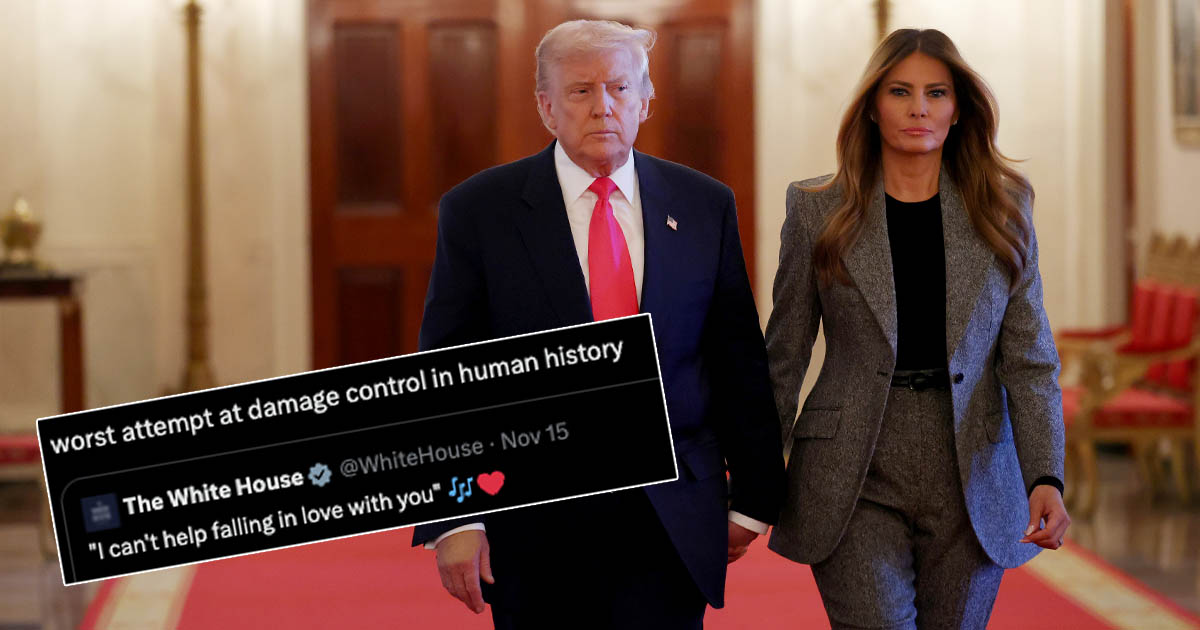
A simple photograph can sometimes speak louder than any press release. This was the case recently when an official White House social media account posted a picture of former President Donald Trump and former First Lady Melania Trump holding hands. The image, meant to project an air of marital unity, instead became a lightning rod for online debate and intense scrutiny. The caption accompanying the photo, which labeled the pair “America’s power couple,” was seen by many as a deliberate piece of political theater. The public reaction was swift and overwhelmingly skeptical, turning a display of affection into a major talking point across various social media platforms. The conversation quickly moved beyond the image itself to question the timing and the motivation behind its release.
The context of this post is critical to understanding the public’s reaction. For years, the Trumps’ marriage has been the subject of endless speculation and analysis by biographers and journalists. Reports have often painted a picture of a distant relationship, with claims that the couple spends significant time apart and maintains separate living quarters. A notable news report from earlier in the year highlighted the infrequency of Melania Trump’s stays at the White House, further fueling rumors about the state of their union. Against this backdrop, any public display of affection between them is inevitably dissected, not just for what it shows, but for what it might be trying to hide.

The hand-holding picture was not an isolated incident. It came just days after another official post showed the couple sharing a kiss on stage following a policy signing event. That previous image was accompanied by a romantic song lyric, creating a narrative of a loving and devoted partnership. For a couple known for their reserved and often formal public interactions, this sudden shift towards overt affection was striking. Supporters of the Trumps may have viewed these posts as a welcome glimpse into a strong personal bond, but for a larger segment of the online audience, the change in behavior seemed calculated rather than organic.
The timing of these posts is what raised the most eyebrows. They appeared directly on the heels of a significant new development in the long-running Jeffrey Epstein scandal. The release of thousands of pages of documents from the deceased financier’s estate has once again brought scrutiny upon his famous associates, including Donald Trump. While one document contained a claim about Trump, he has dismissed the released materials as a hoax. However, the proximity of this difficult news cycle to the barrage of affectionate marital imagery led many to conclude that the two events were connected. The online consensus seemed to be that this was a strategic attempt to control the public narrative.
The internet’s response was a chorus of disbelief and criticism. Commenters described the public relations effort as clumsy and transparent, with one user calling it the “worst attempt at damage control in human history.” Others noted the unusual nature of seeing the couple in such close proximity, joking that the situation behind the scenes must be serious if such a staged display was deemed necessary. The episode highlights the modern political reality where every official communication is analyzed for subtext. In the end, the photograph of a simple handhold failed to convince a skeptical public, instead becoming a symbol of a perceived and poorly executed strategy to overshadow negative headlines with a picture-perfect marriage.