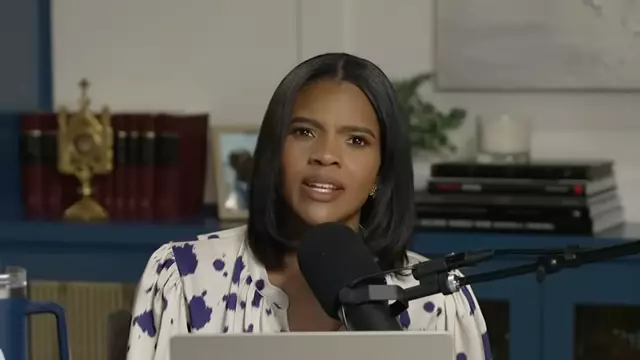
The assassination of a public figure often sends shockwaves through their community, but in the case of Charlie Kirk, the aftermath has been uniquely shaped by the conspiracy theories of a former ally. Candace Owens, a fellow conservative commentator, has used Kirk’s death as a catalyst for a series of escalating claims, the latest of which involves Egyptian military aircraft and an alleged cover-up by Kirk’s own organization. This phenomenon raises questions about how grief, politics, and misinformation intersect in the modern media landscape.
Owens announced her latest findings with dramatic flair on social media, promising evidence that would irrevocably change the narrative. Her investigation, as detailed on her podcast, relies on a theory that two Egyptian planes systematically tracked Charlie and Erika Kirk for years. She presented this as a data-driven discovery, citing dozens of location overlaps, and framed it as a vindication of her role as Kirk’s posthumous defender. This approach transforms a personal tragedy into a political thriller, implicating shadowy foreign actors and institutional deceit.
.jpg)
However, this narrative exists in direct opposition to the established facts of the case, which include a charged suspect, and has caused clear strain within Kirk’s circle. His pastor, Rob McCoy, has publicly appealed for respect and discretion, implicitly criticizing Owens’ methods. The tension illustrates a common conflict in the age of digital media: the clash between traditional mourning, which often seeks closure, and a conspiratorial mindset that resists simple explanations and thrives on continuous investigation. Owens’ actions demonstrate how a tragic event can be repurposed to fuel an alternative media ecosystem, even at the risk of causing further pain to the grieving community closest to the victim.